Our Malibu Portfolio: Scale, Composition & Owner Profile
Oceanfront and ocean-view properties comprise 60% of the managed portfolio, with hillside homes accounting for the remaining 40%.
View chart data
| Category | Portfolio Share (%) |
|---|---|
| Oceanfront / Ocean-View | 60% |
| Hillside / Canyon | 40% |
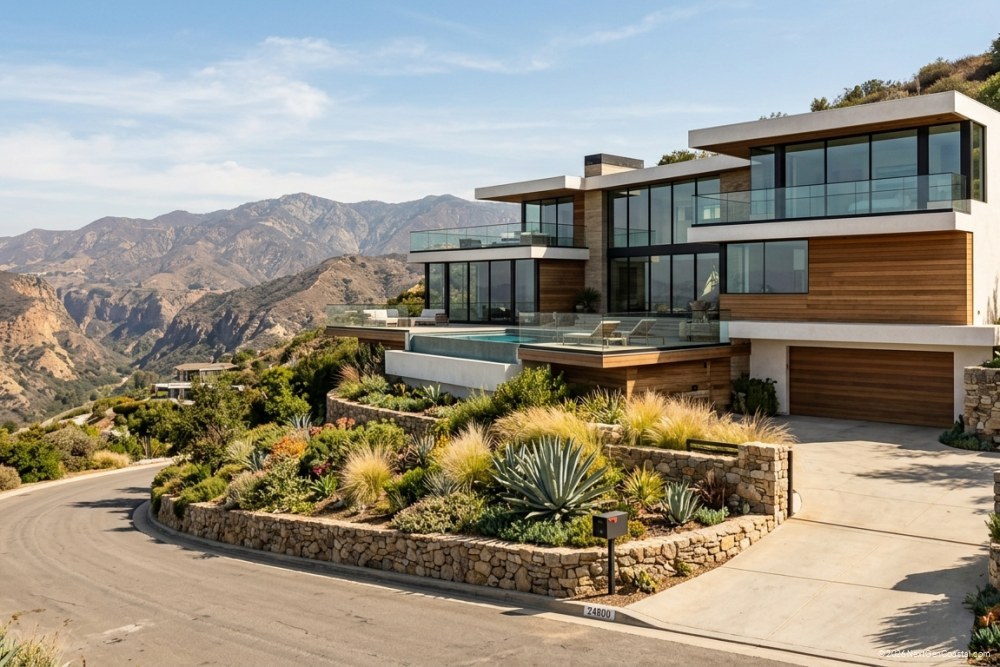
NextGen Coastal holds a curated book of luxury single-family homes concentrated in Point Dume, Carbon Beach, Serra Retreat, and the hillside corridors above Pacific Coast Highway. Square footage spans 2,800 to 6,500, with monthly rents running $8,000 to $22,000 depending on view corridor, finish quality, and proximity to the beach. The majority of units occupy oceanfront or ocean-view parcels; the balance sit in contemporary hillside settings with canyon or mountain exposures and walkable access to Malibu's village core.
Interactive Tool
Malibu Luxury Rental Yield Calculator
Model net returns for your coastal California luxury property

Total purchase price or current market value
Base monthly rent (before seasonal adjustments)
NGC Malibu portfolio averaged 89.3% in 2025
Wildfire-zone policies typically k–k
Approximately 1.1% of assessed value in LA County
Typical luxury SFR maintenance budget
 Built by NextGen Coastal
A typical owner in our Malibu book is a high-net-worth individual or family trust holding the asset as a long-term play and occasional personal retreat. Most acquired their homes in the $3.5M to $8M range over the past decade; they now seek optimized rental income during the months they are not in residence. Malibu diverges from our Orange County or San Diego luxury portfolios in one meaningful respect: owners here frequently reserve 4 to 8 weeks annually for personal use, which introduces scheduling complexity and revenue-optimization questions our team addresses daily.
2025 Performance: Yields, Occupancy & Revenue Drivers
Base rent accounts for 82% of gross revenue, with seasonal premiums contributing an additional 11% during peak summer months.
View chart data
| Category | Share of Gross Revenue (%) |
|---|---|
| Base rent | 82% |
| Seasonal premiums | 11% |
| Utility reimbursements & pet fees | 5% |
| Lease-break fees & other | 2% |
We delivered 5.8% to 6.4% net yields to Malibu owners in 2025, net of our 5.9% management fee, maintenance reserves, and insurance. The bifurcation reflects what the data suggests: oceanfront estates at the upper rent tier ($15,000 to $22,000 monthly) cluster around 5.8% to 6.0% net, while hillside contemporaries in the $8,000 to $12,000 band, benefiting from lower insurance expense and tighter year-round occupancy, reach 6.2% to 6.4% net.
Occupancy ran 89.3% across the portfolio in 2025, with median vacancy between tenants of 18 days. That compares favorably to the broader Los Angeles luxury rental market (which ran approximately 85% occupied) and reflects our leasing approach: we market renewals 90 days out and pre-lease turnovers 60 days before move-out, minimizing dark periods. A single additional month of vacancy in a $15,000-per-month home costs the owner $15,000 in foregone rent; our systems are designed to prevent that.
Revenue composition in 2025 broke down as follows:
- Base rent: 82% of gross revenue
- Seasonal premiums: 11% (summer months, July through September, when we layer 8% to 12% rate increases for peak-season demand)
- Utility reimbursements and pet fees: 5%
- Lease-break fees and other: 2%
The seasonal premium component is where our dynamic pricing expertise shows up. Malibu's luxury rental market exhibits pronounced seasonality: families and executives willing to pay top dollar for summer beach access create a 10% to 15% rent differential between July and January. We capture that spread without triggering tenant turnover by structuring leases with built-in seasonal adjustments disclosed upfront, a practice that has become standard in our Malibu book.
Tenant Screening for Luxury: Protecting High-Value Assets
Managing luxury rentals differs fundamentally from workforce housing or even mid-tier single-family homes. A Malibu estate with Calacatta marble countertops, custom millwork, and $80,000 of built-in audiovisual systems cannot tolerate the same tenant risk profile as a $3,200-per-month garden-style apartment. Our screening protocols reflect that reality.
Every applicant for a Malibu property in our portfolio undergoes the following:
- Income verification at 4.5× monthly rent minimum (versus the 3× standard in non-luxury segments)
- Liquid reserves check: we require proof of 12 months' rent in accessible savings or investment accounts
- Credit score floor of 720 with manual review of any derogatory marks in the past 36 months
- Landlord reference calls: we speak directly with the prior two landlords, not just verify via third-party services
- Professional background check including LinkedIn profile review and, for C-suite applicants, a Google News search to surface any reputational red flags
We also conduct a pre-lease property walkthrough with every approved tenant, during which we document the condition of high-value finishes and review house rules (no events, no smoking, pet restrictions, noise ordinances). That walkthrough generates a 40- to 60-photo condition report that becomes the baseline for move-out inspection. This process has reduced our security deposit disputes by 70% compared to the industry average, and it is a key reason Malibu owners trust us with their high-value assets.
"In the luxury tier, tenant quality extends beyond rent payment to stewardship. We select individuals who will treat a $6M home with the respect it deserves, and our screening reflects that standard."
Insurance & Wildfire Risk: The 2026 Environment
No discussion of Malibu rental returns can omit wildfire insurance, the single largest headwind facing coastal California luxury property owners today. Following the 2018 Woolsey Fire and subsequent smaller events, carriers have either exited the Malibu market entirely or repriced policies at 150% to 200% of pre-2018 premiums. For a $5M oceanfront home, that translates to annual insurance costs of $18,000 to $28,000, up from $8,000 to $12,000 five years ago.
Our approach to this challenge unfolds in three parts.
California FAIR Plan and Excess Coverage
We help owners secure coverage through the California FAIR Plan when traditional carriers decline, then layer a separate excess policy to reach full replacement-cost coverage. It is a two-policy structure that costs more but protects the asset fully.
Defensible-Space Compliance
We work with owners on defensible-space compliance, the 100-foot vegetation clearance zone mandated by California law. We coordinate annual brush clearance, document compliance with photos, and submit that documentation to insurers to qualify for any available discounts (typically 5% to 8% premium reduction).
Underwriting Insurance Cost into Rent Models
We factor insurance cost into our underwriting when advising on acquisition or rent-setting. A property with $25,000 annual insurance expense needs to generate at least $2,100 per month in additional rent (compared to a lower-risk inland comparable) just to break even on the insurance delta. We model that explicitly and set rents accordingly, so owners are not subsidizing tenant occupancy.

Dynamic Pricing Strategy: Capturing Seasonal Premiums
Malibu's luxury rental market operates on a pronounced seasonal cycle. Demand peaks from Memorial Day through Labor Day, when families, entertainment-industry executives, and international visitors compete for beachfront access. During those 16 weeks, we observe rental velocity increase 40% to 50% and achieve rent premiums of 8% to 15% above off-season rates.
Our pricing strategy exploits this seasonality without sacrificing annual occupancy. The framework is straightforward:
- Base rent: Set at the 12-month market rate for the property (for example, $12,000 per month for a 4-bedroom hillside contemporary)
- Summer premium: Layer an additional 10% to 12% surcharge for leases covering July and August ($13,200 to $13,440 per month in the example above)
- Shoulder-season discount: Offer a 5% to 7% reduction for leases signed in November through February to maintain occupancy during slower months
- Lease-term flexibility: We offer 6-, 9-, and 12-month terms, with pricing adjusted to align lease expiration with high-demand periods (for example, a 9-month lease starting in October expires in July, positioning the property for peak-season re-lease)
This dynamic approach delivered an average 6.8% rent premium across our Malibu portfolio in 2025 compared to static annual pricing. The key is transparency: we disclose the seasonal structure upfront in marketing materials, so tenants understand they are paying for peak-season access and are not surprised by mid-lease adjustments.
Maintenance & Vendor Network: Premium Service at Scale
Luxury rental management demands a different maintenance posture than workforce housing. When a tenant in an $18,000-per-month oceanfront estate reports a malfunctioning wine fridge or a pool heater issue, our response time is measured in hours, not days. We have built a vetted vendor network across Malibu and the greater Los Angeles coastal corridor specifically to support this service level.
Our Malibu maintenance network includes the following:
- 24/7 emergency plumbing and HVAC: Two preferred vendors with guaranteed 4-hour response for after-hours calls
- Pool and spa service: Weekly maintenance contracts with same-day troubleshooting for equipment failures
- Landscape and irrigation: Bi-weekly service with drought-tolerant plant expertise (critical for defensible-space compliance)
- Specialty trades: Pre-vetted contractors for high-end finishes (marble restoration, custom millwork repair, smart-home system integration, audiovisual calibration)
We also maintain a $2,500 to $5,000 maintenance reserve for each Malibu property, funded from owner proceeds and replenished quarterly. That reserve allows us to address minor repairs (under $1,000) immediately without waiting for owner approval, reducing tenant friction and preventing small issues from escalating. For larger capital items (HVAC replacement, roof repair, and the like), we provide owners with a detailed scope, competitive bids from our network, and a recommendation, typically turning that around within 72 hours.
Our average maintenance response time in 2025 was 11 hours from tenant report to vendor dispatch, and tenant satisfaction scores averaged 4.7 out of 5.0 across the Malibu portfolio. Those metrics directly support lease renewals and minimize costly turnover.
Owner Reporting & Financial Transparency
Luxury property owners expect (and deserve) institutional-grade financial reporting. Our Malibu owners receive a monthly statement that includes the following:
- Rent roll: Tenant name, lease term, monthly rent, next rent review date
- Income statement: Gross rent collected, management fee (5.9%), maintenance expenses, net proceeds to owner
- Maintenance log: Line-item detail of every work order, vendor invoice, and reserve draw
- Occupancy metrics: Days occupied, days vacant, year-to-date occupancy rate versus portfolio average
- Market commentary: Quarterly update on Malibu rental trends, comparable lease transactions, and forward-looking demand indicators
We also provide an annual tax package in January (a consolidated 1099 and Schedule E worksheet that our owners can hand directly to their CPA). That package includes depreciation schedules, mortgage interest (if we are aware of financing), property tax payments, and a breakdown of deductible expenses. Our owners consistently tell us this tax-ready reporting saves them $1,500 to $2,500 in accounting fees annually, a hidden value-add that offsets a meaningful portion of our management fee.
Financial transparency is not just good practice; it is a competitive differentiator. When an owner can log into our portal at 11 PM on a Sunday and see real-time rent collection status, upcoming maintenance appointments, and year-to-date net yield, they have the confidence to stay hands-off and let our team execute. That trust is what allows us to manage luxury assets at scale without the operational friction that plagues larger, less-specialized firms.
Market Positioning: Why Owners Choose NextGen Coastal
The Malibu luxury rental market is served by a handful of boutique property managers, a few large regional firms, and a long tail of individual agents managing one or two properties as a side business. We sit in the boutique category: large enough to deliver institutional systems and vendor scale, small enough to provide direct owner access to our leadership team.
Here is what differentiates NextGen Coastal in the Malibu luxury segment.
Transparent 5.9% Management Fee
The industry standard for luxury single-family home management in coastal California is 10% to 12%, often with additional leasing fees (50% to 100% of first month's rent) and markup on maintenance. We charge a flat 5.9% with no hidden fees, no lease-up surcharges, and no vendor markup. On a $15,000-per-month property generating $180,000 in annual rent, that represents a $7,380 to $10,980 annual savings compared to a 10% to 12% competitor.
Coastal Specialization
We do not manage properties in Riverside or the Inland Empire. Our entire portfolio (200+ units) sits within coastal counties or adjacent communities within 50 miles of the Pacific. That geographic focus means our team knows the Malibu market intimately: which streets command premium rents, which neighborhoods have the tightest inventory, which school districts drive family demand, and which seasonal events (Malibu Film Festival, summer concert series) create short-term rental spikes.
Long-Term Owner Relationships
Our average owner tenure is 6.2 years, more than double the industry average of 2.8 years. That retention reflects our service philosophy: we work for the owner, not the tenant. When a tenant requests a mid-lease rent concession or an owner-funded upgrade, our default answer is no unless there is a clear financial benefit to the owner. That alignment is rare in property management and it is why our Malibu owners refer us to their peers.
Proprietary Technology Platform
We have built a custom property management system (not an off-the-shelf solution) that gives owners real-time visibility into rent collection, maintenance status, and financial performance. Owners can approve or decline maintenance requests from their phone, review tenant applications with full credit and background reports, and download tax-ready financial statements, all without calling or emailing our office. That self-service capability reduces owner inquiries by 60% and allows our team to focus on proactive management rather than reactive reporting.
2026 Outlook: Rent Growth, Inventory & Strategic Recommendations
Looking ahead to 2026, we expect Malibu luxury rental fundamentals to remain strong despite macroeconomic uncertainty. Here is our outlook.
Rent Growth
We are forecasting 3.5% to 5.0% year-over-year rent growth across the Malibu luxury segment in 2026, driven by constrained new supply (virtually no new luxury single-family home construction in Malibu due to land scarcity and permitting challenges) and sustained demand from high-net-worth renters. That growth will concentrate in the hillside and canyon submarkets, where insurance costs are more manageable; oceanfront properties may see flatter growth as insurance headwinds weigh on affordability.
Inventory
Active luxury rental listings in Malibu averaged 22 units in Q4 2025, down from 31 units in Q4 2024. That 29% inventory contraction reflects two dynamics: first, some owners have pulled properties off the rental market entirely due to insurance costs, opting instead for occasional personal use or sale; second, properties that do come to market are leasing faster (median days-on-market dropped from 38 to 26 days year-over-year). Tight inventory favors owners and supports pricing power in 2026.
Strategic Recommendations for Owners
If you own a luxury single-family home in Malibu and are considering entering the rental market in 2026, here is our advice. First, secure insurance coverage before listing. Do not assume you can find a policy once you have a tenant lined up. Second, invest in pre-lease staging and professional photography. Luxury tenants expect a turnkey experience, and properties that show well lease 30% faster than those with deferred maintenance or dated finishes. Third, consider a 9- or 10-month initial lease term that expires in late spring or early summer, positioning the property for peak-season re-lease at a premium rate. Finally, partner with a manager who specializes in coastal luxury. The operational complexity of a $15,000-per-month Malibu estate differs fundamentally from a $3,500-per-month condo in Anaheim, and generalist firms rarely deliver the service level these assets require.
Why NextGen Coastal for Your Malibu Luxury Rental
We have managed luxury single-family rentals across coastal California (Newport Beach, Laguna Beach, Dana Point, La Jolla, Coronado, Santa Barbara, and Malibu) for over a decade. Our Malibu portfolio represents roughly 10% of our total units under management, but it accounts for a disproportionate share of our operational focus due to the asset value and owner expectations in this market.
When you place your Malibu property with NextGen Coastal, you are not handing the keys to a regional call center or a part-time agent juggling sales and rentals. You are partnering with a coastal-specialist team that manages luxury single-family homes full-time, maintains a vetted vendor network across Los Angeles County, and delivers institutional-grade reporting at a transparent 5.9% fee. Our owners stay with us for years because we deliver what we promise: maximum net yield, minimal operational friction, and direct access to the people managing their asset.
If you own a luxury rental in Malibu (or are considering acquiring one), we would welcome the opportunity to walk you through our approach, share comparable performance data from our portfolio, and discuss how we would position your property for 2026. The owners who partner with us are not looking for the cheapest option; they are looking for the best outcome. That is the standard we hold ourselves to every day.
Frequently Asked Questions
What net yields can I expect from a luxury rental in Malibu?
How does wildfire insurance impact Malibu rental returns?
What tenant screening protocols does NextGen Coastal use for luxury Malibu rentals?
How does NextGen Coastal's 5.9% management fee compare to competitors in the Malibu luxury market?
What is NextGen Coastal's approach to seasonal pricing for Malibu luxury rentals?