What the Natural Hazard Disclosure Statement Actually Covers
Elevation certificates and insurance quotes add material due diligence expense beyond the base NHD report cost.
View chart data
| Category | Typical Cost ($) |
|---|---|
| NHD Report | $113 |
| Elevation Certificate | $600 |
| Annual NFIP Flood Insurance (Zone AE) | $2,850 |
| Annual Defensible Space Maintenance (Very High FHSZ) | $3,250 |
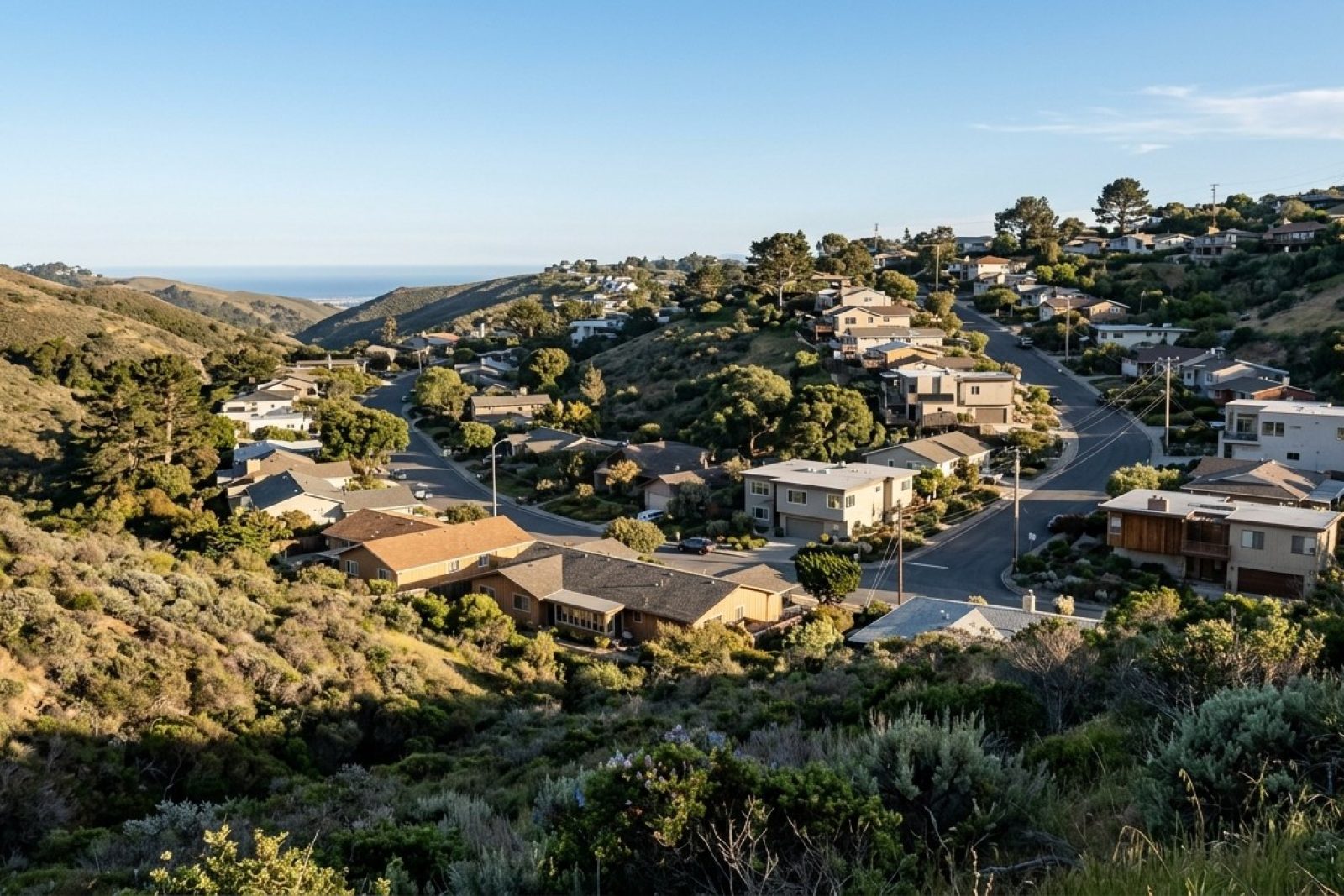
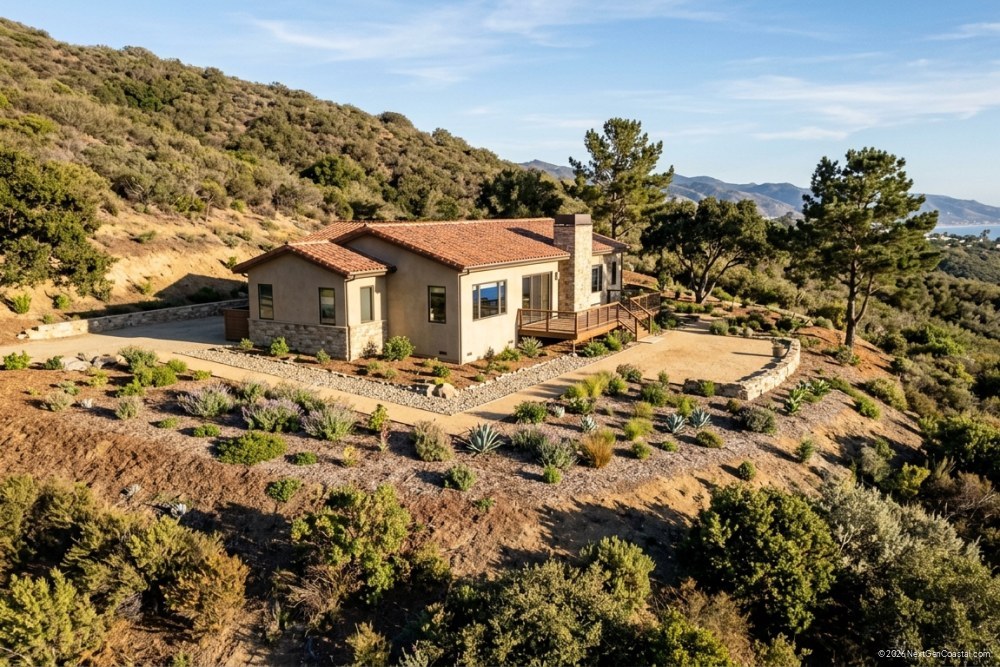
California's Fire Hazard Severity Zone (FHSZ) maps classify parcels into Moderate, High, or Very High Fire Hazard Severity Zones based on fuel load, topography, weather patterns, and fire history. Properties in Very High FHSZ face the most acute investor challenges: insurance availability, premium cost, and defensible-space compliance.
CAL FIRE updates FHSZ maps periodically; recent maps were adopted in 2022. Coastal Orange County, San Diego, and Los Angeles hillside neighborhoods—particularly those adjacent to open space, canyons, or chaparral—are frequently classified as Very High FHSZ. In Orange County, portions of Laguna Beach, Laguna Niguel, San Juan Capistrano, and Trabuco Canyon have been designated in this category. In San Diego County, Rancho Santa Fe, Poway, and Ramona hillside parcels are frequently designated Very High. Los Angeles County's Malibu, Topanga, and Pacific Palisades coastal canyons are commonly mapped as Very High FHSZ.
The investor impact is threefold. First, insurance premiums in Very High FHSZ can be substantially higher than baseline rates, potentially adding thousands of dollars annually to operating expenses on a $2M–$5M coastal single-family rental. Second, the California FAIR Plan—the state's insurer of last resort—provides only basic fire coverage with sub-limits and requires supplemental policies for full replacement cost, effectively increasing total premium costs. Third, lenders increasingly require proof of full-replacement-cost coverage at loan origination and annually thereafter; properties that lose coverage mid-loan can trigger technical default or forced-place insurance at elevated rates.
Properties in Very High Fire Hazard Severity Zones require a fundamentally different underwriting model—insurance is no longer a fixed 25–30 basis points of property value, it becomes a variable cost that compresses net yield and narrows buyer pools at exit.
Defensible-space compliance adds another layer. California Public Resources Code 4291 mandates 100 feet of defensible space around structures in FHSZ, with vegetation management, fuel reduction, and ember-resistant landscaping. Annual maintenance costs can range from $1,500–$5,000 depending on lot size and slope. Investors must budget for ongoing landscape contracts and periodic inspections; non-compliance can void insurance or trigger county abatement with lien attachment.
Underwriting Wildfire Risk: Insurance, Reserves, and Exit Strategy
Sophisticated coastal investors now model wildfire risk as a permanent cost structure rather than a one-time due diligence hurdle. The underwriting checklist includes: obtaining a bindable insurance quote (not just an estimate) during due diligence, confirming the property meets PRC 4291 defensible-space standards, budgeting for landscape maintenance in Very High FHSZ, establishing a capital reserve for ember-resistant retrofits (Class A roof, dual-pane windows, non-combustible siding), and stress-testing exit cap rates assuming the next buyer will face similar or higher insurance costs.
Properties in Very High FHSZ typically trade at wider cap rates than comparable non-FHSZ properties in the same submarket, reflecting the insurance burden and reduced buyer pool. Investors who acquire these assets must either accept the yield compression or execute value-add strategies—hardening the structure, installing fire-resistant landscaping, obtaining multi-year insurance commitments—that justify tighter exit cap rates.
Flood Zone Disclosures: FEMA Maps and Mandatory Insurance
The NHD Statement identifies whether a property lies within a Special Flood Hazard Area (SFHA)—FEMA-designated zones where the annual flood risk exceeds 1% (the "100-year floodplain"). SFHA properties are mapped as Zone A (riverine flooding), Zone AE (riverine with base flood elevation), or Zone V (coastal velocity flooding with wave action). Coastal California investors encounter SFHA designations in low-lying beach communities, river corridors, and areas behind aging levees or seawalls.
In Orange County, portions of Huntington Beach, Seal Beach, and Newport Beach's Balboa Peninsula are mapped as Zone AE or VE. San Diego's Mission Beach, Pacific Beach bay-side blocks, and Imperial Beach neighborhoods adjacent to the Tijuana River Estuary carry SFHA designations. Los Angeles County's Marina del Rey, Playa del Rey, and Long Beach coastal zones near the Los Angeles River and San Gabriel River mouths are similarly mapped.
The investor impact is immediate and non-negotiable: federally backed mortgages require flood insurance for properties in SFHA. The National Flood Insurance Program (NFIP) provides coverage up to $250,000 for the structure and $100,000 for contents; premiums are actuarially determined based on base flood elevation, construction type, and elevation certificate data. For a coastal single-family rental in Zone AE, annual NFIP premiums typically range from $1,200–$4,500. Properties in Zone V—where wave action is modeled—generally face higher premiums due to higher loss severity.
Investors acquiring properties above the NFIP coverage cap must purchase excess flood insurance from private carriers, adding additional annual costs for each additional increment of coverage. A beachfront rental in Zone VE can carry substantial total flood insurance costs, consuming a meaningful portion of gross rental income.
Elevation Certificates and LOMA Applications
An elevation certificate is a FEMA-standard survey document that establishes a structure's lowest floor elevation relative to base flood elevation. Investors should order an elevation certificate during due diligence for any property in or near SFHA; the certificate typically costs $400–$800 and can potentially reduce flood insurance premiums if the structure is elevated above base flood elevation.
Properties that appear to be in SFHA but are actually elevated above the 100-year floodplain can apply for a Letter of Map Amendment (LOMA), which formally removes the property from the SFHA designation. The LOMA application is free but requires a certified elevation certificate and can take 60–90 days for FEMA review. Investors who secure a LOMA eliminate the mandatory flood insurance requirement, improving cash flow and resale marketability.
FEMA is currently remapping coastal California flood zones under the Risk Rating 2.0 initiative, which incorporates sea-level rise, storm surge modeling, and updated topography. Investors should assume that SFHA boundaries may expand in the coming map cycle, particularly in low-lying beach communities and areas behind aging coastal infrastructure. Properties that are currently outside SFHA but within 500 feet of the boundary should be underwritten with a flood insurance contingency reserve.
Earthquake Fault and Seismic Hazard Zones
California's Alquist-Priolo Earthquake Fault Zoning Act requires disclosure of properties within designated earthquake fault zones—typically a quarter-mile buffer around active fault traces. The NHD Statement identifies Alquist-Priolo zones, which trigger additional geotechnical investigation requirements for new construction or substantial remodels but generally do not affect existing single-family rentals unless the investor plans ground-disturbing improvements.
More relevant to coastal investors are Seismic Hazard Zones mapped by the California Geological Survey under the Seismic Hazards Mapping Act. These zones identify areas susceptible to liquefaction (saturated soil that loses strength during shaking) or earthquake-induced landslides. Coastal Orange County, San Diego, and Los Angeles have extensive liquefaction zones in bay-fill areas, river deltas, and reclaimed wetlands. Hillside properties on steep slopes or ancient landslide deposits are mapped as landslide hazard zones.
The investor impact is primarily insurance-related. Earthquake insurance is optional in California, but lenders increasingly require it for properties in Seismic Hazard Zones or for loans above certain thresholds. California Earthquake Authority (CEA) policies carry high deductibles—typically 15–25% of dwelling coverage—and annual premiums that vary based on property characteristics. Private earthquake insurance offers lower deductibles but at premium costs that may be higher than CEA.
Investors should model earthquake insurance as optional but strategically valuable for properties in liquefaction zones, near active faults, or in hillside landslide zones. The decision hinges on leverage, lender requirements, and portfolio concentration—investors with multiple coastal California properties may self-insure earthquake risk at the portfolio level rather than insuring each asset individually.
Dam Inundation and Tsunami Zones
The NHD Statement discloses whether a property lies within a dam inundation zone—the area that would be flooded if an upstream dam failed. California maintains inundation maps for all high-hazard dams; properties downstream of major reservoirs in Orange, San Diego, and Los Angeles counties may carry this designation. The practical investor impact is generally minimal—dam failure is a low-probability event, and standard homeowners insurance typically covers flood damage from dam failure (unlike riverine flooding, which requires separate flood insurance).
Coastal California properties may also fall within tsunami inundation zones mapped by the California Geological Survey. These zones extend inland from the shoreline based on tsunami modeling. Tsunami zones are disclosed on the NHD Statement in some counties but are not universally required.
Tsunami risk does not trigger mandatory insurance, and standard flood insurance excludes tsunami damage. Investors in beachfront or harbor-adjacent properties should be aware of tsunami evacuation routes and consider the reputational and marketing impact of tsunami-zone designation, particularly for vacation rentals where guest safety perception matters.
Methane Gas and Other Special Hazards
Some California counties—most notably Los Angeles County—maintain methane gas hazard zones in areas with historical oil drilling, landfills, or natural gas seeps. Properties in methane zones may require soil-gas testing, vapor barriers, and ventilation systems to prevent methane accumulation in enclosed spaces. The NHD Statement discloses methane zones where locally mapped.
Investors acquiring properties in methane zones face two challenges: potential construction costs for mitigation systems (if building or remodeling) and disclosure obligations to tenants. Methane mitigation does not typically affect insurance costs but can complicate financing and reduce buyer pools at exit. Coastal Orange County has limited methane zones; Los Angeles County's coastal plain—particularly areas near historic oil fields in Long Beach, Torrance, and El Segundo—has more extensive methane mapping.
NHD Due Diligence Checklist for Coastal Investors
Integrating NHD analysis into acquisition underwriting requires a systematic approach. The following checklist ensures that hazard disclosures are translated into financial impact and risk mitigation strategies:
- Order an independent NHD report during the inspection period, even if the seller provides a recent report. Verify that the report reflects current CAL FIRE, FEMA, and CGS maps.
- Obtain bindable insurance quotes for fire, flood, and earthquake coverage based on the property's hazard zone designations. Do not rely on estimated premiums—require written binder commitments from carriers.
- Request an elevation certificate for any property in or near FEMA SFHA. If the structure is elevated above base flood elevation, model the premium implications and consider a LOMA application post-closing.
- Inspect defensible-space compliance for properties in Very High Fire Hazard Severity Zones. Walk the 100-foot perimeter, photograph vegetation, and obtain a cost estimate for bringing the property into PRC 4291 compliance.
- Review local ordinances for additional hazard-related requirements—some coastal cities impose stricter defensible-space rules, require annual fire inspections, or mandate seismic retrofits for older structures.
- Model insurance costs as variable expenses in the pro forma. Use actual quoted premiums, not industry averages, and stress-test the impact of potential premium increases over the hold period.
- Establish capital reserves for hazard mitigation—ember-resistant retrofits, drainage improvements, seismic bracing—and factor these into the acquisition basis for cost-segregation and depreciation planning.
- Assess exit liquidity by comparing recent sales of similar properties in the same hazard zones. Properties in Very High FHSZ or SFHA trade in narrower buyer pools; model exit cap rates accordingly based on comparable transactions.
Insurance Market Dynamics: The 2025–2026 Coastal California Landscape
California's property insurance market has undergone significant change in recent years, driven by wildfire losses, insurer exits, and regulatory constraints on rate increases. Several major carriers have stopped writing new homeowners policies in California or have non-renewed policies in high-risk zip codes. The California FAIR Plan, designed as a temporary backstop, now covers a substantially larger number of properties than in prior years.
For coastal investors, the insurance market tightening has three implications. First, lead times for obtaining coverage have extended, requiring earlier engagement with brokers during due diligence. Second, premium increases are now common in Very High FHSZ and SFHA, necessitating dynamic expense modeling rather than static assumptions. Third, coverage terms have narrowed—higher deductibles, sub-limits on water damage, and exclusions for certain perils are now standard in coastal policies.
Investors should work with brokers who specialize in California coastal and high-hazard properties. These brokers maintain relationships with carriers and can structure layered coverage that provides comprehensive protection. The broker engagement can deliver material value in a constrained market.
FAIR Plan Strategies and Supplemental Coverage
The California FAIR Plan provides dwelling coverage but covers only fire and limited perils. Investors relying on the FAIR Plan must purchase a separate Difference in Conditions (DIC) policy to cover theft, liability, water damage, and other standard homeowners perils. The combined FAIR Plan + DIC premium typically runs higher than a standard homeowners policy in the same location.
FAIR Plan coverage is guaranteed-issue—the plan cannot decline an application if the property meets basic insurability standards (functional roof, electrical, plumbing). This makes the FAIR Plan a critical fallback for properties in Very High FHSZ that cannot obtain coverage in the admitted market. However, FAIR Plan policies have limitations: higher deductibles than standard policies, limited coverage for detached structures, and no automatic inflation adjustments.
Investors should model FAIR Plan + DIC as a potential baseline insurance cost for Very High FHSZ properties and treat any admitted-market coverage as a favorable variance. This conservative approach prevents underwriting surprises and ensures that pro formas reflect realistic operating costs.
Lender Requirements and Hazard Zone Financing
Lenders have tightened underwriting standards for properties in NHD-disclosed hazard zones. Common lender overlays include: requiring proof of full-replacement-cost insurance at loan origination and annually thereafter, mandating flood insurance for properties in SFHA regardless of loan-to-value, requiring earthquake insurance for loans above certain thresholds or for properties in Seismic Hazard Zones, and imposing loan-to-value caps for properties in Very High Fire Hazard Severity Zones.
Some lenders have become more selective about lending on properties in Very High FHSZ, narrowing the financing universe for investors. Investors should pre-qualify lenders during due diligence and confirm that the lender will accept the property's hazard zone profile. Blanket "we lend in California" representations are insufficient—the investor needs written confirmation that the specific property, in its specific hazard zones, meets the lender's underwriting criteria.
Debt service coverage ratio (DSCR) requirements have also increased for hazard-zone properties. Lenders may require higher DSCR for hazard-zone properties compared to non-hazard-zone properties, reflecting the higher operating expense burden and exit risk. Investors should model DSCR at the lender's actual requirement, not at generic market standards.
Portfolio-Level Risk Management for Multi-Property Investors
Investors holding multiple coastal California properties should assess hazard exposure at the portfolio level, not just asset-by-asset. A portfolio concentrated in Very High FHSZ or SFHA faces correlated risk—a single wildfire season or atmospheric river event can impact multiple properties simultaneously, straining liquidity and insurance capacity.
Portfolio risk management strategies include: geographic diversification across hazard zones—balance Very High FHSZ hillside properties with non-FHSZ urban infill assets, staggering insurance renewal dates to avoid simultaneous premium shocks across the portfolio, establishing a portfolio-level capital reserve for hazard mitigation and emergency repairs, and considering portfolio-level insurance solutions for investors with multiple properties.
Investors should also model portfolio-level exit scenarios. If insurance costs continue to rise or lender appetite for hazard-zone properties contracts further, the investor may need to exit multiple properties within a compressed timeframe. Having pre-identified buyers—other investors, 1031 exchange buyers, or institutional funds with hazard-zone mandates—reduces execution risk.
Regulatory Outlook: What's Coming in 2026–2027
California's regulatory environment for natural hazard disclosure and mitigation is evolving. Several legislative and administrative initiatives will affect coastal investors in the next 18–24 months:
- AB 38 (2024) requires the California Department of Insurance to establish a Sustainable Insurance Strategy, including potential rate reforms and incentives for wildfire mitigation. Implementation regulations are expected in late 2026.
- SB 894 (2024) expands the California FAIR Plan's coverage limits and authorizes the plan to offer limited liability coverage, reducing the need for separate DIC policies. Effective January 1, 2026.
- CAL FIRE's periodic FHSZ map updates will incorporate updated fuel models, climate projections, and recent fire history. Preliminary indications suggest that Very High FHSZ boundaries may expand in certain Orange County and San Diego County areas.
- FEMA's Risk Rating 2.0 flood map updates are ongoing; coastal California communities will see revised SFHA boundaries in the coming years, with potential changes to low-lying areas.
- Local defensible-space ordinances are proliferating—cities including Laguna Beach, Malibu, and San Diego have adopted stricter vegetation management rules that exceed state PRC 4291 standards. Investors must track local ordinances in each jurisdiction.
The regulatory trajectory is toward greater disclosure, stricter mitigation standards, and higher costs for properties in hazard zones. Investors who build hazard-zone expertise now—understanding the maps, the insurance market, the mitigation strategies—will have a competitive advantage as the regulatory environment evolves.
Actionable Strategies for Hazard-Zone Acquisitions
Coastal investors can still achieve attractive risk-adjusted returns in hazard-zone properties by deploying targeted strategies that mitigate risk and capture value:
- Target properties with recent mitigation work. Homes with Class A roofs, ember-resistant vents, dual-pane windows, and compliant defensible space command premium rents and trade at tighter cap rates. Acquire these properties at a discount to replacement cost and capture the embedded mitigation value.
- Execute value-add mitigation. Acquire properties in Very High FHSZ with deferred maintenance, invest in fire-hardening improvements, and reposition the asset as a lower-insurance-cost rental. The mitigation spend can be recoverable through lower insurance premiums and higher exit valuation.
- Pursue LOMA applications aggressively. For properties near SFHA boundaries, order elevation certificates immediately and file LOMA applications where eligible. Removing the SFHA designation eliminates mandatory flood insurance and expands the buyer pool at exit.
- Underwrite insurance as a variable expense. Model potential premium increases over the hold period and stress-test cash flow at those levels. Properties that pencil only at today's insurance costs are not investable.
- Build lender relationships early. Identify portfolio lenders, credit unions, and DSCR lenders who actively finance hazard-zone properties. Pre-qualify properties during due diligence and lock rate commitments before closing.
- Leverage cost segregation for mitigation spend. Fire-hardening improvements—roofing, windows, landscaping—often qualify for accelerated depreciation under cost-segregation studies. The tax benefit offsets part of the mitigation cost and improves after-tax returns.
The investors who master NHD underwriting in 2026 will be the ones capturing value in coastal California's next cycle—because hazard-zone properties are mispriced by sellers who don't understand the insurance burden and undervalued by buyers who don't know how to mitigate the risk.
Conclusion: NHD as a Competitive Advantage
California's Natural Hazard Disclosure Statement has transitioned from a routine closing document to a primary underwriting tool that shapes acquisition decisions, operating budgets, and exit strategies. For coastal investors in 2026, fluency in NHD analysis—understanding wildfire severity zones, flood maps, earthquake hazards, and the insurance implications of each—is a competitive advantage.
Properties in Very High Fire Hazard Severity Zones and Special Flood Hazard Areas are not uninvestable—they require different underwriting assumptions, higher capital reserves, and active risk management. Investors who build expertise in hazard-zone acquisitions, cultivate relationships with specialized insurance brokers and lenders, and execute targeted mitigation strategies will find opportunities that others overlook.
The coastal California rental market remains fundamentally strong—demand is deep, supply is constrained, and rent growth continues to outpace inflation in most submarkets. Hazard-zone properties participate in that growth, but they require investors who understand the NHD framework and can translate disclosure data into actionable investment decisions. The investors who acted in 2024–2025 to build that expertise are the ones capturing value today.
Frequently Asked Questions
Is the Natural Hazard Disclosure Statement required for all California real estate transactions?
How much does flood insurance cost for a property in a FEMA Special Flood Hazard Area?
Can I remove my property from a FEMA flood zone?
What is the California FAIR Plan and when should investors use it?
How do lenders treat properties in Very High Fire Hazard Severity Zones?
What is defensible space and how much does it cost to maintain?