What the CA FAIR Plan Is—and What It Isn't

The California FAIR (Fair Access to Insurance Requirements) Plan was established in 1968 as the insurer of last resort for properties that cannot obtain coverage in the voluntary market. It is a nonprofit association funded by all insurers licensed to write property coverage in California, and it operates under the oversight of the California Department of Insurance.
The FAIR Plan provides basic fire and wind peril coverage. It does not cover liability, theft, vandalism, water damage, or any of the ancillary perils included in a standard DP-3 or HO-3 policy. For rental property owners, this means the FAIR Plan functions as a dwelling-only foundation that must be supplemented with a separate liability policy and, in most cases, a DIC policy to approach the breadth of coverage previously available from a single carrier.
As of January 2026, the FAIR Plan covers approximately 418,000 properties statewide, according to available reports. In Orange County, FAIR Plan policies have increased significantly in recent years, with notable uptake in Laguna Beach, San Clemente, and the foothill communities of Anaheim Hills and Yorba Linda.
Coverage Structure and Statutory Limits
The FAIR Plan offers two primary policy forms:
- Dwelling Fire Policy (DF-1, DF-2, DF-3)—covers the structure and, optionally, other structures on the parcel. DF-3 is the most common for rental investors, providing open-peril coverage for the dwelling itself.
- Homeowners Policy (HO-E)—a limited homeowners form that includes some personal property and liability coverage, but with significantly lower limits than a standard HO-3. Rarely used by investors managing rental portfolios.
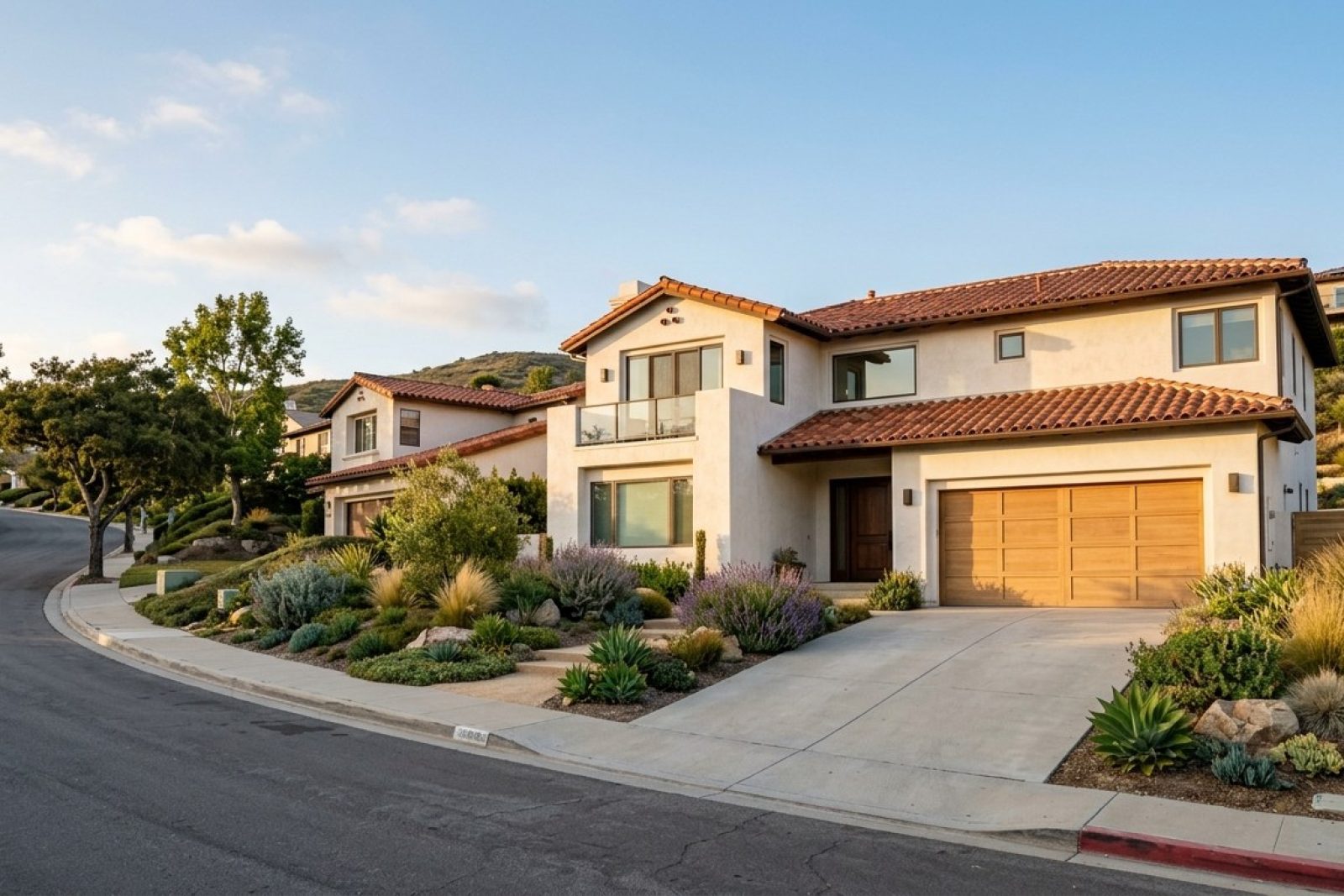
The critical constraint is the $3 million per-property coverage cap. For a beachfront single-family rental in Corona del Mar or a hillside estate in Palos Verdes with a replacement cost of $5M to $8M, the FAIR Plan alone leaves a substantial gap. Investors must purchase excess dwelling coverage through a DIC policy or a separate excess carrier to bridge that gap.
The FAIR Plan is not a substitute for comprehensive insurance—it is the foundation of a multi-layer coverage architecture that sophisticated investors build to protect high-value coastal assets.
When You Need the CA FAIR Plan
The decision to move to the FAIR Plan is rarely voluntary. It typically follows one of three triggering events:
- Non-renewal by your current carrier—the most common path. Insurers are required to provide 75 days' notice before non-renewing a policy in California. If you receive a non-renewal notice and cannot secure replacement coverage in the voluntary market within that window, the FAIR Plan becomes the default option.
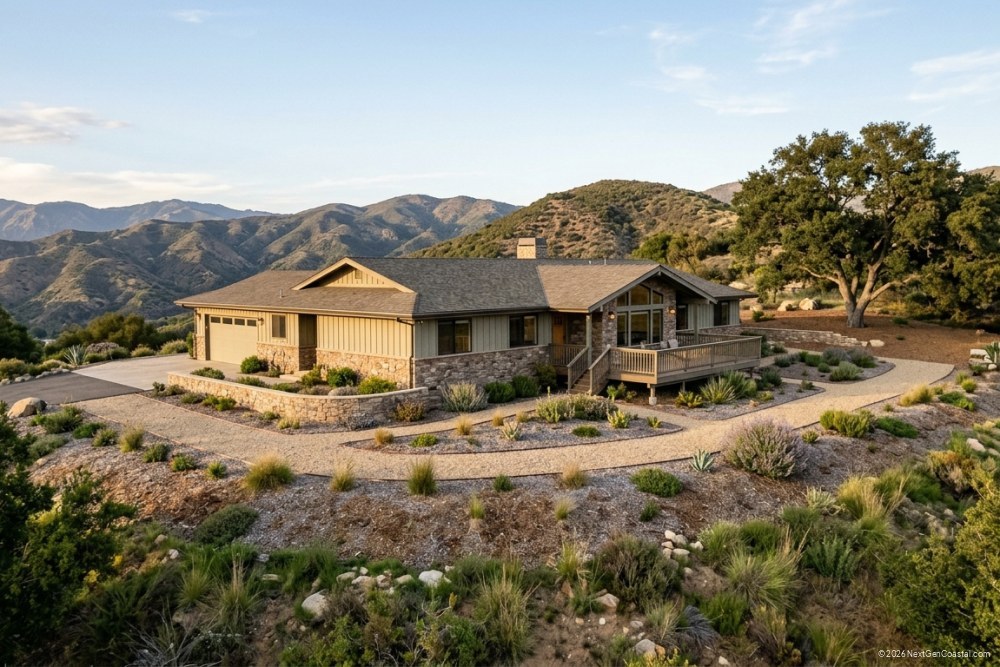
- Declination by multiple carriers—properties in Tier 2 or Tier 3 fire-hazard-severity zones, or those within 2,500 feet of wildland vegetation, are increasingly declined outright by standard carriers. After two or three declinations, brokers will route the submission directly to the FAIR Plan.
- Prohibitive premium increases—some investors receive renewal quotes that represent substantial increases over the prior year. In these cases, the FAIR Plan premium—while not inexpensive—may be significantly lower than the voluntary-market quote, making it the economically rational choice even when voluntary coverage is technically available.
For rental properties in coastal Orange County and San Diego County, the FAIR Plan has become a primary dwelling coverage option for a significant portion of properties in fire-severity zones and beachfront areas where wind and wildfire risk intersect.
Geographic Concentration and Risk Profiles
FAIR Plan penetration is highest in communities where topography, vegetation, and historical fire activity converge:
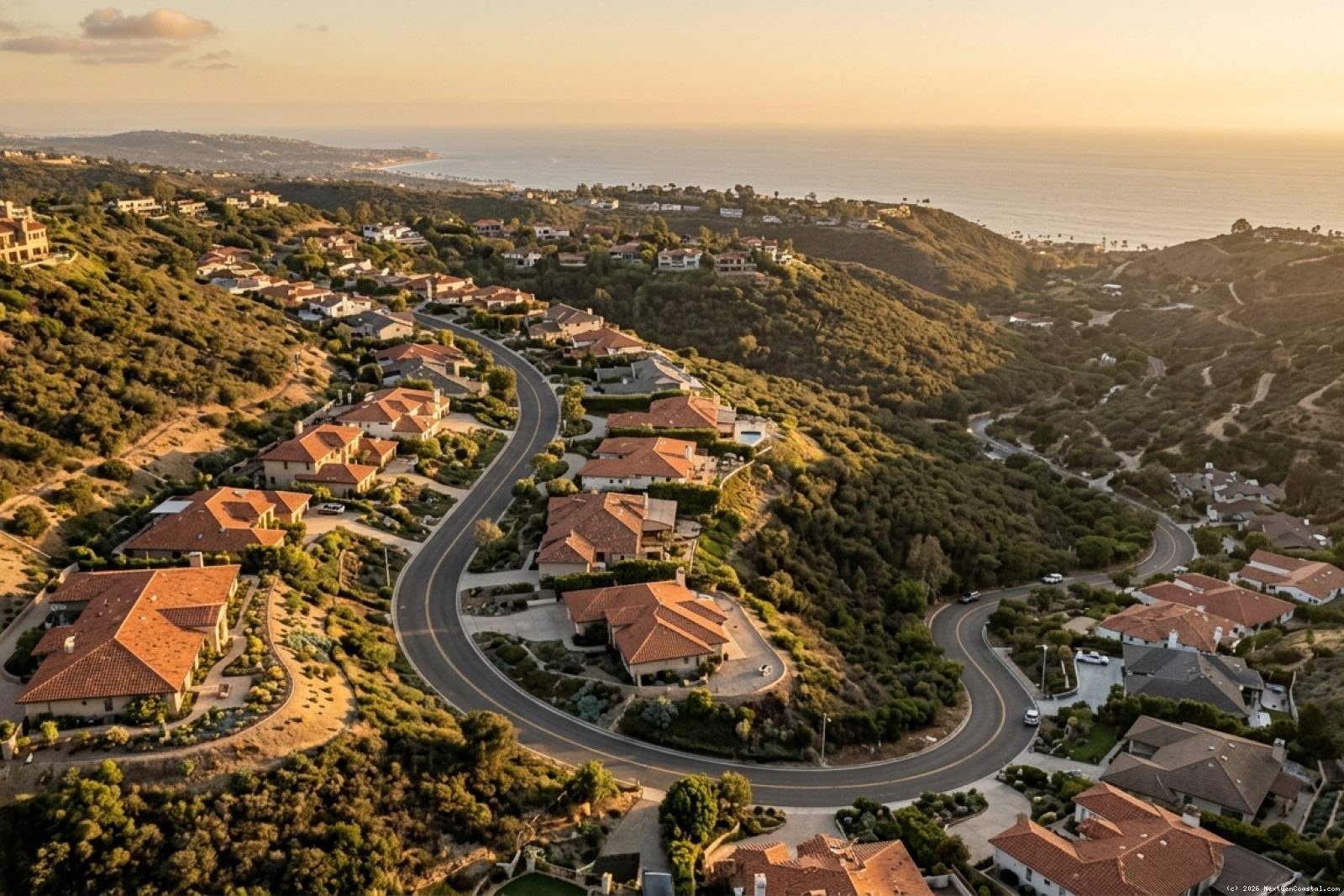
- Laguna Beach—steep canyons, dense chaparral, and a history of major fires (1993 Laguna Fire, 2007 Santiago Fire) have made FAIR Plan coverage increasingly common in the area.
- Malibu and Pacific Palisades—the Woolsey Fire (2018) and subsequent smaller events have made voluntary coverage scarce in these communities. FAIR Plan coverage is now a significant portion of the market in some areas.
- Foothill communities—Anaheim Hills, Yorba Linda, Rancho Santa Margarita, and similar inland-adjacent neighborhoods see elevated FAIR Plan adoption, driven by proximity to Cleveland National Forest and seasonal Santa Ana wind exposure.
Beachfront properties—those within 500 feet of the Pacific—face a different risk profile. Wind-driven ember cast and salt-air corrosion are the primary concerns, and while fire risk is lower than in the hills, the combination of high replacement cost and coastal exposure has led several carriers to exit the segment entirely. For high-value oceanfront rentals, the FAIR Plan typically provides the first $3M of dwelling coverage, and investors layer additional DIC policies on top to reach full replacement cost.
Coverage Gaps and Supplemental Policies

The FAIR Plan's narrow scope creates four major gaps that rental property investors must address through supplemental policies:
1. Liability Coverage
The FAIR Plan DF-3 policy includes zero liability coverage. For a rental property, this is a critical omission. Slip-and-fall claims, tenant injury, and third-party property damage are all excluded. Investors must purchase a separate dwelling liability policy or add the property to an existing umbrella liability policy.
Standalone dwelling liability policies for coastal rentals typically provide $1M to $2M per occurrence and cost $800 to $1,400 annually for a single-family rental in Orange County. For portfolios of five or more properties, a commercial umbrella policy with $5M to $10M aggregate limits is more cost-efficient, running $3,200 to $6,500 per year depending on total insured value and loss history.
2. Theft, Vandalism, and Water Damage
The FAIR Plan excludes theft, vandalism, and water damage from internal sources (burst pipes, appliance leaks, sewer backup). These perils are covered under a Difference in Conditions (DIC) policy, which is designed to fill the gaps left by the FAIR Plan.
A DIC policy for a coastal rental typically costs $2,800 to $4,100 annually and includes:
- Theft and vandalism coverage
- Water damage (excluding flood, which requires separate NFIP or private flood insurance)
- Earthquake coverage (optional endorsement, adds $1,200 to $2,800 depending on proximity to fault lines)
- Excess dwelling coverage above the FAIR Plan's $3M cap
For properties in non-FEMA flood zones but within 1,000 feet of the coast, private flood insurance is increasingly recommended. A $500K private flood policy costs $1,100 to $1,900 annually in Orange County, compared to $600 to $1,200 for an NFIP policy with the same limit—but private policies offer higher limits, replacement-cost coverage, and faster claims processing.
3. Excess Dwelling Coverage Above $3M
For properties with replacement costs exceeding $3 million, the DIC policy must include an excess dwelling endorsement. This is not automatic—investors must explicitly request coverage above the FAIR Plan cap and provide a current replacement-cost appraisal.
Excess dwelling coverage is priced on a per-$100,000 basis. For high-value properties, the investor needs substantial excess coverage. At typical market rates, the annual premium for excess dwelling coverage can be significant, in addition to the base DIC premium and the FAIR Plan premium.
4. Loss of Rents and Additional Living Expenses
The FAIR Plan DF-3 policy includes limited loss-of-rents coverage—typically 10% of the dwelling limit, or $300,000 maximum for a property insured at the $3M cap. For luxury beachfront rentals generating substantial monthly income, this may provide insufficient coverage if a major fire requires a full rebuild, which can take 24 to 36 months in coastal permitting environments.
Investors can purchase additional loss-of-rents coverage through the DIC policy, extending the benefit period to 36 months and increasing the monthly limit to match actual rent. For properties generating significant monthly rental income, additional loss-of-rents coverage costs approximately $1,800 to $2,600 annually.
Cost Structure and Premium Comparison
Total insurance costs have increased 3.5x since 2022, with FAIR Plan structure now competitive against remaining voluntary carriers.
| Label | Annual Premium ($) |
|---|---|
| 2022 Voluntary | $4,800 |
| 2025 FAIR Plan + DIC | $16,750 |
FAIR Plan dwelling coverage represents only 60% of total insurance costs when supplemental policies are included.
| Label | Annual Premium ($) |
|---|---|
| FAIR Plan Dwelling | $8,500 |
| DIC Policy | $3,450 |
| Liability Policy | $1,100 |
| Private Flood | $1,500 |
| Loss-of-Rents Extension | $2,200 |
| Total Annual Cost | $16,750 |
FAIR Plan premiums are not uniform—they vary by construction type, roof age, fire-protection class, and distance to the nearest fire station. For a 2,800-square-foot single-family rental in a Tier 2 fire-hazard zone with a tile roof and stucco exterior, the annual FAIR Plan premium for $3M dwelling coverage ranges from $7,200 to $9,800 depending on the specific ZIP code and fire-protection class.
When you add the required supplemental policies, the total annual insurance cost for a coastal rental property typically includes FAIR Plan dwelling coverage, DIC policy, dwelling liability, private flood insurance, and loss-of-rents extension. The combined cost varies significantly based on property characteristics and location.
For comparison, a standard DP-3 policy from a voluntary-market carrier for similar properties would have cost substantially less in 2022. By 2025, the few carriers still writing coastal fire risk were quoting significantly higher premiums, making the FAIR Plan + DIC structure potentially more cost-effective than the voluntary market for many properties.
Portfolio-Level Cost Optimization
Investors managing multiple coastal properties can achieve meaningful cost savings by consolidating supplemental coverage under a single blanket DIC policy and a commercial umbrella liability policy. A portfolio of eight single-family rentals with a combined insured value of $28M might structure coverage as follows:
- Eight individual FAIR Plan DF-3 policies—combined total varies by property
- Blanket DIC policy (excess dwelling, theft, vandalism, water)—$18,400
- Commercial umbrella liability ($10M aggregate)—$5,800
- Private flood (properties within 1,000 feet of coast)—varies by property
Consolidating coverage under blanket policies can result in meaningful cost savings compared to insuring each property individually with separate DIC and liability policies.
Application Process and Timeline
Applying for FAIR Plan coverage is straightforward but requires documentation that many investors do not have readily available. The process typically takes 10 to 21 days from submission to policy issuance, assuming no underwriting holds.
Required Documentation
- Property address and legal description
- Year built and square footage
- Construction type (frame, masonry, stucco)
- Roof type and age—roofs older than 20 years may require an inspection or trigger a surcharge
- Distance to nearest fire station and fire-protection class (1–10 scale)
- Proof of declination or non-renewal from at least one voluntary-market carrier (required in some cases, though not universally enforced as of 2026)
- Current replacement-cost estimate—many investors use a desktop appraisal from CoreLogic or a similar vendor, which costs $150 to $300 and is delivered in 3–5 business days
For properties with brush or vegetation within 30 feet of the structure, the FAIR Plan may require proof of defensible-space compliance under California Public Resources Code 4291. This means clearing dead vegetation, maintaining horizontal and vertical clearances, and removing overhanging branches. Non-compliance can result in a policy declination or a surcharge.
Underwriting Timeline
The FAIR Plan does not conduct physical inspections for most properties under $3M in coverage. Underwriting is based on the application, publicly available parcel data, and third-party risk scores from vendors like Verisk and CoreLogic. For properties with prior fire claims or located in Tier 3 fire zones, the FAIR Plan may order a desktop inspection using aerial imagery and street-view data, which adds time to the timeline.
Once the policy is issued, the investor has 30 days to bind supplemental DIC and liability coverage. Most brokers coordinate this in parallel, so the full coverage stack is in place on the same effective date.
Claims Experience and Loss Ratios
The FAIR Plan's claims process is slower and more bureaucratic than most voluntary-market carriers, but it is solvent and pays valid claims. The plan's financial performance has varied, with the combined ratio (losses plus expenses divided by premiums) reflecting the cost of providing coverage in high-risk areas.
For rental property investors, the key claims considerations are:
- Adjuster assignment—FAIR Plan adjusters are often independent contractors with high caseloads. Expect 7 to 14 days for an initial inspection after filing a claim, compared to 2 to 5 days with a top-tier voluntary carrier.
- Replacement-cost settlement—the FAIR Plan pays on a replacement-cost basis, but only after repairs are completed. The initial payment is actual cash value (replacement cost minus depreciation), with the depreciation holdback released upon proof of completion.
- Loss-of-rents claims—require monthly submission of rent rolls and proof that the property remains uninhabitable. The FAIR Plan does not advance loss-of-rents payments; they are reimbursed monthly in arrears.
Investors who have filed claims report that the FAIR Plan is procedurally rigid but ultimately fair. The key is documentation—keep detailed records of all repairs, invoices, and correspondence, and expect to provide more paperwork than you would with a voluntary carrier.
Legislative Outlook and Market Dynamics in 2026
California's insurance crisis has prompted significant legislative and regulatory action. In September 2025, the California Department of Insurance issued new regulations allowing insurers to use catastrophe modeling in rate filings—a change that may bring some carriers back into the coastal market by allowing them to price risk more accurately.
However, the impact will not be immediate. Insurers must file new rates, undergo regulatory review, and rebuild underwriting infrastructure. Industry observers expect a gradual increase in voluntary-market capacity for coastal properties over time. In the interim, the FAIR Plan remains the primary option for most investors in fire-severity zones.
Two additional legislative developments are worth monitoring:
- AB 1706 (2025)—according to legislative proposals, would require the FAIR Plan to offer liability coverage as an optional endorsement by January 1, 2027. If implemented, this would eliminate the need for a separate dwelling liability policy, reducing administrative complexity.
- SB 894 (2025)—according to legislative proposals, would propose increasing the FAIR Plan's per-property coverage cap from $3M to $5M for properties in counties with median home values above $1.2M. This would reduce the excess-dwelling gap for high-value coastal rentals, though it would likely increase FAIR Plan premiums.
The investors who understand the FAIR Plan's role as a foundational layer—and who structure supplemental coverage proactively—are the ones maintaining full portfolio protection while competitors scramble for alternatives.
Strategic Considerations for Coastal Rental Portfolios
For investors holding or acquiring coastal rental properties in 2026, the insurance landscape is a material input to underwriting and portfolio construction. Three strategic considerations stand out:
1. Acquisition Underwriting
Insurance cost is no longer a rounding error—it is a line-item expense that can materially impact a deal's returns. For coastal acquisitions, the difference between pre-2023 insurance costs and current costs can be substantial. Sophisticated investors now request insurance quotes as part of due diligence, treating the premium as a fixed operating expense rather than an estimate. For properties in Tier 2 or Tier 3 fire zones, budget 0.35% to 0.55% of replacement cost for total annual insurance expense (FAIR Plan + DIC + liability + flood).
2. Portfolio Concentration Risk
The FAIR Plan's solvency is backstopped by assessments on member insurers. Investors with more than 40% of portfolio value in FAIR Plan-insured properties should consider geographic diversification or partial reallocation to lower-risk submarkets to manage concentration risk.
For a $42M portfolio with properties distributed across multiple coastal and inland areas, the concentration risk is more manageable than a portfolio heavily concentrated in a single high-risk area.
3. Tenant Communication and Lease Language
Tenants in FAIR Plan-insured properties should be informed that the landlord's policy does not cover tenant personal property or tenant liability. Many leases now include a mandatory renters insurance clause requiring tenants to carry $100,000 in personal property coverage and $300,000 in liability coverage, with the landlord named as an additional interested party.
For luxury coastal rentals, consider requiring $500,000 in tenant liability coverage—the incremental cost to the tenant is minimal, and it provides an additional layer of protection in the event of a tenant-caused fire or water-damage event.
Conclusion: Building a Resilient Coverage Architecture
The CA FAIR Plan is not a perfect solution, but it is a functional one. For coastal rental property investors navigating a voluntary market that has largely exited high-fire-risk zones, the FAIR Plan provides the foundational dwelling coverage necessary to maintain portfolio operations while supplemental DIC, liability, and flood policies fill the gaps.
The total cost is higher than it was in 2022, and the claims process is more cumbersome, but the alternative—going uninsured or accepting sub-limit coverage—is not viable for institutional-quality portfolios. The investors who treat insurance as a strategic layer of the capital stack, who budget accurately for the FAIR Plan + DIC structure, and who monitor legislative developments for opportunities to optimize coverage are the ones who will continue to generate risk-adjusted returns in California's coastal rental markets.
The FAIR Plan is not the end of coastal real estate investment—it is the new baseline for how sophisticated investors protect high-value rental portfolios in a climate-adjusted risk environment.
Frequently Asked Questions
What is the maximum coverage the CA FAIR Plan provides for a single rental property?
How much does FAIR Plan insurance cost compared to standard homeowners insurance?
Do I need proof that I was declined by other insurers before I can get a FAIR Plan policy?
What is a DIC policy and why do I need it with the FAIR Plan?
Can I insure multiple rental properties under a single FAIR Plan policy?