What SB 9 Ministerially Permits, The Inland Baseline
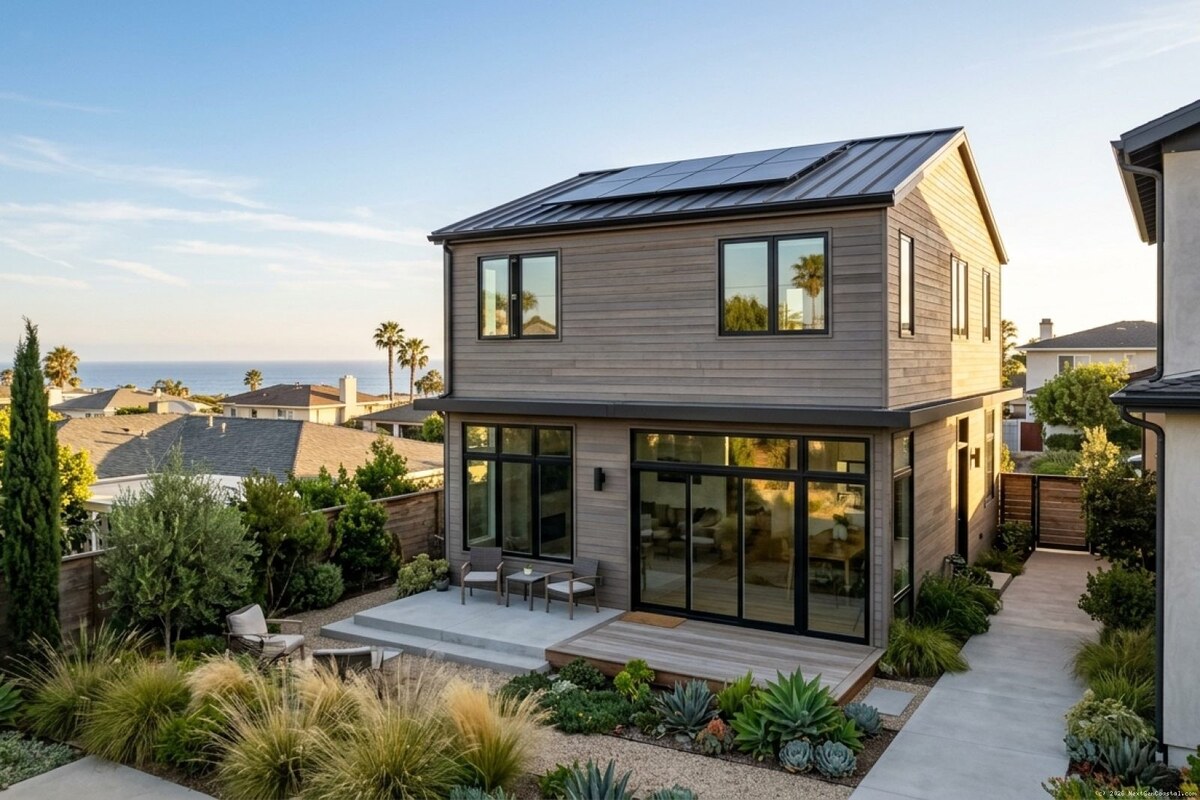
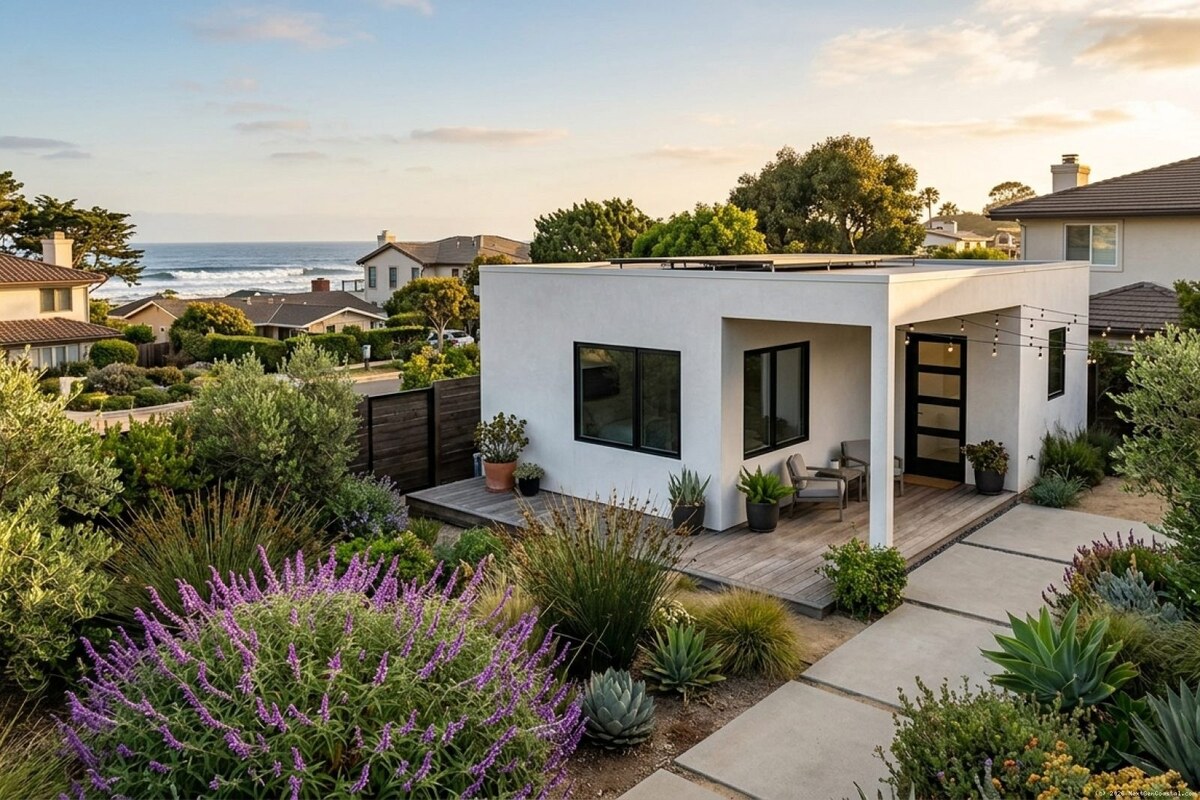
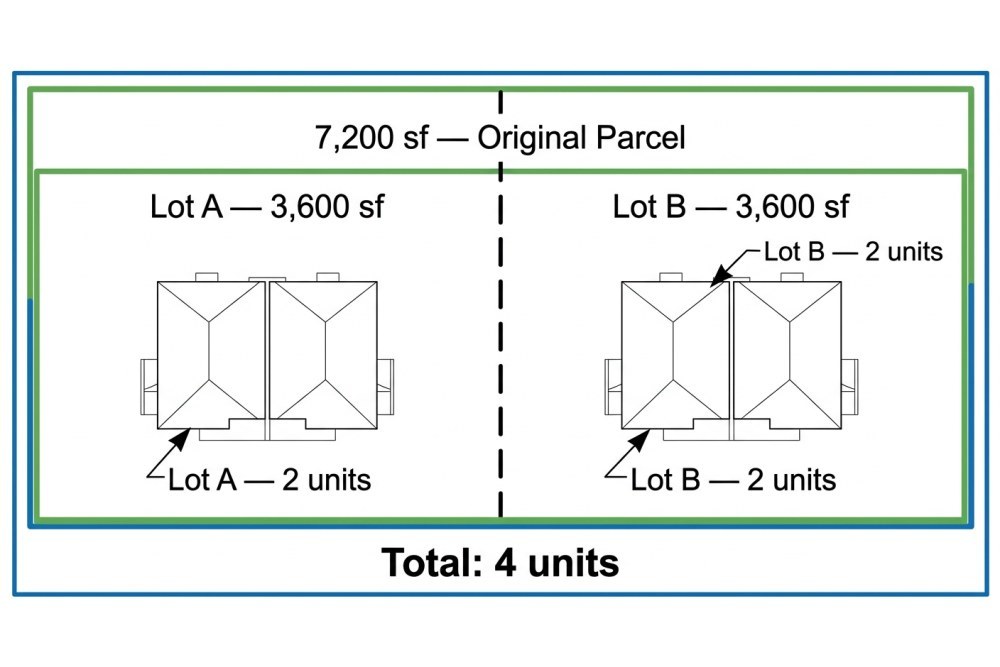
A city must approve an urban lot split ministerially if the parcel meets the eligibility criteria set forth in Gov. Code § 65852.21: zoned single-family, outside high fire severity zones (with certain exceptions), not designated as historic, and free of recorded restrictive covenants from prior subdivisions that prohibit further splits. Each resulting parcel must measure at least 1,200 square feet. The owner may then construct two units on each parcel, configured as a duplex or as detached structures, producing four units where one single-family residence previously stood.
Interactive Tool
SB 9 Coastal California Lot-Split Feasibility Calculator
Model the all-in basis, carrying cost, and exit IRR for ministerial vs. discretionary SB 9 lot splits

60-day lot split + 60-day two-unit approval + 12-month construction.
Construction + site work + soft costs.
Market rent for new construction.
Minimum 3 years due to owner-occupancy affidavit.
 Built by NextGen Coastal
Ministerial approval precludes public hearings, discretionary design review, and CEQA analysis beyond the categorical exemption. Objective standards remain enforceable (setbacks, lot coverage, parking capped at one space per unit, height limits), but subjective denial grounds are off the table. The statutory clock runs 60 days for the lot-split approval, then another 60 days for the two-unit development permit on each resulting parcel.
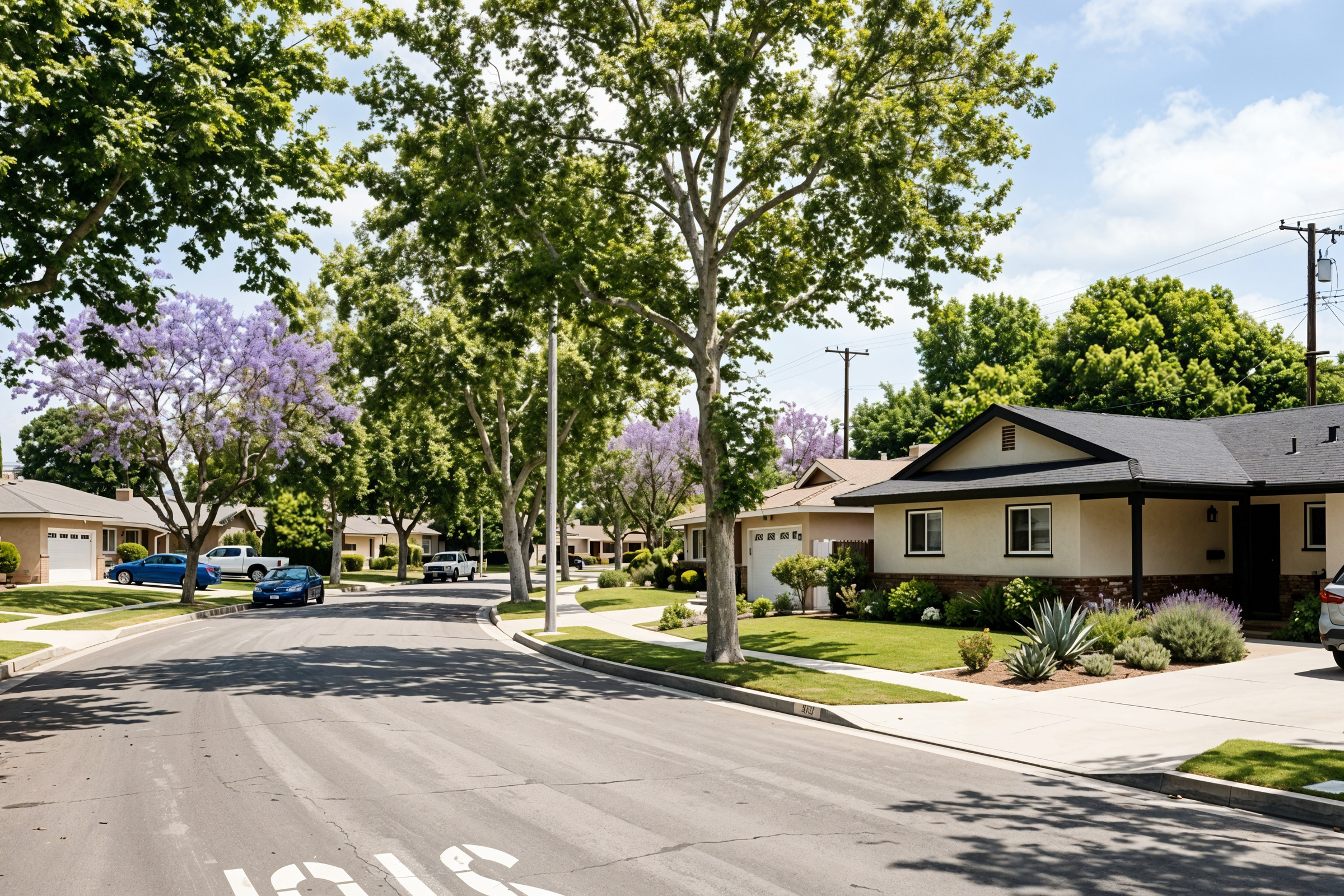
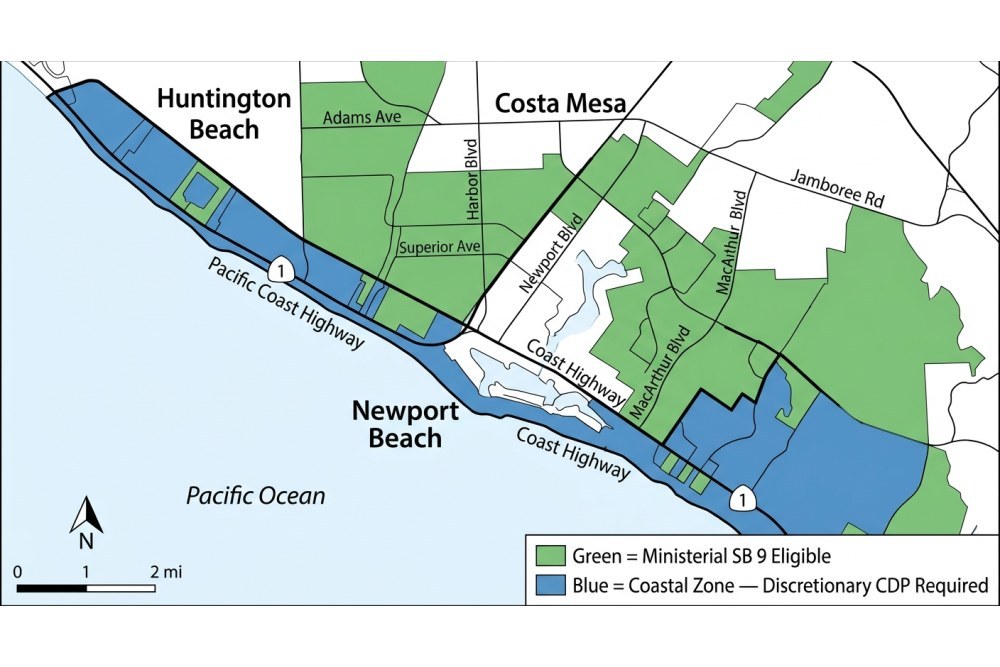
This is what SB 9 accomplishes in Costa Mesa, Irvine, Tustin, and Santa Ana. It does not apply in Newport Beach, Laguna Beach, or any parcel located seaward of the coastal-zone boundary line.
The Coastal Zone Carveout, § 65852.21(a)(2)(D)
Coastal Zone discretionary review adds 20 months to the entitlement timeline, tripling carrying costs and compressing IRR.
View chart data
| Category | Months from application to certificate of occupancy |
|---|---|
| Ministerial (Inland) | 16 |
| Discretionary (Coastal Zone) | 36 |
§ 65852.21(a)(2)(D) exempts parcels within the Coastal Zone, as defined by the California Coastal Act, from the ministerial approval mandate. Jurisdiction reverts to the Coastal Commission, and the city's Local Coastal Program controls the outcome. SB 9 is not banned in these areas; it simply operates under the pre-SB-9 discretionary framework.
If the LCP permits lot splits and multi-unit construction, a four-unit outcome remains achievable. You will file a coastal development permit, endure design review, and await CCC certification if the LCP requires state-level approval. The timeline expands from 60 days to somewhere between 18 and 36 months, contingent on the city's LCP complexity and the commission's workload.
The carveout filters opportunities rather than eliminating them. What matters is whether the discretionary pathway still generates acceptable returns after you account for the extended timeline, the carrying cost during entitlement, and the three-year owner-occupancy requirement.
The Owner-Occupancy Affidavit, 3-Year Minimum
Gov. Code § 66411.7(g) requires the property owner to execute an affidavit attesting that they will occupy one of the units as their principal residence for no less than three years from the date the lot split is recorded. This obligation applies whether the approval is ministerial or discretionary. The affidavit becomes a recorded instrument, and noncompliance permits the city to rescind the split.
For coastal investors, this provision constrains liquidity. You cannot split the lot, construct four units, and exit within twelve months. One unit must house the owner for three full years; the remaining three may be leased. The pure merchant-builder model (split, build, flip) collapses under this requirement. The play now favors long-term holders willing to live on-site while capturing rental income from the other units.
A client in La Jolla signed the affidavit, built four units, then leased all four within the first year. A neighbor complained. The city initiated rescission proceedings, and the owner faced the prospect of unwinding an illegal subdivision while managing tenant displacement. The affidavit is enforceable, not ceremonial.
Eligibility Filters, What Disqualifies a Parcel
Beyond the Coastal Zone boundary, several statutory filters disqualify parcels from SB 9 treatment:
- The parcel must carry single-family residential zoning. Mixed-use, commercial, and multi-family designations are excluded.
- Parcels within a very high fire hazard severity zone are ineligible unless the city has adopted fire-safe development standards and the parcel complies with those standards.
- Parcels listed on a national, state, or local historic register cannot be split under SB 9.
- Recorded restrictive covenants from earlier subdivisions that prohibit further splits disqualify the parcel, though SB 9 overrides such covenants for ministerial splits outside the Coastal Zone. Inside the Coastal Zone, where approval is discretionary, the LCP may enforce the covenant.
- Each post-split parcel must measure at least 1,200 square feet. A 2,400 sf lot qualifies; a 2,000 sf lot does not.
Coastal parcels introduce an additional filter: confirm whether the property sits seaward or landward of the coastal-zone boundary. The boundary does not align with city limits or ZIP codes. In Newport Beach, parcels east of Coast Highway often fall outside the zone; those to the west fall within it. Laguna Beach lies entirely within the Coastal Zone. Huntington Beach's boundary approximates Pacific Coast Highway, but exceptions exist block by block.
Verify Coastal Zone status with the city planning department before underwriting. I have reviewed acquisitions in Corona del Mar where the buyer assumed ministerial approval, only to learn the parcel required a 24-month LCP amendment and CCC certification.
Coastal-City Eligibility Matrix
The table below summarizes Coastal Zone status, LCP discretionary pathways, and entitlement timelines for 15 major coastal cities in Southern California. Confirm city-specific LCP provisions and current processing times with the local planning department before proceeding.
| City | Coastal Zone Status | LCP Discretionary Path | Typical Timeline | Example Parcel Scenario |
|---|---|---|---|---|
| Newport Beach | Partial, seaward of Coast Hwy | Available via CDP | 18–24 months | Corona del Mar 6,800 sf lot, CDP required, CCC certification likely |
| Huntington Beach | Partial, seaward of PCH | Available via CDP | 18–30 months | Sunset Beach parcel, LCP design standards apply, parking waiver difficult |
| Laguna Beach | Entire city | Available via CDP | 24–36 months | Village parcel, hillside overlay, view-corridor review, CCC appeal likely |
| Dana Point | Entire city | Available via CDP | 18–24 months | Lantern District lot, LCP allows splits, but design review is strict |
| San Clemente | Entire city | Available via CDP | 18–30 months | Pier Bowl parcel, CCC jurisdiction, public-access findings required |
| Long Beach | Partial, coastal strip | Available via CDP | 18–24 months | Belmont Shore lot, LCP permits splits, but parking is a binding constraint |
| Santa Monica | Entire city | Available via CDP | 24–36 months | North of Montana parcel, rent control applies to new units, kills economics |
| Malibu | Entire city | Available via CDP | 30–48 months | Point Dume lot, septic capacity, fire zone, CCC appeal, longest timeline |
| Venice | Entire neighborhood | Available via CDP | 24–36 months | Walk-street parcel, parking waiver required, CCC public-access review |
| Manhattan Beach | Entire city | Available via CDP | 18–30 months | Sand Section lot, LCP allows splits, but design review is highly subjective |
| Hermosa Beach | Entire city | Available via CDP | 18–24 months | Downtown parcel, parking is the binding constraint, waiver unlikely |
| Carlsbad | Partial, coastal strip | Available via CDP | 18–24 months | Village parcel, LCP permits splits, timeline is faster than LA/OC coastal cities |
| Encinitas | Entire city | Available via CDP | 24–30 months | Leucadia lot, CCC jurisdiction, public-access findings, design review |
| Oceanside | Partial, coastal strip | Available via CDP | 18–24 months | Downtown parcel, LCP allows splits, parking waiver possible |
| Coronado | Entire city | Available via CDP | 24–36 months | Village parcel, historic overlay, CCC appeal likely, longest SD timeline |
Worked Example 1: Costa Mesa Inland Parcel, Ministerial Path
Consider a 7,200 square-foot parcel zoned R-1, located east of Harbor Boulevard (outside the Coastal Zone). The existing improvement is a 1,950 sf single-family residence built in 1968.
Entitlement Strategy
Split the lot into two 3,600 sf parcels. Construct a duplex on each, yielding four units total. File the lot-split application, obtain approval within 60 days, then file two-unit development permits for each parcel (another 60 days per parcel). Construction takes 12 months. Total elapsed time from application to certificate of occupancy: 16 months.
Owner-Occupancy Requirement
The investor occupies one unit as principal residence for three years. The remaining three units are leased at market rates.
Rental Economics
New-construction two-bedroom units in Costa Mesa lease at approximately $3,200 per month (2-bed, 2-bath, 1,100 sf). Three units generate gross annual income of $115,200.
Development Budget
Construction costs run $400,000 per duplex structure (two units), totaling $800,000 for both buildings. Site work, utility connections, and soft costs add another $150,000. All-in development cost: $950,000.
Basis Calculation
Acquisition at assessed value plus development cost yields a total basis of $2.35 million.
Exit Scenario
After the three-year owner-occupancy period expires, the investor sells. Four-unit properties in Costa Mesa traded at cap rates between 5.2% and 5.8% in 2024, according to CoStar market reports. At a 5.5% cap rate, a property generating $138,240 in NOI (after 10% operating expense ratio) commands a valuation of approximately $2.51 million. Transaction costs at 6% reduce net proceeds to $2.36 million, producing a modest gain on sale but capturing $345,600 in rental income over the hold period (three units for three years). After debt service and operating expenses, the investor nets roughly $250,000 in total return.
The ministerial pathway produces acceptable returns if you can tolerate three years of owner-occupancy and if Costa Mesa rents hold at $3,200 per unit.
Worked Example 2: Corona del Mar Coastal Parcel, Discretionary Path
The 36-month coastal entitlement timeline reduces annualized IRR by 70% compared to the ministerial inland pathway.
View chart data
| Category | Annualized IRR (approximate) |
|---|---|
| Costa Mesa (Ministerial) | 0.1% |
| Corona del Mar (Coastal) | 0.0% |
Evaluate a 6,800 square-foot parcel zoned R-1, located seaward of Coast Highway in Corona del Mar (within the Coastal Zone). The existing structure is a 2,100 sf single-family home built in 1955.
Entitlement Path
File a coastal development permit application, undergo design review, and await CCC certification if the Newport Beach LCP requires it. Typical processing time: 24 months from application to CDP issuance, followed by 12 months of construction. Total: 36 months to certificate of occupancy.
Owner-Occupancy Commitment
The investor occupies one of the four units for three years, beginning after construction completes. The other three units are leased.
Market Rents
Corona del Mar new-construction units (2-bed, 2-bath, 1,200 sf, ocean-proximate) command $5,800 per month. Three units yield $208,800 annually.
Construction Economics
Coastal construction premiums and design-review compliance push per-duplex costs to $550,000, totaling $1.1 million for both structures. Site work, utilities, soft costs, and CDP fees add $250,000. Development cost: $1.35 million.
Carrying Costs
A 36-month entitlement and construction timeline imposes 24 months of pre-construction carrying costs. At 6% interest on a $3.2 million acquisition loan, interest expense totals $384,000. Property taxes during the same period (estimated at $4,000 per month) add $96,000. Combined carrying cost: $480,000.
Revised Basis
Acquisition, development, and carry sum to $5.03 million.
Exit Economics
The three-year owner-occupancy period begins after construction, meaning the investor reaches a sale-eligible position in year six from acquisition. Four-unit properties in Corona del Mar traded at cap rates between 4.2% and 4.8% in 2024, per CoStar. At a 4.5% cap, a property generating $250,560 in NOI (after 10% expenses) is worth $5.57 million. Net proceeds after 6% transaction cost: $5.24 million. The investor realizes $210,000 in sale proceeds, plus $626,400 in rental income over the three-year occupancy period (three units at $208,800 annually). Total return of $836,400 over six years translates to an approximate 2.8% annualized IRR on the $5.03 million basis.
The discretionary pathway barely clears the hurdle rate, and only if you accept a six-year hold, occupy one unit yourself, and achieve both the rent and exit-cap assumptions. For most investors, the 36-month entitlement drag renders the play uneconomic.
Parking, Setback, and Minimum-Lot-Size Limits
Cities may impose objective development standards on SB 9 projects, even when approval is ministerial. The constraints most frequently encountered:
- Parking may be required at a ratio of up to one space per unit, but no higher. A four-unit project therefore triggers a four-space requirement. Tandem configurations satisfy the standard; reliance on street parking does not. For coastal parcels with narrow lot dimensions and no alley access, parking often becomes the binding constraint.
- Setback requirements must align with those applicable to single-family homes in the same zone. R-1 zones typically impose 5-foot side setbacks, 15-foot front setbacks, and 20-foot rear setbacks. Cities cannot apply more restrictive setbacks to SB 9 projects than they apply to conventional single-family construction.
- Each post-split parcel must measure at least 1,200 square feet. State law establishes this floor; cities cannot raise it. A 2,400 sf parcel qualifies for a split; a 2,000 sf parcel does not.
- Lot-coverage and floor-area-ratio caps remain enforceable if they apply uniformly across the zone. Coastal cities often enforce FAR limits between 0.4 and 0.6, which constrain buildable square footage on smaller parcels. A 3,400 sf lot with a 0.5 FAR cap supports only 1,700 sf of structure, a tight fit for a two-unit duplex.
Discretionary coastal projects face additional LCP-based design criteria: building height, roof pitch, fenestration patterns, exterior materials, landscaping composition, and view-corridor preservation. These standards are subjective and city-specific. Laguna Beach's design-review process can extend the timeline by 6 to 12 months beyond the CDP approval date.
Interaction with AB 2221, ADUs on SB 9 Parcels
AB 2221 permits construction of one ADU on each parcel created by an SB 9 lot split, subject to the same ministerial approval process that governs ADU applications generally. In theory, this allows two ADUs (one per post-split parcel) in addition to the four primary units, yielding six units total.
AB 2221 and SB 9 do not stack in the manner many investors assume. You cannot layer a duplex, an ADU, and a JADU on each parcel. The statute caps ADU construction at one per parcel, and JADUs must be carved from the interior of a primary unit, reducing its leasable area.
For coastal parcels, AB 2221 often presents a superior alternative to SB 9. A single 6,800 sf lot can accommodate one primary residence, one detached ADU, and one JADU (three units total) without triggering a lot split, and the ADU receives ministerial approval even within the Coastal Zone, subject to coastal-development-permit requirements for new construction in certain overlay zones. The timeline runs 12 to 18 months versus 24 to 36 months for an SB 9 discretionary split, and no owner-occupancy affidavit is required.
We addressed the AB 2221 coastal pathway in prior articles on OC coastal setback ADU entitlement and LA coastal ADU entitlement CCC AB 2221. For most coastal investors, the ADU strategy delivers better risk-adjusted returns than the SB 9 strategy.
SB 9 vs. AB 1033 ADU Sale, Value-Creation Strategies
AB 1033 authorizes cities to adopt ordinances permitting separate sale of an ADU constructed on a single-family parcel, creating a condominium-style ownership structure in which the ADU receives its own assessor's parcel number and can be sold independently of the primary residence.
SB 9 and AB 1033 pursue different value-creation objectives. SB 9 produces four rental units distributed across two parcels; AB 1033 produces one for-sale ADU on the original parcel. The former is an income play; the latter is a liquidity play.
Coastal California cities have adopted AB 1033 slowly. As of early 2025, only a small number of jurisdictions have enacted the enabling ordinance, and none of the major Orange County coastal cities (Newport Beach, Laguna Beach, Dana Point, San Clemente) have done so. San Diego adopted an AB 1033 ordinance in late 2024, but it applies only to parcels outside the Coastal Zone.
The decision tree is straightforward. If the city has adopted AB 1033 and the parcel lies outside the Coastal Zone, the ADU-sale pathway may provide faster capital recovery. If the city has not adopted AB 1033, or if the parcel sits within the Coastal Zone, the SB 9 rental model (or the AB 2221 ADU-rental model) represents the only available value-creation mechanism.
SB 423 Streamlined Approval Interaction
SB 423 extends the SB 35 streamlined ministerial approval process to qualifying housing developments in cities that have failed to meet their Regional Housing Needs Allocation targets. Qualifying projects must be 100% affordable (or at least 50% affordable in certain jurisdictions), and the city must be in noncompliance with its housing-element obligations.
SB 423 and SB 9 operate on parallel statutory tracks and do not directly interact. For coastal investors, however, SB 423 offers a potential mechanism to circumvent the Coastal Zone carveout: if the city is out of RHNA compliance and the project incorporates an affordable-housing component, the investor may be able to pursue streamlined approval under SB 423 even within the Coastal Zone, bypassing LCP discretionary review.
The constraint is the affordability requirement. A market-rate SB 9 project does not qualify for SB 423 streamlining. A project that includes one or two affordable units (restricted to 80% of area median income or below) may qualify, and the streamlined timeline is 90 days versus 24 to 36 months for a discretionary CDP.
We have not yet encountered an SB 423 + SB 9 hybrid in coastal California, but the statutory framework permits it. Investors willing to accept below-market rents on a subset of units in exchange for a compressed entitlement timeline should explore this pathway.
Common Failure Modes, What Kills the Deal
Five failure patterns recur across SB 9 projects in coastal California:
- Investors acquire parcels in Corona del Mar or Laguna Beach under the assumption that SB 9 triggers ministerial approval, only to discover the Coastal Zone exemption. Confirm zoning and Coastal Zone status before you close escrow.
- Owners execute the owner-occupancy affidavit but lease all four units within the first twelve months. If the city learns of the violation (often via neighbor complaint), it can rescind the lot split. The rescission process typically requires reconveyance of the parcels, termination of tenant leases, and refund of any proceeds from separate parcel sales.
- Owners commence construction of all four units on the original parcel before recording the lot split. The city treats this as an illegal four-unit development on a single-family parcel and issues a stop-work order. The lot split must be recorded before construction begins on the second parcel.
- Investors overlook recorded CC&Rs from earlier subdivisions that prohibit further splits. SB 9 overrides such covenants for ministerial splits outside the Coastal Zone, but inside the zone, where approval is discretionary, the LCP may enforce the restriction.
- Parcels within very high fire hazard severity zones are disqualified unless the city has adopted fire-safe development standards. Hillside parcels in Laguna Beach, Malibu, and portions of San Clemente fall within VHFHSZ boundaries. Always cross-reference the city's VHFHSZ map before underwriting.
The Coastal Zone carveout is jurisdictional, not discretionary. Investors who assume they can invoke SB 9 to bypass CCC review will encounter rescission orders, stop-work notices, and potential liability. The discretionary path takes longer, but it is the only compliant path for coastal parcels.
SB 9 Coastal California Eligibility Checklist
Before underwriting an SB 9 lot split in coastal California, verify the following conditions:
- Parcel carries single-family residential zoning (R-1 or equivalent).
- Parcel measures at least 2,400 square feet, allowing creation of two 1,200 sf parcels post-split.
- Parcel lies outside the Coastal Zone (for ministerial approval) or the city's LCP permits discretionary lot splits (for coastal parcels).
- Parcel is not located within a very high fire hazard severity zone, or the city has adopted fire-safe development standards and the parcel complies.
- Parcel does not appear on a national, state, or local historic register.
- No recorded restrictive covenant from a prior subdivision prohibits further splits, or (if inside the Coastal Zone) confirm the LCP disregards such covenants.
- Owner is prepared to execute an owner-occupancy affidavit and occupy one unit for three years.
- Owner has confirmed parking, setback, and FAR constraints with the city planning department.
- Owner has budgeted for a 24 to 36 month timeline if the parcel is inside the Coastal Zone.
If all conditions are satisfied, the SB 9 strategy may be viable. If any condition fails, consider the AB 2221 ADU pathway instead.
How NextGen Coastal Navigates Coastal Entitlement
NextGen Coastal manages over 200 units across Orange County, Los Angeles, and San Diego coastal markets. We have guided clients through ministerial ADU approvals, discretionary CDP processes, and hybrid SB 9 entitlements in jurisdictions ranging from Laguna Beach to La Jolla.
When a client asks whether an SB 9 split is economically viable, we begin by pulling the Coastal Zone map and confirming parcel status with the city. We model the discretionary timeline, quantify carrying costs during entitlement, and stress-test rent and exit-cap assumptions against live portfolio data. If the numbers support the play, we connect the client with entitlement counsel and coordinate the CDP submission. If the numbers do not support it, we present the AB 2221 ADU alternative, which often delivers comparable rental income with lower execution risk and a shorter timeline.
Our 5.9% management fee includes entitlement consulting for value-add projects. We do not bill separately for zoning research, LCP review, or contractor coordination. The service is embedded, because we recognize that coastal rental economics hinge on entitlement execution, not leasing velocity.
If you are evaluating an SB 9 play in coastal California and you want a realistic assessment of the timeline, the owner-occupancy constraint, and the discretionary-path economics, contact us. We will tell you whether the deal pencils, and if it does not, we will show you what does.
Frequently Asked Questions
Does SB 9 apply inside the California Coastal Zone?
What is the owner-occupancy requirement for SB 9 lot splits?
Can I build an ADU on each parcel after an SB 9 lot split?
How long does a discretionary SB 9 lot split take in the Coastal Zone?
What disqualifies a parcel from SB 9 eligibility?