The Regulatory Floor: What the Law Requires
California Insurance Code § 678 gives you 60 days' written notice before a carrier can non-renew a homeowners policy. The notice must state the reason — wildfire exposure, brush clearance deficiency, roof condition, claims history, or underwriting guidelines. Non-renewal is distinct from cancellation (mid-term termination for non-payment or material misrepresentation) and rescission (voiding the policy ab initio for fraud). Non-renewal happens at the policy anniversary; you have the full 60 days to cure the cited deficiency or find replacement coverage.
Section 675.1 and SB 824 impose post-disaster moratoriums: carriers cannot non-renew policies within or adjacent to a declared disaster area for one year after the declaration. The California Department of Insurance (CDI) publishes moratorium ZIP codes on its website; if your property falls inside the perimeter, your carrier must offer renewal even if underwriting guidelines would otherwise trigger non-renewal. According to industry reports and regulatory guidance, some carriers are cautiously re-entering WUI markets in 2026, but the coverage comes at elevated premiums and with tighter underwriting (Class A roof, 100-foot defensible space, ember-resistant vents, and annual brush-clearance certification).
When you receive the non-renewal letter, read it twice. Identify the cited reason. If it's curable — roof replacement, brush clearance, tree trimming, gutter cleaning — you have 60 days to remediate and submit proof. If the carrier accepts the cure, they must offer renewal. If the reason is non-curable (geographic underwriting, portfolio rebalancing, reinsurance treaty limits), you move immediately to the marketplace ladder.
The 60-Day Triage Workflow
Day 1: Open the letter, note the effective date, and calendar the 60-day deadline. Forward the letter to your property manager (if you work with us at NextGen Coastal, we flag non-renewals in our quarterly owner reports and coordinate the response). Pull your prior policy dec page, your most recent inspection report, and any mitigation work orders (roof, HVAC, electrical panel upgrades) completed in the last 24 months.
Day 2–7: If the cited reason is defensible-space non-compliance, hire a certified wildfire-mitigation contractor to perform a CAL FIRE-compliant inspection. The contractor will measure the 0–5 foot ember-resistant zone (no combustibles, hardscape or succulent groundcover only), the 5–30 foot reduced-fuel zone (horizontal clearance, vertical separation, ladder-fuel removal), and the 30–100 foot extended zone (tree thinning, dead-wood removal). If your property is on a slope, the clearance extends downhill. Submit the inspection report and remediation plan to the carrier within 14 days of the non-renewal notice.
Day 8–30: If the reason is roof condition, obtain a contractor's certification that the roof is Class A fire-rated (composition shingle, tile, or metal with UL 790 Class A rating) and has at least 5 years of serviceable life remaining. If the roof fails, replace it and submit the permit sign-off and manufacturer's warranty. The carrier may agree to renew if you cure within 30 days; some will not, citing underwriting discretion.
Day 31–60: If the carrier declines to renew despite your cure, or if the reason is non-curable, you move to the marketplace ladder. Start with admitted-carrier surplus capacity (carriers still writing new business in your ZIP code), then non-admitted excess-and-surplus (E&S) markets, then the FAIR Plan as last resort. Do not let the 60-day window close without replacement coverage in place — a coverage gap voids your mortgage and exposes you to personal liability.
The Marketplace Ladder: Admitted, E&S, and FAIR Plan
The California insurance market has three tiers. Admitted carriers are licensed by the CDI, participate in the California Insurance Guarantee Association (CIGA), and file rates with the Department. As of 2026, the admitted carriers still writing coastal California homeowners policies — with significant geographic and underwriting restrictions — include Chubb (high-net-worth only, $2M+ dwelling), USAA (military-affiliated only), and a handful of regional mutuals. State Farm, Allstate, and Farmers have suspended new-business writing in most WUI ZIP codes and are non-renewing existing policies at renewal.
When admitted capacity is exhausted, you move to non-admitted excess-and-surplus (E&S) markets. E&S carriers are not licensed in California but are eligible surplus-lines insurers under Insurance Code § 1760 et seq. They do not participate in CIGA, do not file rates, and charge market-based premiums. E&S carriers active in California coastal and WUI markets include Lloyd's of London syndicates (via wholesale brokers like RT Specialty and CRC), Lexington Insurance (AIG), Scottsdale Insurance Company, and other specialty carriers. E&S premiums typically run 2x–3x prior admitted-carrier rates, and underwriting is strict: recent (within 5 years) claims history, roof age, defensible space, and proximity to prior fire perimeters all factor into the quote. You must work through a licensed surplus-lines broker; your retail agent will refer you.
If E&S markets decline or quote premiums you cannot underwrite, the last resort is the California FAIR Plan. The FAIR Plan is a state-mandated insurer of last resort, established under Insurance Code § 10090 et seq. and funded by assessments on all admitted carriers. The FAIR Plan covers fire peril only — no liability, no theft, no water damage, no personal property beyond the dwelling structure. The dwelling limit is capped at $3 million for residential properties and $20 million for commercial. If your replacement cost exceeds $3 million, you must self-insure the excess or find a surplus-lines carrier willing to write a difference-in-conditions (DIC) policy over the FAIR Plan base.
The FAIR Plan does not cover liability. You must purchase a separate personal-liability umbrella policy (typically $1M–$5M limits) to satisfy your mortgage and protect against slip-and-fall, dog-bite, or other premises-liability claims. The FAIR Plan also does not cover loss of use (additional living expenses if the home is uninhabitable after a fire). A DIC policy wraps over the FAIR Plan and fills these gaps — liability, theft, water, personal property, loss of use — bringing your coverage back to an HO-3 equivalent. DIC carriers active in California include Chubb, AIG Private Client Group, and PURE Insurance. DIC premiums add another 50%–100% on top of the FAIR Plan premium.

FAIR Plan Mechanics and the DIC Overlay
Applying to the FAIR Plan is straightforward but requires disclosure discipline. The application asks for prior-carrier information, claims history (5 years), and property details (year built, roof type, square footage, construction class, proximity to fire station and hydrant). Misrepresenting claims history or failing to disclose a prior non-renewal can void the policy. The FAIR Plan does not inspect before binding; they issue coverage based on the application and reserve the right to inspect within 60 days of binding. If the inspection reveals undisclosed conditions (non-compliant roof, excessive vegetation, deferred maintenance), the FAIR Plan can rescind or non-renew at the first anniversary.
FAIR Plan premiums are set by statute and vary by territory, construction class, and coverage amount. For a $1.8 million replacement-cost single-family home in a high-risk coastal territory, the annual FAIR Plan premium is typically in the range of $6,000–$8,000 for fire coverage only. Add a $2 million DIC policy (liability, theft, water, loss of use) at $3,000–$5,000/year, and your all-in annual premium could range from $9,000–$13,000 — compared to prior admitted-carrier premiums that may have been significantly lower. This represents a material increase in insurance costs, and it flows directly to your debt-service-coverage ratio (DSCR) and cash-on-cash return.
The FAIR Plan pays actual cash value (ACV) for the dwelling unless you purchase replacement-cost coverage (RCC) endorsement. ACV deducts depreciation; for a 30-year-old home, that can mean a 40%–50% haircut on the claim payout. Always elect RCC. The FAIR Plan deductible is typically 5% of the dwelling limit, which is higher than the 1%–2% deductibles common on admitted-carrier policies. Budget for the higher deductible in your reserve account.
WUI ZIP Code Exposure: Where Non-Renewals Hit Hardest
Wildland-urban interface (WUI) ZIP codes — areas where residential development abuts wildland vegetation — are the epicenter of the non-renewal crisis. In Orange County, Laguna Canyon (92651, 92607 portions), Modjeska Canyon (92676), and Silverado Canyon (92676) are high-severity WUI zones. In Los Angeles County, Malibu (90265), Topanga (90290), Pacific Palisades (90272), and the Santa Monica Mountains communities see elevated non-renewal activity. In San Diego County, Rancho Santa Fe (92067), Elfin Forest (92029), and the backcountry east of Escondido are similarly exposed. Santa Barbara hillside neighborhoods (93108, 93103) and the Big Sur coast (93920) round out the list.
Coastal-cliff and bluff-erosion exclusions are now routine on oceanfront policies in Newport Beach, Laguna Beach, Encinitas, and Del Mar. Carriers exclude coverage for landslide, earth movement, and gradual erosion; if your home is within 100 feet of a coastal bluff, expect the exclusion. Saltwater-corrosion exclusions are creeping into policies on Balboa Island, Coronado, and other bayfront or oceanfront locations where salt spray accelerates metal and stucco degradation. These exclusions do not trigger the non-renewal notice requirement under § 678 because the carrier is still offering renewal — just with narrower coverage. Read your renewal dec page carefully and compare it to the prior year's policy; if new exclusions appear, negotiate or shop the policy before binding.
2026 Carrier Comparison: Admitted, E&S, and FAIR Plan
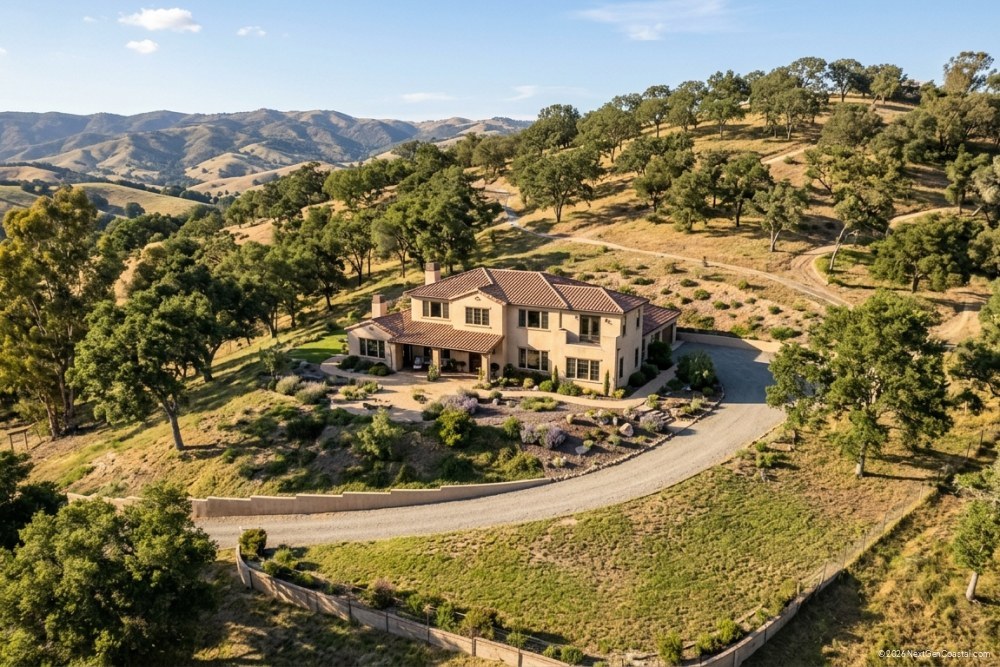
Consider a 3-bedroom, 2-bath single-family rental at 1234 Canyon Acres Drive, Laguna Beach 92651. The home is a 2,100-square-foot wood-frame structure with stucco exterior and composition shingle roof, built in 1978, replacement cost $1.8 million. The owner has held a homeowners policy for 12 years with no claims. Annual premium: $4,800, including $1 million liability, $500,000 personal property, and $360,000 loss of use. The property is rented long-term at $6,500/month ($78,000/year gross rent).
In January 2026, the carrier issues a non-renewal notice citing 'wildfire exposure per underwriting guidelines.' The notice provides 60 days to find replacement coverage. The owner hires a wildfire-mitigation contractor who confirms that the property has 100 feet of defensible space (the lot is 0.4 acres and slopes downhill to the south, extending the clearance zone). The roof is 8 years old, Class A composition shingle, in good condition. The owner submits the inspection report and roof certification to the carrier within 14 days, requesting reconsideration. The carrier declines, stating that the non-renewal is based on portfolio rebalancing and reinsurance capacity, not on property-specific deficiencies.
The owner's retail agent shops the admitted market and receives limited quotes. The agent refers the owner to a surplus-lines broker, who obtains quotes from three E&S carriers:
- Lloyd's syndicate via CRC: $10,800/year, $1.8M dwelling, $2M liability, $1M personal property, 5% deductible ($90,000), annual defensible-space cert required.
- Lexington (AIG): $9,600/year, $1.8M dwelling, $1M liability, $500K personal property, 5% deductible, annual cert required.
- Scottsdale: $8,400/year, $1.8M dwelling, $1M liability, $500K personal property, 5% deductible, annual cert required.
The owner selects Scottsdale at $8,400/year — a 75% increase over the prior premium. The policy binds on March 1, 2026, with no coverage gap. The owner's annual insurance expense rises from $4,800 to $8,400, reducing net operating income by $3,600. On a $78,000 gross rent, that's a 4.6% hit to NOI. The owner elects not to raise rent mid-lease but plans a $200/month increase ($2,400/year) at the next renewal in September 2026, recovering two-thirds of the insurance delta.
Alternative scenario: if all E&S carriers had declined, the owner would apply to the FAIR Plan for $1.8M fire coverage and layer a DIC policy for liability, theft, water, and loss of use. Total annual premium could range from $10,000–$13,000 — a material increase over the prior premium. At that cost, the owner's DSCR (assuming a $1.2M mortgage at 6.5%, $7,600/month payment) would be materially impacted. The owner would likely need to evaluate refinance, rent adjustment, or sale options.
Cost Delta and Debt-Service Impact
The premium increase from an admitted carrier to E&S or FAIR Plan + DIC is not a rounding error; it's a material operating-expense shock that flows through to cash-on-cash return, DSCR, and refinance eligibility. For a $1.8M coastal rental generating $78,000/year gross rent, a $4,800 insurance expense is 6.2% of gross revenue. At higher premium levels, insurance can represent 15%+ of gross revenue — higher than property tax in some jurisdictions. The annual delta reduces NOI materially, and on a leveraged property, that can push DSCR below lender minimums.
If you're refinancing or acquiring a coastal property in 2026, underwrite insurance at elevated levels compared to historical costs. Do not rely on the seller's dec page; obtain a binding quote from an E&S broker or FAIR Plan before closing. Lenders are increasingly requiring proof of insurance at application, not just at closing, and they will not fund a loan if the projected DSCR falls below lender minimums. For cash buyers, the insurance delta still matters: it's a permanent drag on yield, and it compounds annually if carriers continue to exit the market.
At NextGen Coastal, we update insurance-cost assumptions in our annual owner budgets every January and flag properties in WUI ZIP codes for early renewal shopping. We maintain relationships with surplus-lines brokers and can coordinate FAIR Plan + DIC quotes within 48 hours of a non-renewal notice. Our coastal-market focus means we see the carrier movements in real time — when a syndicate pulls out of a territory or a new E&S entrant starts quoting — and we pass that intelligence to our owners before renewal season.
Failure Modes: What Goes Wrong
The most common failure mode is missing the 60-day cure window. Owners receive the non-renewal notice, set it aside, and remember it on day 58. By then, there's no time to obtain E&S quotes, complete a FAIR Plan application, or remediate a cited deficiency. The policy lapses, the mortgage goes into technical default, and the lender force-places coverage at elevated rates with minimal limits. Force-placed insurance is not negotiable and does not cover liability; it exists solely to protect the lender's collateral interest. Avoid this by calendaring the non-renewal date the day you receive the letter and starting the marketplace search immediately.
Second failure mode: assuming the FAIR Plan covers liability. It does not. The FAIR Plan is fire-peril only. If you bind a FAIR Plan policy without a DIC overlay or separate umbrella, you have zero liability coverage. A tenant's guest slips on your front step, breaks an ankle, and sues for $500,000 in medical bills and lost wages — you're personally liable. The FAIR Plan pays nothing. Always stack a DIC policy or standalone umbrella over the FAIR Plan base.
Third failure mode: failing to disclose loss history on the surplus-lines application. E&S underwriting is strict, and carriers run CLUE (Comprehensive Loss Underwriting Exchange) reports that show every claim filed in the last 7 years. If you omit a prior water-damage claim or a roof-wind claim, the carrier will discover it during underwriting or — worse — after a new claim is filed. Misrepresentation voids the policy ab initio, meaning the carrier refunds your premium and denies the claim. Disclose every claim, even if it was denied or withdrawn. The underwriter will price it in or decline to quote; either outcome is better than a voided policy.
Fourth failure mode: allowing a coverage gap. If your old policy expires on March 31 and your new E&S policy binds on April 3, you have a 3-day gap. During that gap, you have no coverage, your mortgage is in default, and any loss is uninsured. Coordinate the bind date with your broker so that the new policy is effective at 12:01 AM on the day after the old policy expires. Pay the premium in full before the bind date; most E&S carriers require payment before issuing the policy.
Fifth failure mode: not stacking DIC over FAIR Plan and getting caught on a slip-and-fall. This is a repeat of the second failure mode but worth emphasizing: the FAIR Plan is not a complete homeowners policy. It is a fire-only policy. If you treat it as a drop-in replacement for your old HO-3 and skip the DIC overlay, you are self-insuring liability, theft, water, and loss of use. That works until it doesn't — and when it doesn't, the loss is catastrophic.
How NextGen Coastal Supports Owners Through Non-Renewal
We manage coastal rentals in the ZIP codes hit hardest by the carrier exodus — Laguna Canyon, Malibu, Pacific Palisades, Rancho Santa Fe, and the Santa Barbara foothills. When a non-renewal notice arrives, our protocol is:
- Day 1: Log the notice in the owner's file, calendar the 60-day deadline, and email the owner with a summary of next steps.
- Day 2–5: If the cited reason is curable (roof, brush clearance), coordinate a contractor inspection and obtain a remediation quote. Submit the cure documentation to the carrier within 14 days.
- Day 6–20: If the carrier declines to renew or the reason is non-curable, refer the owner to our surplus-lines broker network and request quotes from at least three E&S carriers.
- Day 21–40: If E&S quotes exceed the owner's underwriting threshold or all carriers decline, prepare a FAIR Plan application and coordinate DIC overlay quotes from major DIC carriers.
- Day 41–55: Bind the replacement policy with an effective date that eliminates any coverage gap. Confirm that the lender receives the new dec page and that the mortgagee clause is correctly endorsed.
- Day 56–60: Update the owner's annual budget to reflect the new insurance expense, model the NOI and DSCR impact, and discuss rent-adjustment strategy if the delta is material.
Our coastal focus means we have seen every permutation of this workflow — the carrier that reverses a non-renewal after a roof replacement, the E&S syndicate that quotes and then ghosts, the FAIR Plan application that sits in underwriting for 45 days and binds on day 59. We know which brokers move fast, which DIC carriers layer cleanly over FAIR Plan, and which lenders accept E&S policies without re-underwriting the loan. That institutional knowledge is the difference between a smooth transition and a coverage gap that costs you your mortgage.
60-Day Decision Checklist
When the non-renewal notice arrives, work through this checklist in order:
- Read the notice and identify the cited reason (wildfire exposure, roof condition, claims history, underwriting guidelines, geographic rebalancing).
- Calendar the effective date of non-renewal and the 60-day deadline.
- Forward the notice to your property manager, your insurance agent, and your mortgage servicer (if required by your loan documents).
- If the reason is curable, hire a contractor to inspect and remediate within 14 days. Submit proof of cure to the carrier and request reconsideration.
- If the carrier declines to renew or the reason is non-curable, contact a surplus-lines broker and request quotes from at least three E&S carriers.
- If E&S quotes are unaffordable or all carriers decline, apply to the FAIR Plan and obtain DIC overlay quotes from at least two carriers.
- Compare the all-in annual premium (FAIR Plan + DIC or E&S standalone) to your prior cost. Model the NOI and DSCR impact.
- Bind the replacement policy with an effective date that eliminates any coverage gap. Pay the premium in full before the bind date.
- Confirm that the new dec page lists your mortgage servicer as mortgagee and that the servicer receives a copy within 10 days of binding.
- Update your annual operating budget and reserve account to reflect the new insurance expense.
- If the premium increase is material (>20% of prior cost), evaluate rent adjustment, refinance, or sale.
Frequently Asked Questions
Can my carrier non-renew me without giving a reason?
No. California Insurance Code § 678 requires the carrier to state the reason for non-renewal in the written notice. The reason must be specific — "wildfire exposure," "roof condition," "claims history" — not a generic "underwriting guidelines" without further detail. If the notice does not state a reason, contact the California Department of Insurance and file a complaint; the non-renewal may be invalid.
What's the difference between non-renewal and cancellation?
Non-renewal occurs at the policy anniversary and requires 60 days' notice. Cancellation is mid-term termination for non-payment, material misrepresentation, or fraud, and requires 10–20 days' notice depending on the reason. Rescission is retroactive voiding of the policy for fraud at application; the carrier refunds all premiums and denies all claims as if the policy never existed. Non-renewal is the least severe and gives you the most time to find replacement coverage.
Does the FAIR Plan cover my rental property?
Yes, if it's a residential dwelling (1–4 units). The FAIR Plan covers fire peril only, up to $3 million dwelling limit. It does not cover liability, theft, water damage, or loss of use. You must layer a DIC policy or separate umbrella to obtain full HO-3 equivalent coverage. Commercial properties (5+ units, mixed-use, retail) are eligible for FAIR Plan coverage up to $20 million dwelling limit, but the same exclusions apply.
Can I get a mortgage with a FAIR Plan policy?
Yes, but the lender will require proof that you have stacked a DIC policy or umbrella over the FAIR Plan base to cover liability and other perils. Most lenders require at least $1 million liability coverage; the FAIR Plan alone does not satisfy that requirement. Provide the lender with both the FAIR Plan dec page and the DIC dec page at application, and ensure that the lender is named as mortgagee on both policies.
What happens if I let my policy lapse?
Your mortgage goes into technical default, and the lender will force-place coverage at elevated rates with minimal limits (fire only, no liability). Force-placed premiums are added to your loan balance and capitalized, increasing your monthly payment. You also have zero liability coverage during the lapse, exposing you to personal liability for any on-premises injury. Avoid a lapse by binding replacement coverage before the old policy expires, even if the replacement is expensive or has narrow coverage. A bad policy is better than no policy.
Frequently Asked Questions
Can my carrier non-renew me without giving a reason?
What's the difference between non-renewal and cancellation?
Does the FAIR Plan cover my rental property?
Can I get a mortgage with a FAIR Plan policy?
What happens if I let my policy lapse?