What Is the California Earthquake Authority?
The California Earthquake Authority (CEA) is a publicly managed, privately funded insurance pool that came out of the 1994 Northridge quake. Most carriers pulled out of California earthquake coverage after that event, so the legislature created CEA under Cal. Ins. Code § 10089 to keep earthquake insurance available. You can't buy directly from CEA. Instead, you get a companion policy through one of the participating residential carriers, State Farm, Farmers, CSAA, Nationwide, and a couple dozen others. Your landlord policy comes from the carrier; the earthquake piece comes from CEA, written to CEA's standard forms and rates.
Interactive Tool
CEA Earthquake Insurance Premium & Deductible Calculator
Estimate annual premium and out-of-pocket exposure for coastal California rental properties

Match your landlord policy dwelling limit.
Balances premium cost and cash exposure.
Retrofit discount available.
Coastal corridor, typical rating.
 Built by NextGen Coastal
CEA writes 1–4 unit residential properties, owner-occupied or rented. If you own a coastal single-family in Newport Beach, a duplex in Long Beach, or a triplex in Pacific Beach, you qualify, assuming the structure meets current bolting and cripple-wall standards or you've done a seismic retrofit through the Earthquake Brace + Bolt program. The 2025/2026 rate filing tightened the retrofit discount rule. Only buildings that meet the current bolting standard get the 20–25% premium discount. Older homes without documented retrofit work pay the base rate.
CEA Product Lines and How Homeowners Choice Applies to Rentals
CEA offers four tiers: Homeowners Choice, Standard, Basic, and Mini. For a rental property, you're looking at Homeowners Choice or Standard. The Basic and Mini products cap contents and loss-of-use coverage too low for a landlord who depends on rental income.
Homeowners Choice is the broadest product and the one we recommend for coastal rentals:
- Dwelling coverage up to the replacement-cost limit you pick (usually matching your landlord policy dwelling limit).
- Loss-of-use coverage (called Additional Living Expense, or ALE) up to $100,000 for 24 months. Critically, this includes lost rental income when you add the rental endorsement.
- Contents coverage up to $200,000 (for landlord-owned appliances, fixtures, tools, any personal property stored on-site).
- Building code upgrade coverage up to $30,000 (to bring a damaged structure into current seismic code compliance during repair).
- Emergency repairs up to $3,000 (tarping, shoring, temporary fencing).
The Standard product drops loss-of-use to $15,000 and contents to $100,000. That might work for a low-rent inland property, but it's insufficient for a coastal rental generating $4,000–$8,000/month. If a damaging quake renders the home uninhabitable for six months, you need the Homeowners Choice loss-of-use limit to cover lost rent, mortgage carry, and tenant relocation assistance.

CEA Deductible Options and How the Math Works
In moderate-to-severe scenarios, CEA covers the majority of repair costs after the deductible threshold is met.
View chart data
| Category | Owner Out-of-Pocket (15% Deductible) | CEA Payout |
|---|---|---|
| 40% Loss ($480k) | $180,000 | $300,000 |
| 80% Loss ($960k) | $180,000 | $780,000 |
CEA offers five deductible tiers. The deductible applies to the dwelling limit, not the loss amount. That distinction catches many owners off guard.
Lower deductibles cost 2.5–3× more in annual premiums but reduce out-of-pocket exposure in moderate-to-severe loss scenarios.
View chart data
| Category | Annual Premium ($) |
|---|---|
| 5% deductible | $4,200 |
| 10% deductible | $2,800 |
| 15% deductible | $2,100 |
| 20% deductible | $1,700 |
| 25% deductible | $1,400 |
Example: you insure a $1.2M dwelling with a 15% deductible. Your out-of-pocket before CEA pays anything is $180,000, whether the loss is $200,000 or $800,000. If the quake causes $500,000 in structural damage, CEA pays $320,000 (loss minus deductible). If the loss is $150,000, you pay the entire amount yourself because it falls below the deductible threshold.
The premium scales inversely with the deductible. A 5% deductible costs roughly three times what a 25% deductible costs, but it lowers your cash exposure on a moderate loss. The table below shows annual premium estimates for a $1.2M dwelling on a 1965 wood-frame single-family home in Newport Beach (CEA territory 19, soft-soil overlay, no retrofit discount):
| Deductible | Annual Premium | Out-of-Pocket (40% Loss) | Out-of-Pocket (80% Loss) |
|---|---|---|---|
| 5% | ~$4,200 | $60,000 | $60,000 |
| 10% | ~$2,800 | $120,000 | $120,000 |
| 15% | ~$2,100 | $180,000 | $180,000 |
| 20% | ~$1,700 | $240,000 | $240,000 |
| 25% | ~$1,400 | $300,000 | $300,000 |
In a 40% loss scenario ($480,000 damage), the 5% deductible saves you $120,000 in out-of-pocket compared to the 15% deductible, but costs an extra $2,100/year in premium. Break-even is roughly 57 years of premium payments. The 5% deductible is a liquidity hedge, not an actuarial winner. Most coastal landlords we work with choose the 10% or 15% deductible as the sweet spot between premium cost and manageable cash exposure.
What's Covered, What's Not
CEA Homeowners Choice covers:
- Dwelling structure: foundation, framing, roof, walls, built-in appliances, HVAC, plumbing, electrical.
- Loss-of-use / lost rent: up to $100,000 over 24 months when you add the rental endorsement (see failure mode below).
- Contents: landlord-owned items (washer, dryer, refrigerator, tools, stored furniture) up to $200,000.
- Building code upgrade: up to $30,000 to bring the repaired structure into current seismic code compliance.
- Emergency repairs: up to $3,000 for immediate stabilization (tarping, shoring, debris removal to prevent further damage).
CEA does not cover:
- Exterior masonry chimneys: the most common earthquake damage item in coastal California. If your 1940s Craftsman has a brick chimney, budget separately for replacement or retrofit.
- Swimming pools and spas: cracked pool shells, broken coping, damaged equipment are excluded.
- Landscaping: retaining walls, hardscaping, mature trees.
- Detached structures: garages, ADUs, sheds, unless specifically scheduled and insured under a separate dwelling limit.
- Land / lot value: CEA insures the structure, not the dirt. In coastal markets where land represents 40–60% of total value, this is a significant coverage gap.
The building-code-upgrade sublimit is a common blind spot. If you own a 1940s coastal home with a $1.2M dwelling limit and the quake triggers a red-tag, bringing the foundation, framing, and lateral bracing into 2026 code compliance can easily exceed $100,000. CEA caps that coverage at $30,000, leaving you to fund the balance. Some surplus-lines carriers offer higher building-code-upgrade limits (up to 25% of dwelling coverage), which may be worth the premium for older coastal homes.
Coastal Fault Proximity and Liquefaction Overlays
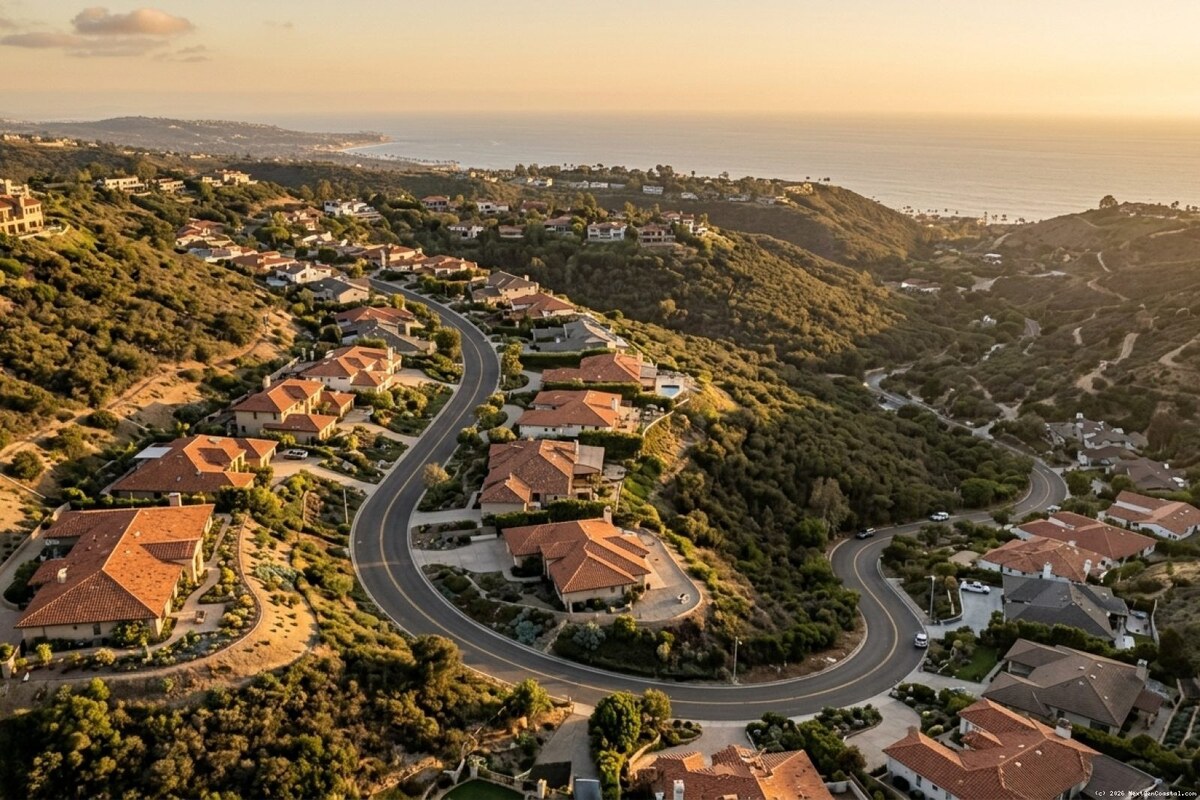
CEA's rate filing divides California into 19 rating territories based on fault proximity, soil type, and historical loss experience. Coastal Southern California sits in territories 16–19, with the highest rates reserved for areas within 5 km of an active fault trace.
Three fault systems dominate the coastal risk map:
- Newport-Inglewood fault: runs offshore from Seal Beach through Huntington Beach, Newport Beach, and Corona del Mar, then inland through Costa Mesa and Santa Ana. A repeat of the 1933 Long Beach quake (M6.4) would cause severe shaking and liquefaction in low-lying coastal flats.
- Rose Canyon fault: extends from La Jolla through downtown San Diego and into the bay. The USGS estimates a 6–7% probability of a M6.9+ event on this fault in the next 30 years.
- San Andreas fault (southern segment): sits 50–80 miles inland from the coast but capable of generating M7.8+ events that would produce moderate-to-strong shaking (MMI VI–VII) across the entire coastal corridor from Santa Barbara to San Diego.
CEA applies a soft-soil liquefaction overlay in neighborhoods built on fill, alluvial deposits, or reclaimed tidelands. In Long Beach (Belmont Shore, Naples Island), parts of Newport Beach (Balboa Peninsula, Lido Isle), Marina del Rey, and the San Diego bayfront, the liquefaction overlay adds roughly 15–25% to the base premium. If your rental sits on one of these parcels, the CEA underwriter will flag it during binding, and your quote will reflect the higher rate.
Worked Example: $1.4M Belmont Shore Rental
Property: $1.4M dwelling, 1,850 sq ft, built 1958, wood frame, no seismic retrofit, rented at $5,200/month, located in Long Beach (Belmont Shore), CEA territory 18, soft-soil liquefaction overlay.
Owner selects CEA Homeowners Choice with a 15% deductible and adds the rental loss-of-use endorsement.
- Annual CEA premium: ~$2,600 [VERIFY]
- Rental endorsement add-on: ~$180 [VERIFY]
- Total annual cost: $2,780
Deductible: 15% of $1.4M = $210,000
Loss-of-use coverage: $100,000 over 24 months (enough to cover 19 months of lost rent at $5,200/month, plus mortgage carry and tenant relocation).
Break-even analysis: The USGS estimates a 1.0–1.5% annual probability of a damaging earthquake (M6.0+) at this location. Over a 30-year hold period, cumulative probability of at least one damaging event is roughly 26–37%. If the quake causes $600,000 in structural damage (a realistic scenario for a 1958 wood-frame home on soft soil), CEA pays $390,000 ($600,000 loss minus $210,000 deductible). The owner's out-of-pocket is $210,000. Painful, but manageable with a HELOC or bridge loan. Without CEA, the owner funds the entire $600,000 repair, likely triggering a sale or foreclosure.
The premium ($2,780/year) represents 0.20% of the dwelling value annually. For a leveraged owner with 75% LTV ($1.05M loan balance), the earthquake risk is existential. A total loss wipes out equity and leaves the lender holding a red-tagged lot. The CEA policy is cheap catastrophic coverage, not a profit center.
The Loss-of-Use Rental Endorsement: The Most Important Line Item
The default CEA Homeowners Choice policy includes $100,000 in loss-of-use coverage, but that limit is structured for owner-occupied homes. It reimburses your temporary housing, meals, and storage while your home is uninhabitable.
For a rental property, you need the rental loss-of-use endorsement. That converts the $100,000 limit into coverage for lost rental income, mortgage payments, property taxes, insurance, and tenant relocation assistance during the repair period.
The endorsement costs around $200/year depending on rent level and territory, and it is the single most valuable component of the CEA policy for a landlord. Without it, CEA pays to rebuild the structure but does not cover the 6–18 months of lost rent while the home is red-tagged and under construction. If your coastal rental generates $6,000/month, a 12-month repair timeline costs you $72,000 in lost income, plus the mortgage, taxes, and insurance you continue to pay. The $100,000 loss-of-use limit with the rental endorsement covers that gap.
For a coastal landlord, the CEA loss-of-use rental endorsement is not optional. It's the difference between surviving a damaging quake and selling the property at a loss during reconstruction.
Alternative Markets: Palomar, GeoVera, Arrowhead, and Surplus Lines
CEA is the dominant earthquake insurer in California, but it's not the only option. Three admitted carriers and the surplus-lines market offer stand-alone earthquake policies that may beat CEA on luxury-home limits ($1.5M+ dwelling), lower deductibles, or higher building-code-upgrade sublimits.
- Palomar Specialty: writes earthquake coverage up to $3M dwelling limits with deductibles as low as 10% and building-code-upgrade coverage up to 25% of dwelling limit. Palomar is often cheaper than CEA for newer construction (post-2000) and homes with documented seismic retrofits.
- GeoVera: offers earthquake policies in coastal California with 5% and 10% deductibles and higher contents limits ($300,000+). GeoVera's underwriting is more flexible on older homes and mixed-use properties.
- Arrowhead / Homesite: stand-alone earthquake products with competitive pricing in low-risk territories (coastal areas more than 10 km from an active fault). Arrowhead caps dwelling coverage at $2M.
- Surplus-lines market: Lloyd's syndicates and specialty carriers write earthquake coverage for high-value coastal homes ($2M–$10M+) with agreed-value settlement (no depreciation), 50% building-code-upgrade limits, and blanket contents coverage. Surplus-lines premiums run roughly double CEA rates, but the coverage is broader and the claims process faster.
We work with surplus-lines brokers on behalf of clients who own luxury coastal rentals in Laguna Beach, Corona del Mar, and La Jolla where the CEA dwelling limit ($1.5M–$2M) is insufficient and the 15–25% deductible creates unacceptable cash exposure. For a $3.5M oceanfront rental, a surplus-lines policy with a 10% deductible ($350,000) and $1M building-code-upgrade coverage is worth the annual premium.
Five Failure Modes We See Most Often
Earthquake insurance is sold, not bought. The gap between what owners think they have and what the policy actually covers creates expensive surprises after a quake. These are the five failure modes we encounter most often in our coastal portfolio:
1. Assuming the FAIR Plan or Landlord Policy Covers Earthquake
The California FAIR Plan is a fire-only policy of last resort. It does not cover earthquake, flood, or any other peril beyond fire and lightning. Your standard landlord policy (DP3 or HO3) excludes earthquake damage unless you purchase a separate earthquake endorsement or stand-alone policy. We have seen owners discover this gap after a damaging quake, when the landlord-policy carrier denies the claim and points to the earthquake exclusion on page 14 of the policy jacket.
2. Skipping the Rental Loss-of-Use Endorsement
The default CEA loss-of-use coverage is designed for owner-occupants. If you do not add the rental endorsement, CEA will not reimburse lost rent, only your temporary housing if you were living in the property. For a landlord, this renders the loss-of-use coverage worthless. The endorsement costs around $200/year and is non-negotiable.
3. Buying CEA but Not Seismically Retrofitting
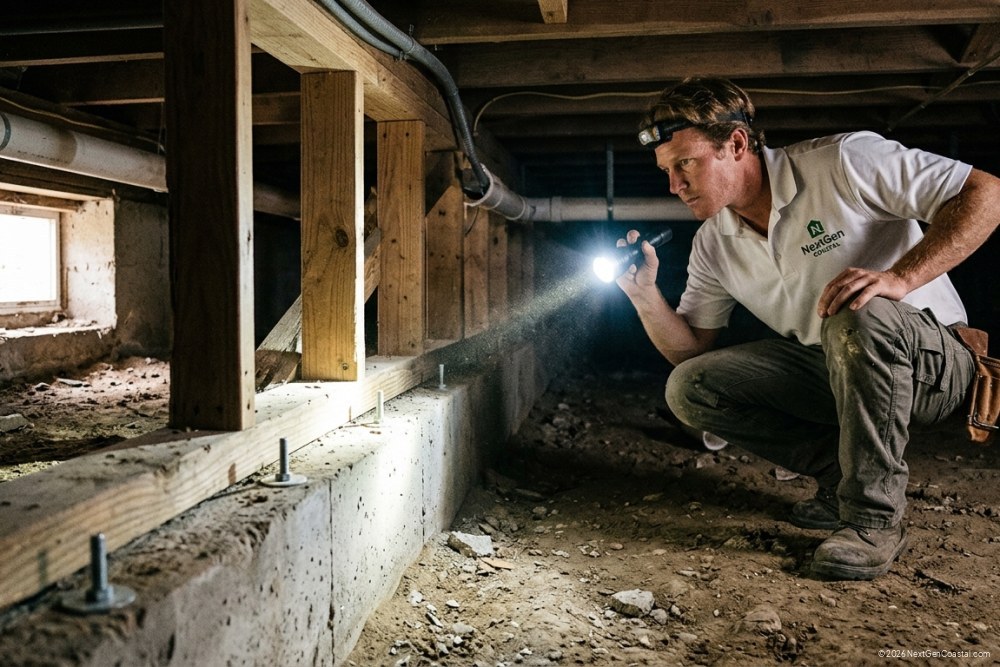
The Earthquake Brace + Bolt program offers grants up to $3,000 to retrofit older homes (pre-1980 wood-frame construction) with foundation bolting and cripple-wall bracing. Completing the retrofit unlocks a 20–25% CEA premium discount and, more critically, reduces the probability of collapse in a major quake by 60–80%. Buying earthquake insurance without retrofitting is like buying flood insurance and skipping the sump pump.
4. Ignoring the Building-Code-Upgrade Sublimit
CEA Homeowners Choice caps building-code-upgrade coverage at $30,000. For a 1940s coastal home, bringing the foundation, framing, and lateral bracing into 2026 code compliance during a post-quake rebuild can cost $80,000–$150,000. If you own an older home, ask your broker about extended building-code-upgrade endorsements (available through some surplus-lines carriers) or budget the gap as a self-insured line item.
5. Treating Earthquake as a "Next Year" Decision and Binding After a Swarm
CEA and most admitted carriers impose underwriting moratoria after seismic events. No new policies, no coverage increases, no endorsements for 30–90 days following a swarm or damaging quake. In 2024, after a M5.1 swarm near San Clemente, CEA stopped writing new policies in Orange County for 60 days. If you wait until the ground is shaking to buy coverage, you're too late.
Buy or Skip? The Decision Matrix
Earthquake insurance is a catastrophic-loss hedge, not a maintenance expense. The decision to buy depends on leverage, liquidity, hold period, and risk tolerance. Use this matrix:
| Factor | Buy CEA | Skip / Self-Insure |
|---|---|---|
| Leverage | LTV > 50% | LTV < 30%, or all-cash |
| Liquidity | Cash reserves < 20% of dwelling value | Cash reserves > 50% of dwelling value |
| Hold period | 10+ years | < 5 years (flip, 1031 exit planned) |
| Fault proximity | < 10 km from active fault | > 25 km from active fault |
| Construction year | Pre-1980, no retrofit | Post-2000, engineered foundation |
| Rental income dependency | Rental income funds mortgage + expenses | Rental income is discretionary cash flow |
If you check three or more boxes in the "Buy CEA" column, the policy is a rational hedge. If you check three or more boxes in the "Skip" column, self-insurance may be the better play, provided you set aside a dedicated earthquake reserve (10–15% of dwelling value) in a liquid account.
How NextGen Coastal Helps Clients Make the CEA Decision
We manage over 200 units across Orange County, Los Angeles, and San Diego coastal markets. Earthquake insurance is part of every owner's annual risk review. During onboarding, we walk through the CEA product options, deductible trade-offs, and loss-of-use strategy. We coordinate with your insurance broker to confirm the rental endorsement is in place, the dwelling limit matches current replacement cost, and the building-code-upgrade sublimit is adequate for your property's age and construction type.
For clients who own luxury coastal rentals ($2M+ dwelling), we introduce surplus-lines brokers who can quote agreed-value earthquake policies with lower deductibles and broader building-code coverage. For clients in liquefaction zones (Belmont Shore, Balboa Peninsula, Marina del Rey), we flag the soft-soil overlay during the quote process so there are no surprises at binding.
Our maintenance network includes seismic retrofit contractors who complete Earthquake Brace + Bolt work and document the retrofit for the CEA discount. We also track CEA rate filings and underwriting-rule changes so clients know when to lock in coverage before a rate increase or moratorium.
Earthquake insurance is not a set-it-and-forget-it line item. Dwelling values change, rental income changes, and CEA coverage limits need to track those changes. We review every client's earthquake policy annually and recommend adjustments when the numbers shift.
Coastal California Fault Zones: What Proximity Means for Your CEA Policy
CEA rates are calculated using probabilistic seismic hazard modeling that weights fault proximity, soil type, and construction vintage. Three fault systems dominate the pricing and coverage conversation for coastal California rental owners.
Newport-Inglewood Fault (Orange County coast). The Newport-Inglewood fault runs directly beneath the coastline from Newport Beach through Huntington Beach to Long Beach. Properties within one mile of the fault trace sit in the highest CEA rate tier for OC coastal zip codes — typically $4.50–$7.00 per $1,000 of dwelling coverage for wood-frame construction, versus $1.80–$3.20 for equivalent buildings inland of the 405. The 1933 Long Beach earthquake (M6.4) ruptured this fault; a repeat event would affect the densest concentration of coastal rental inventory in Orange County. Owners in zip codes 92648, 92646, 92625, and 92627 should verify whether their parcel falls within the Alquist-Priolo Earthquake Fault Zone, which requires tenant disclosure and may affect carrier participation.
Rose Canyon Fault (San Diego coastal). The Rose Canyon fault passes through downtown San Diego and the La Jolla coastal zone. San Diego generally has lower CEA base rates than OC or LA, but Rose Canyon is considered capable of a M6.9 event. Properties in Pacific Beach, Ocean Beach, and La Jolla Shores within two miles of the fault trace will see rate premiums above the county average. CEA’s zip-code lookup tool shows the risk tier; La Jolla and Bird Rock owners should run the lookup before assuming San Diego’s generally lower rates apply to their parcel.
Palos Verdes Fault and coastal liquefaction (LA South Bay). The offshore Palos Verdes fault runs parallel to the coast from Redondo Beach through Rolling Hills Estates. Though the fault is offshore, the liquefaction hazard in the beach communities between Hermosa Beach and Redondo Beach is rated high by CDMG. The standard CEA Homeowners Choice policy covers dwelling damage from ground shaking but explicitly excludes damage from land movement, settling, or liquefaction. Owners in high-liquefaction zones need the CEA policy plus a separate earth movement endorsement — or a specialty carrier that writes combined shaking-plus-liquefaction coverage.
Soft-soil amplification on coastal properties. CEA rates use soil classification (site class A through E under ASCE 7) to adjust premiums. Coastal properties on filled land, bay mud, or beach sand sit in site class D or E — the two highest amplification classes. A 1960s wood-frame apartment in a soft-soil zone near Seal Beach pays 30–50% more in CEA premiums than a structurally identical building on rock, even at the same distance from a fault. For older soft-story buildings in coastal zip codes, the premium difference is often the deciding factor in whether earthquake coverage pencils for a small-portfolio landlord.
Frequently Asked Questions
Does my landlord insurance policy cover earthquake damage?
What is the CEA rental loss-of-use endorsement and do I need it?
How does the CEA deductible work?
What does CEA earthquake insurance not cover?
Should I buy CEA earthquake insurance or self-insure?