
An Unlawful Detainer Is a Procedure, Not a Fight
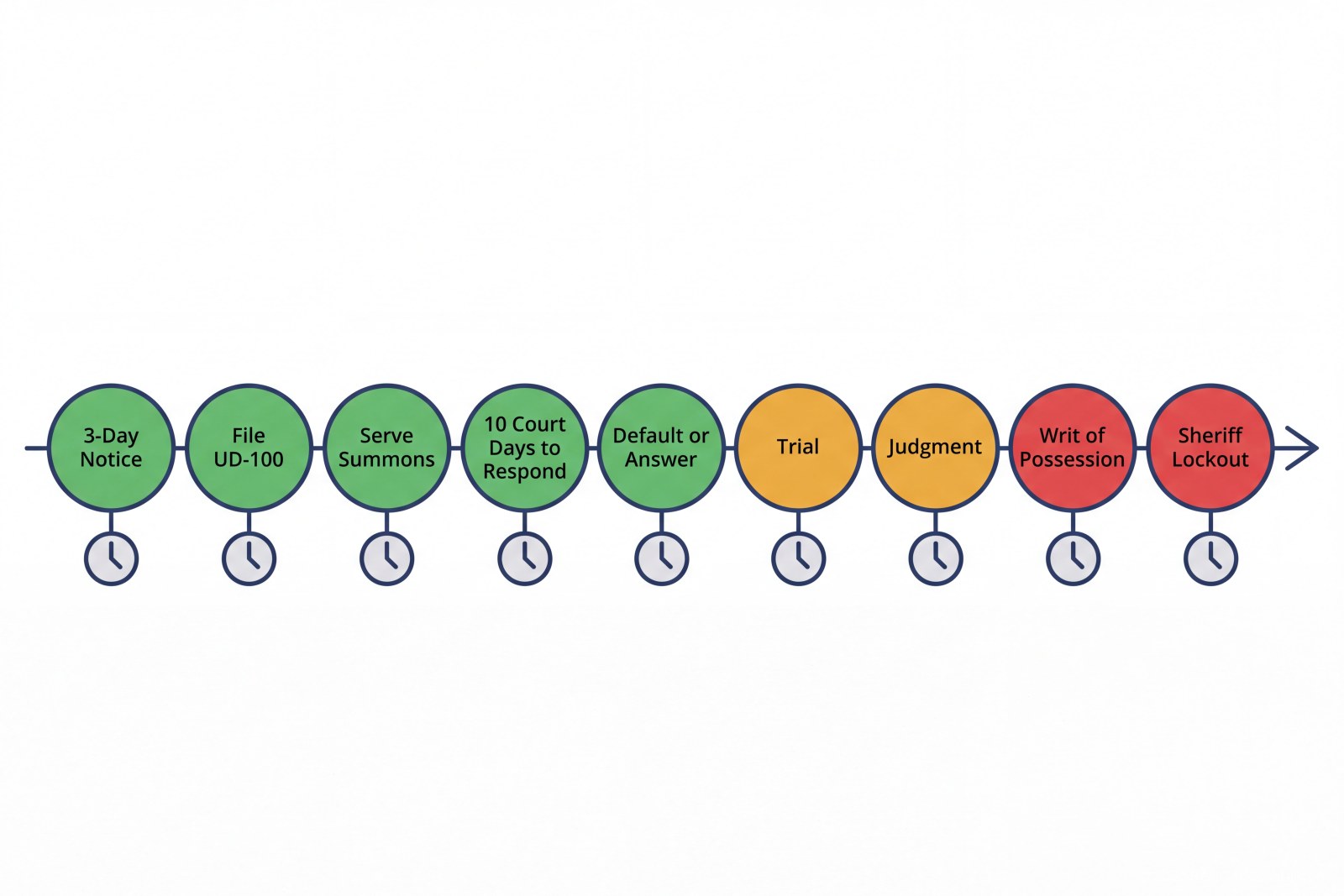
Most owners think of eviction as a confrontation. We think of it as a checklist with a clock attached. California's unlawful detainer statute, Code of Civil Procedure Sections 1161 through 1179a, gives landlords a summary proceeding. That word matters. Summary means fast, and fast means the court holds you to every procedural detail in exchange for the speed.
Interactive Tool
California Eviction Exposure vs. Cash-for-Keys Calculator
Compare the full cost of a contested unlawful detainer against paying the tenant to leave on a fixed date.

We budget 45–60 days uncontested, 60–90 contested in coastal counties.
Limited civil.
Check your county sheriff's current civil fee schedule.
 Built by NextGen Coastal
 Here's where we land: across our portfolio, the cases we lose are almost never lost at trial. They're lost on the notice. A three-day notice that overstates rent by the amount of a late fee, or that gets served on a Friday with the weekend miscounted, gets the case dismissed. You start over, and the tenant has bought another month.
This guide walks the full 2026 timeline from notice to lockout. It's written for operators managing units in Orange County, Los Angeles, and San Diego, where local just-cause ordinances sit on top of state law. We cite the code sections you'll want to read for yourself. This is how we run it, not legal advice for your specific case.
Step One: The Notice Decides the Case
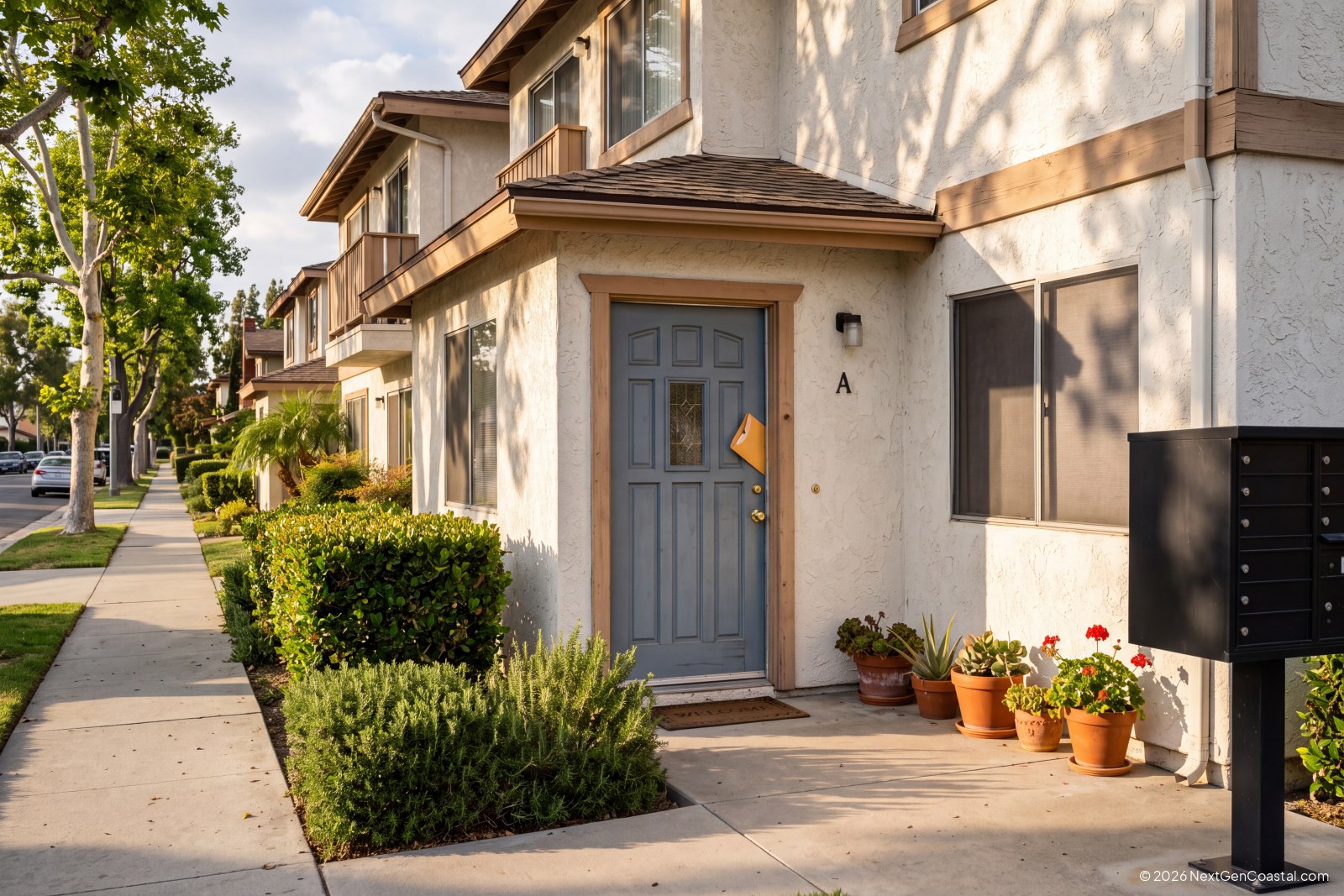
Every UD starts with a written notice that either demands a cure or terminates the tenancy. Section 1161 lists the grounds, and each ground carries its own notice. Pick the wrong one and nothing that follows counts.
The three-day pay-or-quit
Nonpayment drives most of our filings. Under Section 1161(2), the notice must state the exact amount of rent due, the name, phone number, and address of the person to whom it's paid, and the days and hours that person accepts payment. Under California law, the three days exclude Saturdays, Sundays, and judicial holidays. Serve on a Thursday and the tenant has through Tuesday.
Three rules we enforce on every pay-or-quit notice:
- Rent only. No late fees, no utility pass-throughs, no damage charges. Section 1161(2) says rent, and an overstated demand is a defective notice.
- Nothing older than twelve months. The same subsection bars demanding rent that came due more than one year before the notice.
- Match the lease to the dollar. If the lease says $2,850 and the ledger says $2,850 plus a $75 late charge, the notice says $2,850.
We red-flag any notice prepared from a ledger export without a human reconciling it against the lease. The ledger is where late fees hide.
Cure-or-quit, HOA violations, and nuisance
Section 1161(3) covers breach of a lease covenant with a three-day notice to perform or quit. This is the notice for unauthorized occupants, unapproved pets, and HOA rule violations at condo and planned-community units. The HOA angle trips up coastal owners. The association fines you, not the tenant. The only path to the tenant is a lease clause that incorporates the CC&Rs and a cure-or-quit notice that names the specific rule breached. Tighten the clause before you need it.
Section 1161(4) covers nuisance, waste, and unlawful purpose. That notice is three days to quit, no cure option. Courts read it narrowly. We use it for documented threats, drug activity backed by a police report, and structural damage. We don't use it for noise complaints, and neither should you.
Short-term guests who won't leave
Coastal owners running permitted short-term rentals in Newport Beach or San Diego occasionally get a guest who stops paying and stays. Civil Code Section 1940(b) exempts true transient occupancy from the residential tenancy rules, but a guest who has been in the unit for 30 days or more will generally be treated as a tenant. The police won't remove them. The path is a notice and a UD, same as any other occupant. Don't try to argue the hotel exemption on day 45.
No-fault terminations under AB 1482 and local ordinances
For a tenant past twelve months in a covered unit, Civil Code Section 1946.2 (the Tenant Protection Act, AB 1482) limits you to the listed just-cause grounds. No-fault grounds include owner move-in, withdrawal from the rental market, substantial remodel, and government order. Under current law, owner move-in requires the owner or qualifying relative to move in within 90 days and stay at least twelve months, and substantial remodel requires permits and a notice describing the work. Violations expose you to treble damages plus the tenant's attorney's fees.
No-fault notices run 30 or 60 days under Civil Code Section 1946.1, and you owe one month's rent in relocation assistance under Section 1946.2(d). Then check the city:
- Santa Monica: rent-controlled units fall under the city charter's Rent Control Law. Owner move-in and Ellis Act withdrawals run through the Rent Control Board with a relocation schedule well above the state minimum.
- Los Angeles: the Just Cause Ordinance applies after six months of tenancy, and the city's relocation schedule attaches to no-fault evictions and to 'economic displacement' rent increases above the ordinance threshold.
- San Diego: under local ordinance, no-fault terminations typically require relocation assistance of at least two months' rent for standard tenancies, additional assistance for protected households, and permit requirements for substantial remodel.
- Unincorporated coastal parcels: state law only. If the withdrawal is tied to a conversion inside the Coastal Zone, expect the Local Coastal Program to have its own review step.
We keep a one-page matrix per city. If you manage in more than one coastal jurisdiction, build one.
The 30-day trap for covered properties
One more notice rule that gets missed. Section 4024(c) of the federal CARES Act addressed notice requirements for nonpayment at 'covered dwellings,' which include properties with federally backed mortgages (Fannie Mae, Freddie Mac, FHA, VA) or tenants holding Section 8 vouchers. As of 2026, the applicability and current enforcement status of this requirement remains subject to ongoing litigation in California courts. Our practice: if the loan is agency paper or the tenant holds a voucher, we have consulted current guidance and legal counsel before proceeding. Waiting to verify current law is worth the delay.
Service and the 10-Court-Day Response Window
A contested unlawful detainer can take 50% longer than an uncontested default, stretching the filing-to-lockout window from as little as 45 days to as many as 90.
View chart data
| Category | Days from filing to sheriff lockout |
|---|---|
| Uncontested – Low | 45 |
| Uncontested – High | 60 |
| Contested – Low | 60 |
| Contested – High | 90 |
Once the notice expires without cure, you file the complaint and serve the summons. This is the second place cases die.
Personal service by a registered process server is the standard. Substituted service, leaving the papers with another adult at the unit and mailing a copy, is allowed but adds ten days before it's deemed complete. Post-and-mail service requires a court order under Code of Civil Procedure Section 415.45 after a declaration of diligent attempts. Budget a week for that order.
Then the tenant's clock runs. Under recent amendments to California procedure, the response window for unlawful detainer was extended, effective in 2025. Ten court days is fourteen calendar days in a normal stretch, longer across a holiday. Tenant motion practice operates on a compressed schedule: a demurrer, motion to strike, or motion to quash now gets heard within days of filing rather than weeks. The net effect on case calendars has been roughly a week added per case.
What happens next splits two ways.
- No answer filed: you request entry of default. The clerk enters judgment for possession, and a judge signs the money portion. Realistic timing from default request to writ is one to two weeks in Orange County, longer in Los Angeles.
- Answer filed: you file a request to set the case for trial. Section 1170.5 says trial shall be held within 20 days of that request. That number is aspirational in Los Angeles and Santa Ana. We plan on three to six weeks.
The chart below shows what we actually budget for each stage in a coastal county in 2026, uncontested versus contested. The statute reads faster than the courthouse runs.
Filing: Forms, Fees, and the 60-Day Masking Rule
The statewide filing fee nearly doubles, from $240 to $435, once the amount demanded crosses $25,000.
View chart data
| Category | Judicial Council filing fee |
|---|---|
| Under $10,000 | $240 |
| $10,000–$25,000 | $385 |
| Over $25,000 | $435 |
The complaint is Judicial Council form UD-100, filed with the summons (SUM-130), a civil case cover sheet, and the notice attached. If the tenant is holding over after a written lease, attach the lease. If the notice was served by posting and mailing, attach the proof of service. Serve a prejudgment claim of right to possession (form CP10.5) with the summons on every case. It costs one extra form and it prevents an unnamed occupant from halting the lockout later.
Filing fees follow the Judicial Council's statewide civil fee schedule and depend on the amount demanded: $240 for claims under $10,000, $385 from $10,000 to $25,000, and $435 for unlimited cases above $25,000. At rents above $3,400, three months of arrears puts you in the middle tier.
One procedural rule works in your favor, and it's why we file the day the notice expires. Under Code of Civil Procedure Section 1161.2, the court record of a UD stays masked from the public and from screening databases unless the plaintiff prevails within 60 days of filing. A judgment inside that window makes the case visible to every future landlord who screens the tenant. Miss the window and the case stays hidden unless you later win and ask the court to unmask it.
Practically, 60 days means a defaulted case makes the window and a contested case usually doesn't. Keep that in mind when we get to cash for keys. The masked record is one of the things the tenant is bargaining for.
The court will give you speed or forgiveness, never both. An unlawful detainer moves in weeks precisely because every notice, every count of days, and every dollar on the demand gets checked to the decimal.
The Contested Case: Discovery, Motions, and Trial
A minority of our cases go to trial. When one does, the answer usually raises one of four defenses: breach of the warranty of habitability under Civil Code Section 1941.1, retaliation under Civil Code Section 1942.5, a defective notice, or waiver by acceptance of partial rent after the notice expired.
Discovery in a UD is compressed. Under Section 1170.8, responses to interrogatories, document requests, and requests for admission are due in five days instead of the usual thirty. Depositions are allowed but rare. We send a short discovery set the day the answer arrives: the tenant's repair requests, photos, and any communication with code enforcement. If the habitability defense has no paper behind it, we want to know before trial, not at it.
Habitability is the defense to respect. If the tenant proves a substantial defect the landlord knew about and didn't fix, the court can reduce the rent owed by reference to California case law on habitability, and possession can turn on whether the reduced amount was tendered. Our defense is the maintenance log. Every work order, timestamped, with the vendor invoice attached. Operators who can't produce a repair history for the unit are guessing at trial.
Three trial-day realities:
- Bring the original notice, the proof of service, the ledger, the lease, and a witness who can authenticate each one. A property manager who didn't personally serve the notice can't testify to service.
- Jury trials are available on demand, and tenant-side firms in Los Angeles request them to push the date. Most settle by stipulation before a jury is seated.
- A stipulated judgment with a firm move-out date and conditional forgiveness of arrears is often the best outcome available. You get an enforceable judgment. The tenant gets a date and, if you agree to dismiss on performance, a clean record.
Judgment, Writ, and the Sheriff
A judgment for possession under Section 1174 doesn't put you back in the unit. The writ of possession does, and only the sheriff executes it. Never change the locks yourself. Self-help lockouts and utility shutoffs carry civil and statutory penalties under California law, on top of actual damages and the tenant's attorney's fees. We've seen owners turn a won case into a paid settlement this way.
The sequence:
- The clerk issues the writ of possession (form EJ-130) on your request, typically one to three days after judgment.
- You deliver the writ, sheriff's instructions, and the fee to the sheriff's civil division. Fees are set by county; check the current schedule when you file.
- The sheriff posts a five-day notice to vacate at the unit under Section 1174(c) and Section 715.010.
- On lockout day a deputy meets your representative at the unit. You bring a locksmith. The deputy confirms the unit is empty and hands you possession.
In our experience, Orange County runs about two weeks from writ to lockout. Los Angeles County runs longer, and San Diego sits between. Those are planning numbers, not promises, and they move with deputy staffing.
Two post-judgment moves the tenant can still make. A motion for relief from forfeiture under Section 1179 asks the court to reinstate the lease if the tenant pays everything owed; courts grant it more often than owners expect when the money is actually tendered. A post-judgment claim of right to possession from an unnamed occupant halts the lockout until the court hears it, unless you served the prejudgment claim with the summons. That's why we serve it on every case.
Personal property left behind falls under Civil Code Sections 1980 through 1991. You send the notice of right to reclaim, hold the property at least 15 days if the notice was personally delivered or 18 days if mailed, and then dispose of it or sell it at public auction depending on value. Under Section 1988, property reasonably worth less than $700 can be kept or disposed of without a sale.
Cost Recovery: What the Judgment Says and What You Collect
The money judgment covers rent through the notice period, holdover damages at the daily rental value through judgment under Section 1174(b), court costs, and attorney's fees if the lease has a fee clause. Civil Code Section 1717 makes any fee clause reciprocal, so a losing landlord pays the tenant's lawyer. We keep the clause. We cap it at a stated dollar amount in the lease so the reciprocal exposure is known.
Then there's collection. A California money judgment is enforceable for ten years and renewable. The tools are wage garnishment, bank levy, and an abstract of judgment recorded against real property. In practice, a tenant who couldn't pay rent rarely pays a judgment. We treat the money judgment as a screening signal for the next landlord and a bad-debt write-off for this one. Not as a receivable.
The security deposit is your actual recovery
Which brings us to the deposit. Under recent California law, security deposits are capped at one month's rent for most landlords, with a higher allowance for small owners under specific conditions. One month is the standard threshold. Civil Code Section 1950.5 governs deposit handling. Under current requirements, landlords must deliver an itemized statement within 21 days after possession. Recent amendments have added photo documentation requirements: landlords should photograph the unit before and after any damage-related deductions, and at move-in for new tenancies, to defend against later disputes. A post-eviction unit is exactly where deductions get contested, so the photos matter more here, not less.
Apply the deposit to unpaid rent first, then to documented damage beyond ordinary wear. Send the itemization inside 21 days even when the tenant left no forwarding address; mail it to the unit. Bad-faith retention exposes you to statutory damages under Section 1950.5, and a tenant who just lost a UD is motivated to file in small claims.
Where We Land: The Math on Cash for Keys
Bottom line for operators: we budget 60 to 90 days for a contested UD in a coastal county, and the judgment at the end is one we probably won't collect. Meanwhile the unit earns nothing. At $3,200 a month, 75 days of lost rent is $8,000 before you pay a filing fee, a process server, a lawyer, or the sheriff.
So we run the numbers before we file. If a tenant will sign a move-out agreement for a date inside two weeks, and the payment to get there is less than the rent lost between that date and a realistic lockout, we pay it. Structure it as a written agreement with a surrender date, a broom-clean condition, a mutual release, and payment on key return. Never before. In Los Angeles and Santa Monica, check local requirements for buyout agreements in covered units, as some jurisdictions maintain specific disclosure or filing rules for settlement agreements in eviction contexts.
When we file anyway: documented nuisance, a tenant already represented on a habitability theory that doesn't match the maintenance log, or a tenant who cashed the cash-for-keys check last time and stayed. That happens. Then the procedure above is the only path, and speed depends entirely on the notice being right on day one.
Walk away from the idea that the courtroom is where the case is won. It's won in the ledger reconciliation before the notice goes on the door. Get that right and the rest is calendar management.