Across coastal Orange County, homeowners associations are tightening rental oversight in ways that will reshape how landlords operate in 2026. If you own single-family rental property in a Laguna Beach HOA community, the compliance burden just got heavier. Associations are implementing stricter approval workflows, higher penalty schedules, and expanded monitoring, not as isolated experiments, but as coordinated policy shifts driven by resident pressure over short-term rentals, parking congestion, and neighborhood composition.
The financial stakes have escalated. Miss a single approval step and you may face fines beginning at $500 per violation, climbing to $1,000 or more for subsequent infractions. Some associations have pursued injunctive relief to terminate leases or block future rental activity entirely. Most of these disputes, however, are preventable. What matters is knowing which restrictions carry legal force, how approval processes function in practice, and where California statute limits association authority.
What follows is a detailed examination of Laguna Beach HOA rental restrictions, the enforcement changes taking effect in 2026, and the operational strategies that keep coastal landlords clear of enforcement trouble.
What HOAs Can Legally Restrict Under California Law
California Civil Code grants homeowners associations substantial authority to regulate rental activity through recorded covenants, conditions, and restrictions, but that authority operates within statutory boundaries. Associations may impose restrictions on lease duration, tenant screening, approval processes, and occupancy standards, yet they cannot enforce rules retroactively, engage in discrimination based on protected characteristics, or override state housing law.
Interactive Tool
Laguna Beach HOA Rental Compliance Cost Calculator
Estimate the total cost of HOA approval, fees, and potential fines for your coastal rental property.
Typical range: $100–$300 per application.
Some HOAs charge an annual fee for rental properties.
Credit report, background check, and verification services.
Cost to add HOA as additional insured on renter's policy.
Parking, unapproved occupants, maintenance issues, etc.
First-time fines typically $500–$750; repeat offenses escalate.
One-Time Approval Costs$325.00
Annual Recurring Costs$150.00
Estimated Annual Fines$0.00
Total First-Year Compliance Cost$475.00
Zero violations projected. Proactive compliance keeps your operating costs predictable and avoids enforcement friction.
Violations add up fast. Each infraction triggers fines and creates a compliance record that can complicate future applications. Focus on prevention: early application submission, clear tenant onboarding, and quarterly property inspections.
Estimates are illustrative and vary by HOA. Review your association's CC&Rs and fee schedule for precise figures. Consult NextGen Coastal for a property-specific compliance assessment.
Built by NextGen Coastal
.00
Total First-Year Compliance Cost5.00
Zero violations projected. Proactive compliance keeps your operating costs predictable and avoids enforcement friction.
Violations add up fast. Each infraction triggers fines and creates a compliance record that can complicate future applications. Focus on prevention: early application submission, clear tenant onboarding, and quarterly property inspections.
Estimates are illustrative and vary by HOA. Review your association's CC&Rs and fee schedule for precise figures. Consult NextGen Coastal for a property-specific compliance assessment.
Built by NextGen Coastal
.00
Total First-Year Compliance Cost5.00
Zero violations projected. Proactive compliance keeps your operating costs predictable and avoids enforcement friction.
Violations add up fast. Each infraction triggers fines and creates a compliance record that can complicate future applications. Focus on prevention: early application submission, clear tenant onboarding, and quarterly property inspections.
Estimates are illustrative and vary by HOA. Review your association's CC&Rs and fee schedule for precise figures. Consult NextGen Coastal for a property-specific compliance assessment.
Built by NextGen Coastal
.00
Total First-Year Compliance Cost5.00
Zero violations projected. Proactive compliance keeps your operating costs predictable and avoids enforcement friction.
Violations add up fast. Each infraction triggers fines and creates a compliance record that can complicate future applications. Focus on prevention: early application submission, clear tenant onboarding, and quarterly property inspections.
Estimates are illustrative and vary by HOA. Review your association's CC&Rs and fee schedule for precise figures. Consult NextGen Coastal for a property-specific compliance assessment.
Built by NextGen Coastal
In Laguna Beach HOA communities, rental restrictions typically cluster around four categories:
Minimum lease duration: A large share of associations prohibit leases shorter than 30 days, which effectively eliminates short-term vacation rentals. In neighborhoods where transient occupancy has become a flashpoint, some communities have elevated the threshold to six months or a full year.
Rental caps: Certain HOAs cap the percentage of units available for rent at any moment, often in the range of 20% to 30% of the total housing stock. When the cap is reached, additional rental applications enter a waitlist or face outright denial.
Lease approval mandates: The majority of associations require landlords to submit lease agreements, tenant applications, and background screening results for board review before the tenant takes occupancy. Approval periods span 10 to 30 days, and any denial must reference a specific provision in the CC&Rs.
Occupancy and use standards: Associations enforce guest policies, parking allocations, noise ordinances, and architectural guidelines that bind both owners and tenants. When tenants violate these rules, the landlord typically bears responsibility for correction.
What associations cannot do: enforce blanket rental prohibitions on properties purchased before the restriction was recorded, reject applicants on the basis of income source (California law prohibits discrimination against Section 8 voucher holders), or impose rules that conflict with municipal rent control or tenant protection statutes. Laguna Beach has no rent control, which means HOA restrictions face fewer statutory conflicts than in jurisdictions like Los Angeles or San Francisco, but state-level protections remain in force.
Whether an HOA rule constitutes legitimate governance or overreach often hinges on timing and documentation. When a rental restriction was recorded after your acquisition, enforceability may be limited, though contesting an association rule demands legal counsel and a meticulous paper trail.
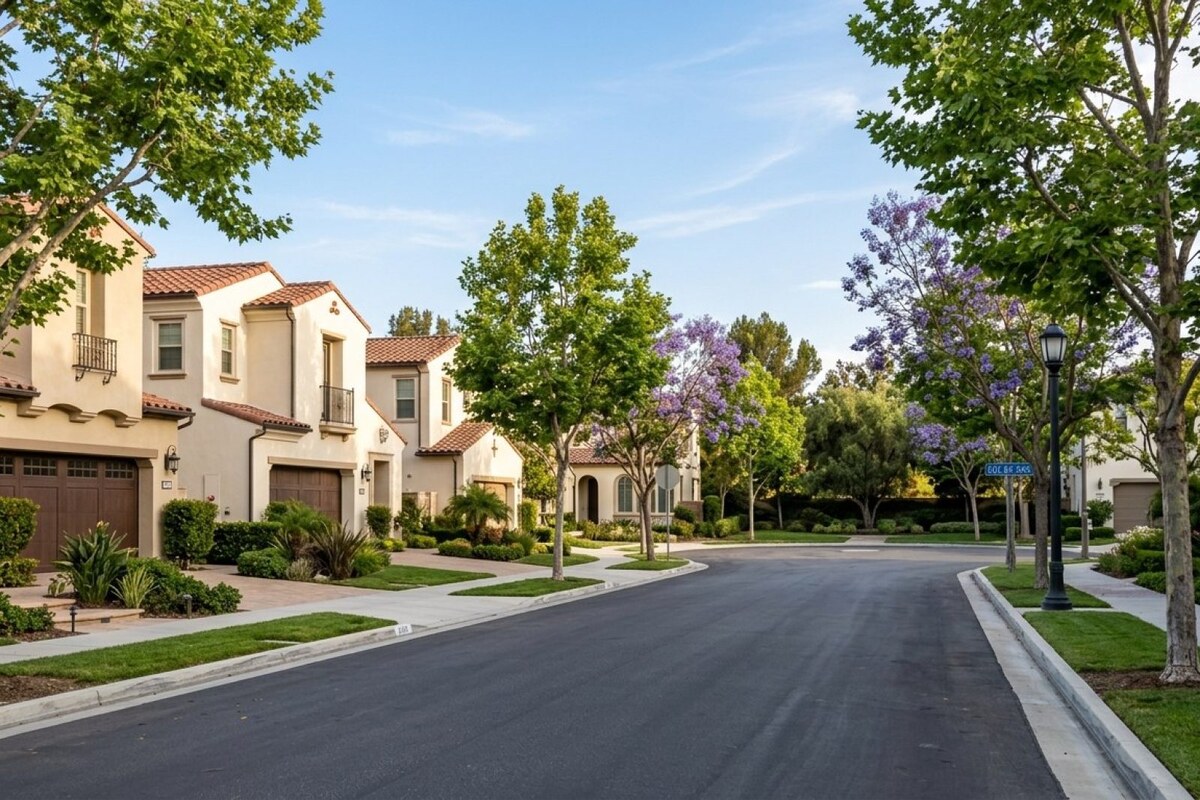
High-value coastal properties in HOA communities face stricter rental enforcement as associations respond to resident concerns.
What's Changing in 2026: Enforcement Escalation Across Coastal Communities
Enforcement Impact
HOA Fine Escalation for Repeat Rental Violations (2026 Schedule)
Repeat offenses within 12 months trigger aggressive multipliers, with third violations reaching $1,500.
View chart data
HOA Fine Escalation for Repeat Rental Violations (2026 Schedule)
Category
Fine Amount ($)
First Violation
$500
Second Violation
$1,000
Third Violation
$1,500
The enforcement shifts unfolding in 2026 do not stem from a single ordinance or state mandate. Instead, individual HOAs are responding to resident pressure and guidance from association counsel by tightening oversight in coordinated fashion. Across Laguna Beach and neighboring coastal communities, the changes converge around three themes: stricter approval workflows, elevated penalties, and broader monitoring.
Property managers are navigating tighter HOA approval workflows as associations implement 2026 enforcement protocols.
Mandatory Pre-Approval and Expanded Documentation
Beginning in early 2026, multiple Laguna Beach associations are mandating that landlords submit rental applications at least 15 business days before the lease commences. The application packet now encompasses the following:
Complete signed lease agreement, including all addenda
Tenant application form with employment verification and references from previous landlords
Credit report and criminal background check, either landlord-provided or HOA-ordered
Evidence of renter's insurance naming the association as additional insured
Signed acknowledgment of CC&Rs and house rules by every adult occupant
Applications submitted with missing documents are returned without board review, and the 15-day timeline restarts from zero. Landlords accustomed to same-week move-ins must now secure tenant commitment earlier and compress lease negotiation windows.
Penalty Increases and Repeat-Offense Multipliers
Fine schedules have escalated. An unapproved tenant move-in that previously drew a warning fine in the range of $250 to $500 now triggers initial penalties of $500 to $750 under 2026 schedules. Subsequent violations within a rolling 12-month period activate multipliers: $1,000 for a second offense, $1,500 for a third, with daily accrual for continuing non-compliance.
Consider a recent case in which a Laguna Beach landlord bypassed the approval process for three consecutive tenant placements. The association assessed cumulative fines and pursued recovery through small claims court, ultimately securing a judgment that required the landlord to terminate the existing lease and submit to a 12-month probationary approval regime for future rentals.
Enhanced Monitoring and Third-Party Compliance Vendors
Several associations have engaged compliance vendors that systematically scrape short-term rental platforms such as Airbnb and VRBO, then cross-reference active listings against the association's property roll. When a match surfaces, the vendor notifies the board, which initiates enforcement. Landlords who assumed a low-profile listing would evade detection now face automated surveillance that closes that operational gap.
Long-term rentals are also subject to heightened scrutiny. Certain HOAs now require annual lease renewals to be submitted for re-approval even when the tenant remains unchanged. The stated rationale: boards seek ongoing visibility into lease terms, rent escalation, and any modifications to occupancy or use.
Navigating the HOA Rental Approval Process: Step-by-Step
Compliance Economics
Typical First-Year HOA Rental Compliance Costs in Laguna Beach
Application fees and screening costs dominate upfront compliance expenses, while violations can double total costs.
View chart data
Typical First-Year HOA Rental Compliance Costs in Laguna Beach
Category
Cost ($)
Application Fee
$250
Tenant Screening
$75
Annual Registration
$0
Insurance Premium
$150
Single Violation (if incurred)
$500
Most landlord-HOA friction originates in the approval process. Boards operate on deliberate timelines, documentation requirements often lack clarity, and denials can appear arbitrary. Below is a structured approach to the workflow that minimizes delays and disputes.
Step One: Review Your CC&Rs and Current Rental Policy
Before you list the property, obtain the most current CC&Rs and any rental policy amendments from the HOA management company. Focus on these elements:
Minimum permissible lease term (30 days, six months, one year)
Rental cap status (whether the community is at or approaching the cap)
Approval timeline (the number of days the board has to respond)
When the CC&Rs were amended after your purchase date, consult legal counsel to determine whether the new restrictions bind your property. In California, rental restrictions typically cannot be applied retroactively to owners who acquired title before the amendment was recorded, though exceptions exist and the case law is fact-specific.
Step Two: Screen Tenants with HOA Criteria in Mind
Your tenant screening should align with the association's approval criteria. When the CC&Rs specify a minimum credit score of 650 or exclude applicants with evictions in the preceding five years, screen accordingly. Submitting an application that fails the HOA's published standards wastes time and signals poor diligence.
Critical screening elements for HOA compliance include:
Credit score: Most associations expect a floor of 650; luxury communities may require 700 or above.
Income verification: The standard 3× rent threshold applies, but HOAs may demand pay stubs, tax returns, or direct employer confirmation.
Criminal background: Associations may reject applicants with violent felony convictions or sex offender registry status, though blanket exclusions for all criminal history may violate fair housing law.
Prior landlord references: Boards expect a clean rental history with no evictions, no lease violations, and no property damage claims.
When the prospective tenant is relocating from out of state or derives income from non-traditional sources (self-employment, gig economy, investment portfolios), provide supplementary documentation upfront. Boards tend toward risk aversion, and ambiguity often results in denial.
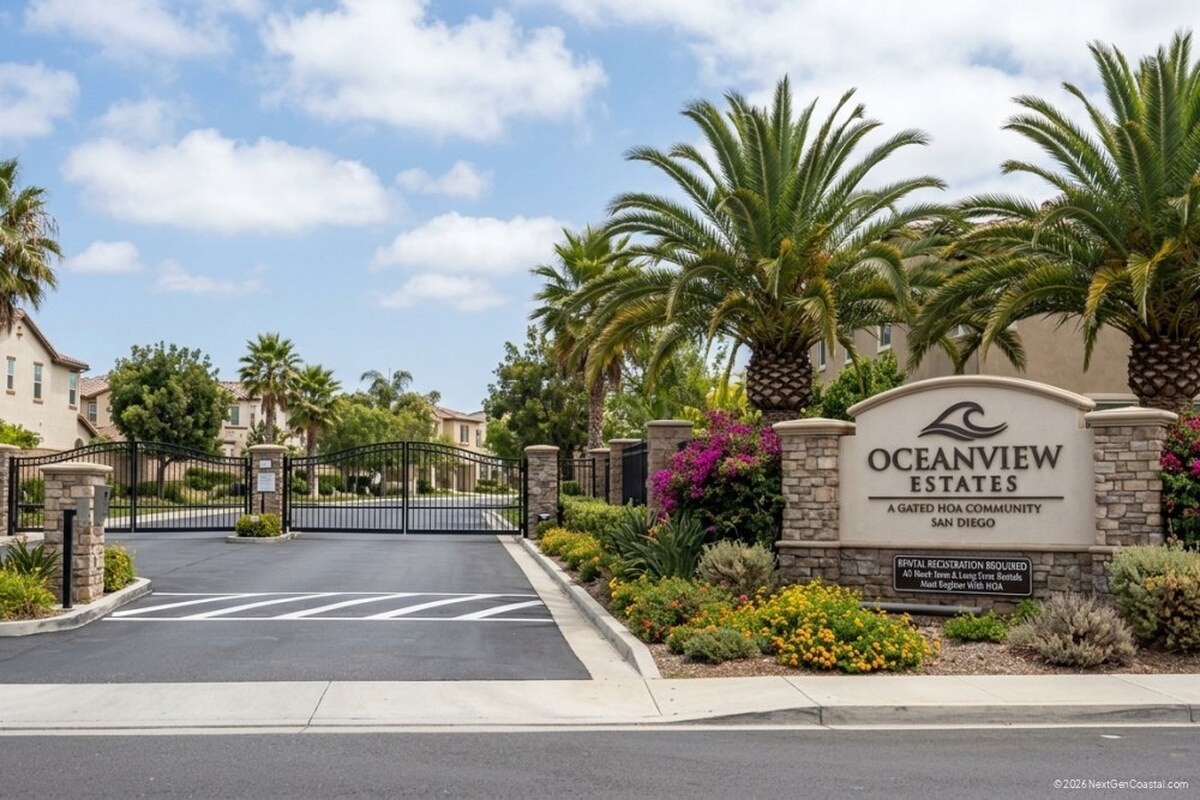
Laguna Beach HOA communities are tightening rental oversight to preserve neighborhood character and owner-occupancy rates.
Step Three: Submit the Application Package Early
Target submission 20 to 25 days in advance of the intended move-in date. This buffer accommodates board meeting schedules (many convene monthly), incomplete-application rejections, and follow-up document requests.
The submission checklist comprises:
Completed HOA rental application form (obtained from the management company)
Fully executed lease agreement with all addenda attached
Tenant application and consent-to-screen forms
Credit report and background check (procured through a tenant screening service)
Certificate of renter's insurance naming the HOA as additional insured
Signed acknowledgment of CC&Rs by all adult occupants
Non-refundable application fee (typically $100 to $300)
Submit via the method prescribed in the CC&Rs (email, online portal, or certified mail). Retain a timestamped record of submission. When the board exceeds its approval deadline, you may have grounds to argue deemed approval, though proceeding without board consent carries legal risk absent counsel.
Step Four: Respond Promptly to Board Requests
When the board requests supplementary documentation (updated pay stubs, a co-signer agreement, clarification of a credit report item), respond within 48 hours. Delays restart the approval clock and may push move-in into the subsequent month, jeopardizing the lease.
Common follow-up requests include:
Explanation of a credit score decline or derogatory mark
Employment verification for a recently hired tenant
Proof of vehicle registration (to enforce parking allocations)
Pet documentation (breed, weight, vaccination records) when the HOA restricts certain animals
Should the board deny the application, request a written explanation that cites the specific CC&R provision. Vague denials referencing "board discretion" or "not a good fit" may be contestable, particularly when the applicant satisfies all published criteria.
Common HOA Rental Disputes and How to Avoid Them
Most landlord-HOA conflicts follow predictable patterns. Understanding the common flashpoints and the corresponding preventive measures keeps you clear of enforcement action.
Unapproved Occupants and Subletting
The most frequent violation: a tenant takes occupancy before HOA approval is granted, or a tenant sublets to a roommate without notifying the landlord or the association. Either scenario triggers fines and, in some instances, demands for lease termination.
Prevention: Incorporate a lease clause that prohibits subletting or additional occupants absent landlord and HOA approval. Conduct periodic drive-bys or request tenant confirmation of occupancy status twice per year. When a tenant seeks to add a roommate, treat the request as a new application and submit it to the HOA for approval.
Parking and Guest Violations
Coastal HOAs maintain strict parking oversight. Tenants who park on the street (when CC&Rs mandate garage or driveway parking), accumulate guest vehicles, or leave boats or recreational vehicles in driveways generate complaints and fines assessed against the landlord, not the tenant.
Prevention: Walk the tenant through parking rules at move-in. Provide a written summary of guest policies, street parking prohibitions, and overnight parking bans. When the HOA permits two vehicles per unit, specify that limit in the lease and require tenants to register vehicle details with the association.
Short-Term Rental Violations
Even in communities with explicit short-term rental prohibitions, landlords occasionally test enforcement by posting Airbnb listings under the assumption of low visibility. The new compliance monitoring vendors have eliminated that operational gap. Fines for short-term rental violations in Laguna Beach HOAs now begin at $1,000 per occurrence, with daily accrual for ongoing listings.
Prevention: When the CC&Rs prohibit rentals shorter than 30 days (or six months, or one year), comply with the restriction. The incremental revenue from short-term rental activity seldom justifies the enforcement risk in HOA communities. If short-term rental income is central to your strategy, target non-HOA properties or communities with explicit short-term rental allowances.
Maintenance and Architectural Violations by Tenants
Tenants who repaint the front door, install satellite dishes, or allow landscaping to deteriorate can trigger HOA architectural violations, which are again assessed against the landlord. In coastal communities with rigorous aesthetic standards, even minor deviations (incorrect shade of white trim, unapproved patio furniture) draw enforcement notices.
Prevention: Include a lease clause requiring tenants to comply with all HOA architectural guidelines and to obtain landlord approval before any exterior modifications. Conduct quarterly property inspections and address maintenance issues (overgrown hedges, peeling paint, broken fixtures) before the HOA issues a notice. When the association sends a violation letter, remedy the issue immediately and document compliance with photographs and receipts.
Landlords who avoid HOA disputes treat association rules as non-negotiable and integrate compliance into lease terms, tenant onboarding, and property management workflows. Reactive enforcement is costly; proactive compliance is economical.
Legal Limits on HOA Rental Restrictions: When to Push Back
While homeowners associations possess broad regulatory authority, they are not exempt from statutory constraints. California courts have invalidated rental restrictions that are retroactive, discriminatory, or unreasonably burdensome. Knowing when to contest an HOA decision (and when to comply) requires legal judgment, but several principles are well-settled.
Retroactive Application of New Restrictions
When you acquired your property before the HOA recorded a rental restriction, the association typically cannot enforce that restriction against your unit without your consent. California Civil Code Section 4740 mandates a supermajority vote (usually 67% of owners) to amend CC&Rs, and even then the amendment may not bind existing owners who relied on the prior rules when purchasing.
Example: You purchased a Laguna Beach condominium in 2018 when the CC&Rs permitted unrestricted rentals. In 2024 the HOA amended the CC&Rs to impose a six-month minimum lease term. The new rule likely does not apply to your unit unless you voted in favor of the amendment or the CC&Rs include a specific retroactivity provision. Consult legal counsel before complying with a restriction that post-dates your acquisition.
Discriminatory Tenant Denials
Associations may not reject tenants on the basis of race, religion, national origin, familial status, disability, or (under California law) source of income. When a board denies a Section 8 voucher holder solely because of the voucher, that constitutes illegal discrimination. Similarly, blanket prohibitions on families with children or applicants with service animals violate fair housing law.
If you suspect a discriminatory denial, document the board's stated rationale, compare it to the CC&R criteria, and consult a fair housing attorney. Discrimination claims can yield substantial damages and attorney's fees, and associations generally become risk-averse once legal exposure is raised.
Unreasonable or Arbitrary Restrictions
California courts apply a reasonableness standard to HOA rules. A restriction that serves no legitimate purpose, is selectively enforced, or imposes costs wildly disproportionate to the purported harm is vulnerable to challenge. For instance, a rule requiring landlords to pay annual rental registration fees in excess of several thousand dollars with no corresponding service might be deemed unreasonable.
Challenging an HOA rule is expensive and protracted, so the economic calculus usually favors compliance unless the restriction threatens the rental's viability. If you are contemplating a legal challenge, weigh litigation costs against the cost of divesting the property or converting it to owner occupancy.
Practical Compliance Checklist for Laguna Beach Landlords
Remaining compliant in an HOA community demands systems, not improvisation. Below is the checklist we employ at NextGen Coastal to keep rental properties clear of enforcement trouble.
A structured approval workflow prevents missed deadlines and documentation gaps that trigger HOA fines.
Pre-Listing Phase
Obtain current CC&Rs and rental policy documents from the HOA management company
Verify rental cap status and waitlist position, if applicable
Review minimum lease term, approval timeline, and application requirements
Budget for HOA application fees (typically $100 to $300) and any annual rental registration fees
Confirm that your landlord insurance policy covers HOA fines and legal defense costs
Tenant Screening Phase
Screen applicants against HOA criteria (credit score, criminal history, income verification)
Order credit report and background check through a compliant screening service
Collect references from prior landlords and employment verification documentation
Confirm the tenant maintains renter's insurance or is willing to obtain it, with the HOA named as additional insured
Disclose HOA rules, parking restrictions, and pet policies during property showings
Application Submission Phase
Submit the application package 20 to 25 days before the target move-in date
Include all required documents: lease, tenant application, credit and background reports, insurance certificate, CC&R acknowledgment
Remit the application fee and retain the receipt
Confirm receipt with the HOA management company and request an estimated approval date
Respond to any follow-up requests within 48 hours
Post-Approval Phase
Provide the tenant with HOA contact information, parking pass (if applicable), and a copy of the CC&Rs
Walk the tenant through parking rules, guest policies, and architectural guidelines at move-in
Conduct quarterly property inspections to identify maintenance or compliance issues early
Monitor HOA communications (newsletters, violation notices, board meeting minutes)
If the tenant requests a lease modification (adding an occupant, subletting, acquiring a pet), treat it as a new application
Ongoing Compliance
Pay HOA dues on time (delinquent dues can trigger rental restrictions or fines)
Respond to violation notices within the cure period (typically 10 to 30 days)
Document all compliance efforts (photographs, receipts, correspondence) in case of dispute
If the lease renews, confirm whether the HOA requires re-approval for continuing tenancy
Review CC&Rs annually for amendments that may affect rental terms
When Disputes Escalate: Mediation, Arbitration, and Legal Action
When you receive a violation notice or application denial you believe is unjustified, the dispute resolution pathway typically follows this sequence.
Informal Resolution
Begin with a phone call or email to the HOA management company or board president. Many disputes arise from miscommunication or incomplete information. Provide the missing documentation, clarify the misunderstanding, and request withdrawal of the notice. When the issue involves a tenant violation (parking, noise), demonstrate that you have addressed it with the tenant and implemented corrective measures.
Formal Appeal to the Board
If informal resolution proves unsuccessful, request a hearing before the board. California Civil Code Section 5855 requires HOAs to afford owners an opportunity to be heard before imposing fines exceeding $500 or taking other disciplinary action. Prepare a written statement, bring supporting documents (lease, correspondence, photographs), and be ready to answer questions. Board hearings are not courtroom proceedings; tone matters, and a cooperative posture often yields better outcomes than an adversarial stance.
Mediation and Arbitration
Many CC&Rs mandate mediation or arbitration before either party may file a lawsuit. Mediation is non-binding and relatively inexpensive (mediator fees typically range from $500 to $2,000, split between the parties). Arbitration is binding and more formal, with costs comparable to litigation. When the dispute involves a significant financial stake (the HOA is demanding lease termination or imposing fines exceeding $10,000), arbitration may be the most efficient resolution mechanism.
Litigation
Lawsuits against HOAs are expensive and protracted. Attorney's fees for a full trial can reach $50,000 to $100,000 or more, and cases often require 18 to 24 months to resolve. California's prevailing-party rule means the losing side may be ordered to pay the winner's attorney's fees, which substantially raises the stakes. Litigation makes sense only when the economic harm is substantial, the legal issue is clear-cut, and informal resolution has been exhausted.
Before filing suit, consult an attorney who concentrates in HOA law. The case law is intricate, and procedural missteps (missing a statute of limitations, failing to exhaust internal remedies) can defeat an otherwise meritorious claim.
Market Impact: How HOA Restrictions Affect Rental Yields and Property Values
Stricter HOA rental enforcement carries tangible economic consequences. In Laguna Beach and comparable coastal markets, properties in HOA communities with restrictive rental policies trade at a discount of approximately 5% to 10% relative to non-HOA or rental-friendly HOA properties, all else equal. The discount reflects reduced investor demand and the operational friction inherent in compliance.
For landlords already operating in these markets, the 2026 enforcement escalation may compress yields. Elevated application fees, extended approval timelines, and the risk of fines add to operating costs. Vacancy periods lengthen when you must account for 20 to 25 days of HOA approval before a new tenant can take occupancy. When the association imposes a rental cap and your property is waitlisted, the unit may remain vacant for months.
Conversely, properties in rental-friendly HOAs or non-HOA coastal neighborhoods are attracting stronger investor interest. In Newport Beach and Dana Point, where some neighborhoods impose no HOA or minimal rental restrictions, single-family rentals are commanding cap rates 50 to 75 basis points higher than comparable HOA-restricted properties. The premium reflects operational simplicity and lower compliance risk.
If you are evaluating a Laguna Beach acquisition, incorporate HOA rental restrictions into your underwriting. Request the CC&Rs during due diligence, confirm rental cap status, and model the cost of compliance (application fees, potential fines, extended vacancy). A property that pencils at a 5.2% cap rate in a rental-friendly neighborhood may drop to 4.5% or 4.8% once you account for HOA friction.
Looking Ahead: What 2026 Means for Coastal Rental Operators
The enforcement escalation taking effect in 2026 represents a new baseline, not a temporary crackdown. HOAs in Laguna Beach and across coastal Orange County have invested in compliance infrastructure (monitoring vendors, updated CC&Rs, legal counsel) and are unlikely to reverse course. For landlords, the path forward is straightforward: integrate compliance into your operating model, or shift capital to less-restricted inventory.
The operators who will succeed in this environment are those who treat HOA rules as a fixed cost of doing business, not an obstacle to be circumvented. That means accepting longer approval timelines, conducting tighter tenant screening, maintaining proactive communication with boards, and maintaining zero tolerance for lease violations. It also means exercising selectivity in acquisitions, passing on properties in high-friction HOAs and targeting neighborhoods where rental operations are straightforward.
For operators managing multiple coastal rentals, the compliance burden is substantial but manageable. Standardized workflows, early application submission, and rigorous tenant onboarding reduce the risk of fines and disputes. The properties that generate the most operational friction are those where compliance is reactive, where the landlord learns about HOA rules only after receiving a violation notice.
Operators who used 2025 as a planning year (updating lease templates, mapping HOA approval timelines, stress-testing tenant screening against association criteria) are positioned to proceed through 2026 without operational disruption.
Frequently Asked Questions
Can my Laguna Beach HOA ban rentals entirely?
California law allows HOAs to impose rental restrictions through recorded CC&Rs, but outright bans are generally unenforceable if applied retroactively to owners who purchased before the restriction was recorded. If you bought your property when rentals were allowed, the HOA likely cannot prohibit you from renting without your consent. However, new restrictions (minimum lease terms, approval requirements, rental caps) may apply if properly adopted through a supermajority vote. Consult an attorney to determine whether a rental ban applies to your specific property and purchase date.
What happens if I move a tenant in before HOA approval?
Moving a tenant in before HOA approval is one of the most common, and costly, violations. Associations typically impose fines starting at $500 for a first offense, escalating to $1,000+ for repeat violations. In some cases, the HOA may demand lease termination or seek injunctive relief to remove the tenant. The violation also creates a compliance record that can complicate future rental applications. Always submit the application package 20–25 days before move-in and wait for written approval before allowing occupancy.
How long does HOA rental approval take in Laguna Beach?
Approval timelines vary by association but typically range from 10 to 30 days. Many boards meet monthly, so if your application arrives just after a meeting, you may wait four weeks for the next review cycle. Incomplete applications are returned without review, resetting the clock. To avoid delays, submit a complete application package, lease, tenant screening, insurance, CC&R acknowledgment, at least 20–25 days before your target move-in date. Confirm receipt with the management company and request an estimated approval date.
Can an HOA reject my tenant based on credit score?
Yes, if the CC&Rs specify minimum credit score requirements (commonly 650 or higher), the HOA can reject applicants who fall below that threshold. However, the association must apply the criteria consistently and cannot use credit score as a pretext for discrimination based on protected classes. If your tenant has a lower credit score but strong compensating factors (high income, substantial savings, excellent rental history), provide that context in the application. Some boards have discretion to approve borderline cases, but there is no guarantee.
What are the fines for HOA rental violations in 2026?
Fine structures vary by association, but 2026 schedules in Laguna Beach HOAs typically start at $500–$750 for first-time violations (unapproved tenant, parking violation, lease term breach). Repeat offenses within 12 months trigger escalating penalties: $1,000 for a second violation, $1,500 for a third, with daily accrual for ongoing non-compliance. Short-term rental violations in communities with STR bans often carry higher fines, $1,000+ per occurrence. Review your HOA's fine schedule in the CC&Rs or request it from the management company.
Can I challenge an HOA rental restriction that was added after I bought my property?
Yes, but success depends on the timing and language of the CC&R amendment. California law generally prohibits retroactive application of rental restrictions to owners who purchased before the amendment was recorded, unless the owner consented to the change. If you bought your Laguna Beach property in 2018 when rentals were unrestricted, and the HOA imposed a six-month minimum lease term in 2024, you may have grounds to argue the new rule does not apply to your unit. Challenging an HOA restriction requires legal counsel and a clear paper trail showing your purchase date and the amendment's effective date. Consult an attorney before taking action.
Navigate Laguna Beach HOA Compliance with Confidence
NextGen Coastal manages the full HOA approval workflow, application submission, board communication, tenant onboarding, and ongoing compliance monitoring, so you avoid fines and maintain stable occupancy. Let's discuss your coastal rental portfolio.
Strategic advisor to NextGen Coastal. Covers California Coastal Commission rulings, AB/SB legislation affecting coastal real estate, and the long-term policy trajectory shaping coastal investment.



 Built by NextGen Coastal