The Legal Definitions: Size, Kitchen, Entrance
Detached ADUs go up to 1,200 sf. JADUs are capped at 500 sf and must fit within the existing walls of the primary residence.
View chart data
| Category | Square Feet |
|---|---|
| JADU (max) | 500 |
| Attached ADU (1BR) | 850 |
| Attached ADU (2BR+) | 1,000 |
| Detached ADU (max) | 1,200 |
AB 68 and its successor legislation define the two units by structural constraints rather than nomenclature. The distinction is physical.
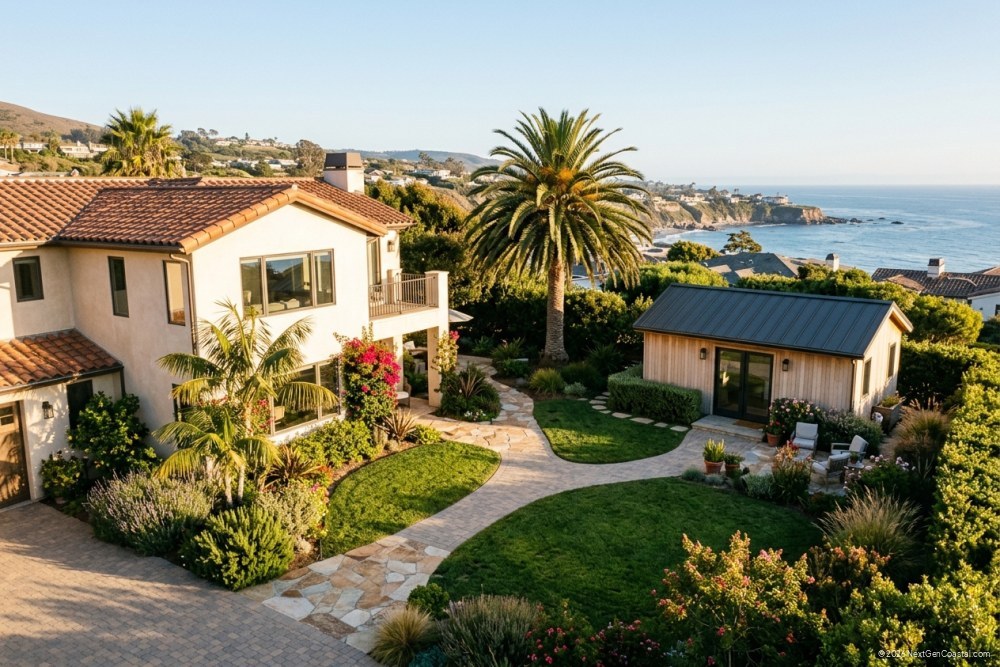
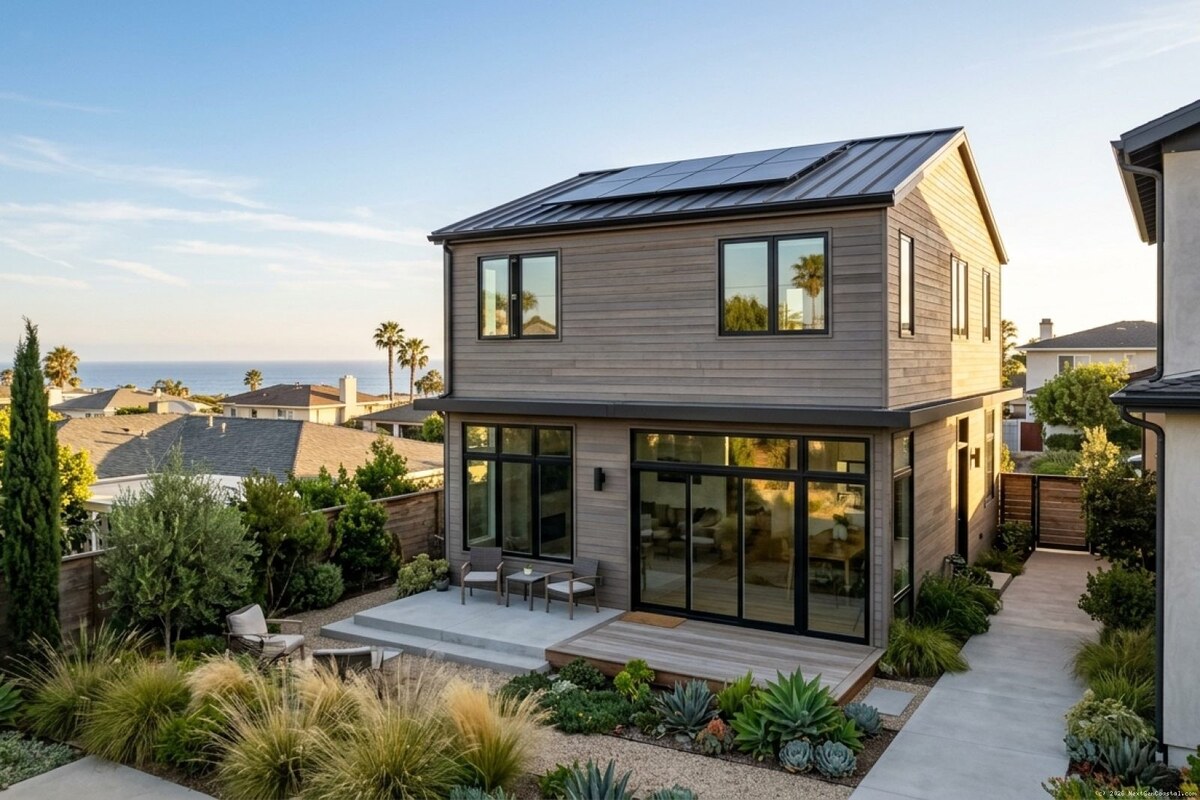
- ADU: Detached units may reach 1,200 square feet; attached configurations are capped at 850 square feet for one bedroom or 1,000 square feet for two or more bedrooms under Gov. Code § 65852.2(e)(1). Every ADU requires a full kitchen, independent bathroom, and separate entrance. Owner occupancy is not mandated statewide.
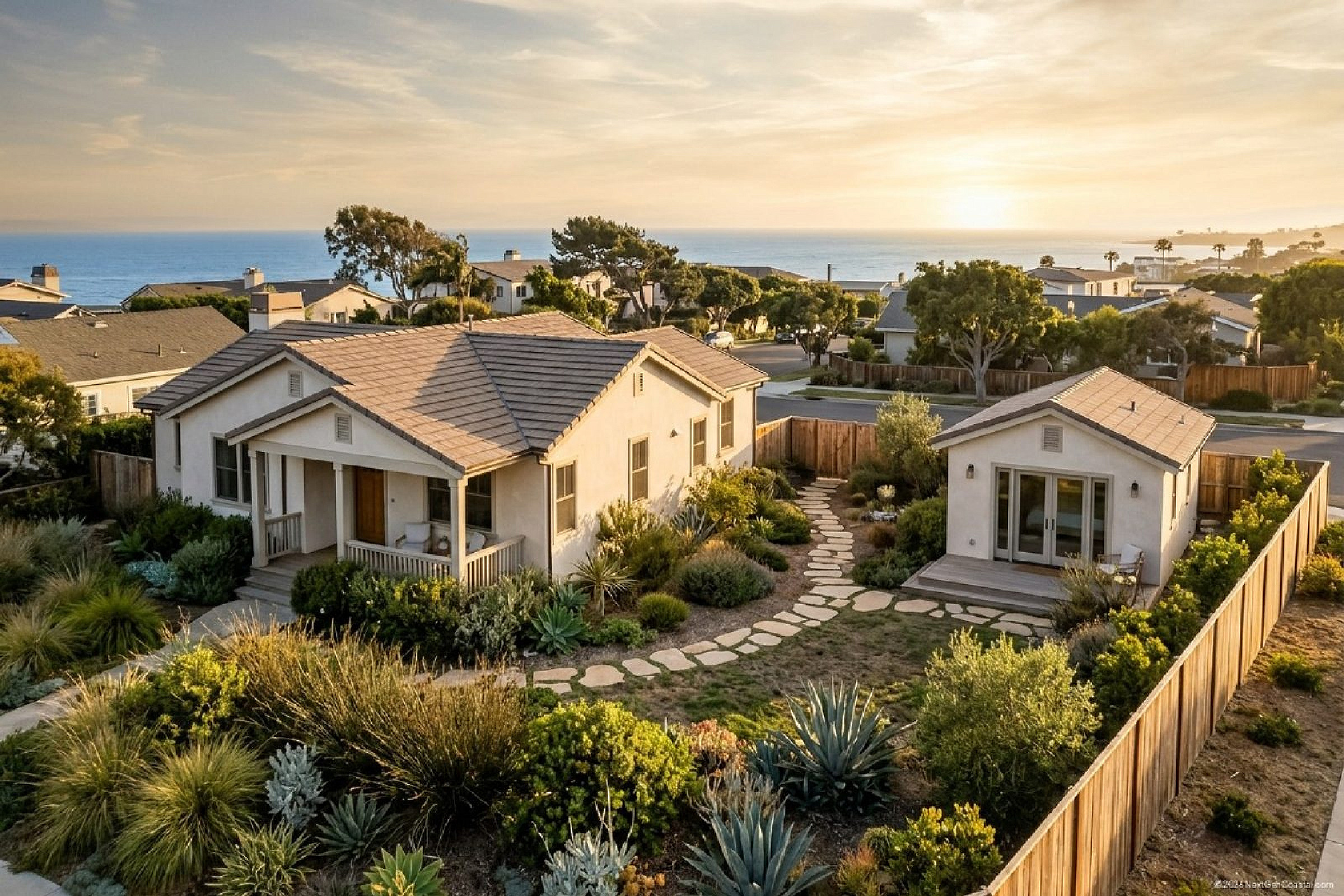
- JADU: Maximum 500 square feet, constructed entirely within the existing footprint of a single-family residence or attached garage per Gov. Code § 65852.22(h)(1). The unit may share a bathroom with the primary dwelling. An efficiency kitchen, limited to a sink, refrigerator, and two-burner cooktop, satisfies the cooking requirement. Owner occupancy of either the primary residence or the JADU as a principal residence is mandatory.
That owner-occupancy clause is the binding constraint for most coastal investors. If the parcel sits outside your primary-residence portfolio, the JADU is ineligible and you revert to the ADU framework.
"The owner-occupancy mandate on JADUs is the single biggest practical difference, if you don't live on the property, you build an ADU."
Property Tax: How Each Unit Affects Your Basis
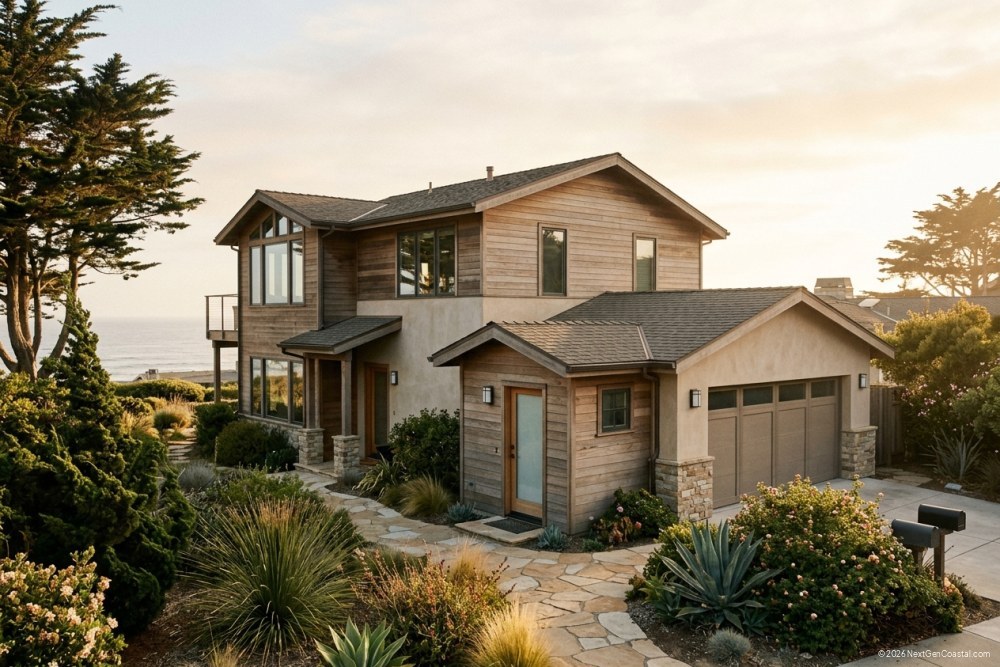
Proposition 13 limits reassessment to change-of-ownership events or new construction, and both ADUs and JADUs qualify as new construction under Revenue and Taxation Code § 70(c). The county assessor adds only the newly constructed accessory unit to your assessed value; the primary residence retains its existing Prop 13 base year. A detached ADU with a construction cost of $225,000 on a parcel with a primary residence assessed at $1,150,000 yields a combined assessed value near $1,375,000, not a reassessment to full current market value, which in Orange County coastal zones often exceeds $3,000,000. The JADU receives identical partial-reassessment treatment: the assessor capitalizes construction cost and adds it to the existing base, leaving the remainder untouched.
Certain coastal jurisdictions have attempted to trigger full reassessment when the ADU represents a substantial improvement or exceeds threshold square footage. The State Board of Equalization has consistently rejected those arguments, holding that partial reassessment applies regardless of unit size or finish quality so long as the primary residence does not transfer ownership. Annual incremental property tax therefore approximates the ADU construction cost multiplied by the combined rate in your tax-rate area, typically 1.00% to 1.10% in Orange County coastal cities after accounting for Mello-Roos and direct assessments.
Permitting Timelines and Coastal Commission Jurisdiction
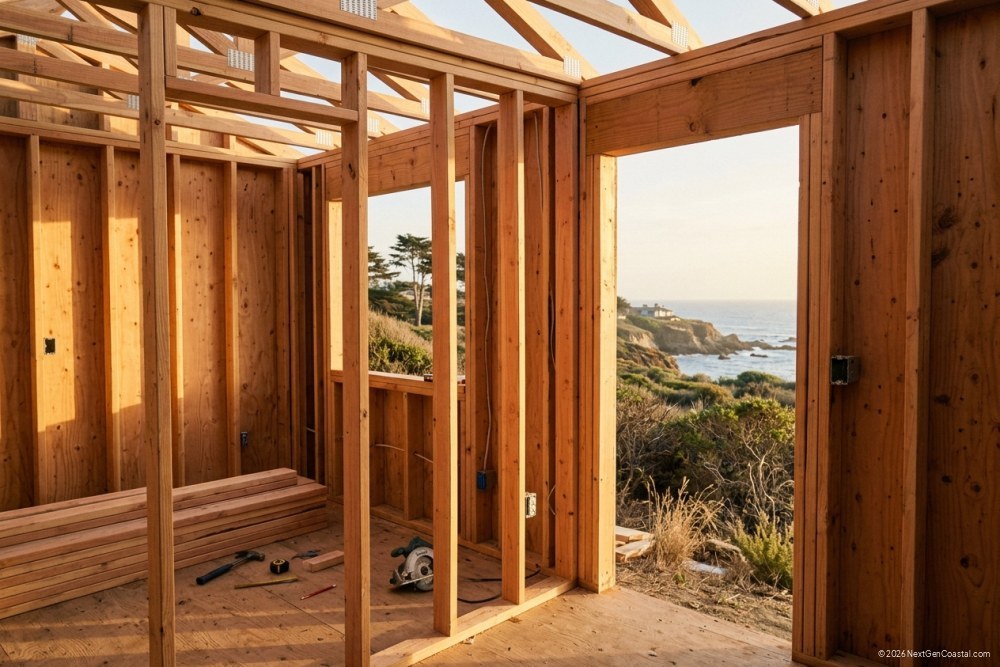
Gov. Code § 65852.2(a)(3) requires cities and counties to approve or deny ADU applications ministerially within 60 days of submittal. JADUs receive the same expedited treatment under Gov. Code § 65852.22(a)(4). The California Coastal Commission introduces a second layer of review that the 60-day cap does not displace.
- Parcels located within the Coastal Zone, defined by the California Coastal Act as the area extending roughly 1,000 yards inland from mean high tide, may require a Coastal Development Permit (CDP) in addition to the local building permit.
- Cities that have adopted a certified Local Coastal Program (LCP) under Public Resources Code § 30500 may issue ADU and JADU permits without separate CCC approval, provided the unit complies with the LCP's development standards.
- Cities without a certified LCP, or parcels within appealable jurisdictions as designated in the LCP, trigger CCC review. The procedural mechanics are detailed in our San Diego JADU CCC permits guide and OC coastal setback rules.
When a CDP is required, the timeline shifts from the statutory 60-day window to the LCP's appeal period plus any de novo hearing scheduled by the Commission. Budget 90 to 180 days for parcels that fall into CCC jurisdiction, depending on whether the application is heard on the consent calendar or pulled for full review.
Short-Term Rental Eligibility: Where It Gets Restrictive
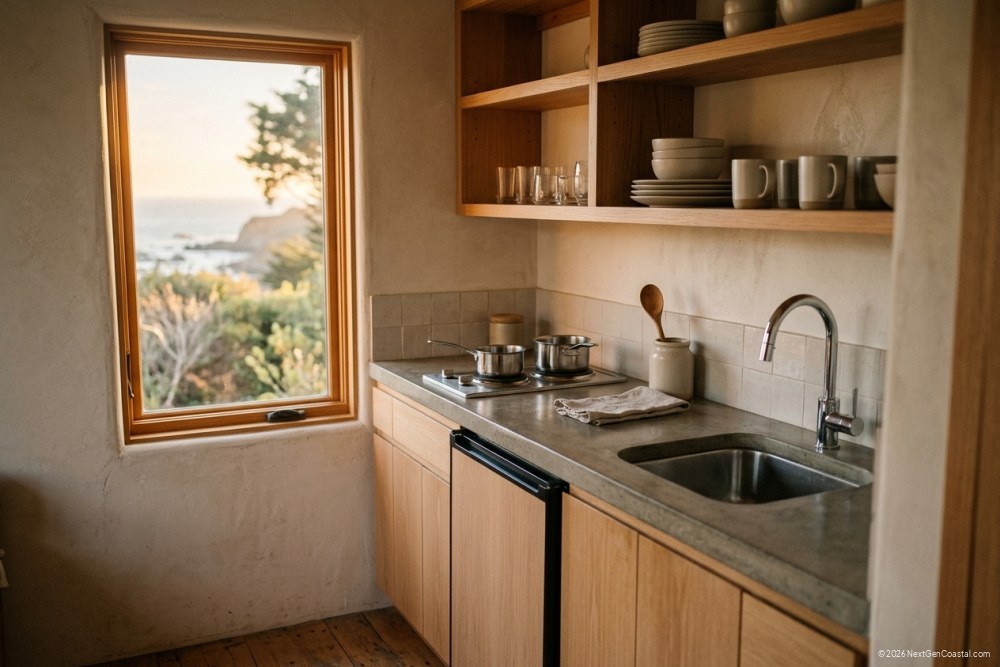
Coastal municipalities have adopted STR prohibitions on properties with permitted accessory units as a housing-preservation measure. Representative examples follow.
- Oceanside: Any parcel on which an ADU or JADU was permitted on or after September 9, 2017, is prohibited from operating a short-term rental in the primary residence, the ADU, or the JADU under Oceanside Municipal Code § 30A.140.
- Newport Beach: ADUs and JADUs are restricted to rentals of 30 days or longer per Newport Beach Municipal Code § 20.62.050. Our Newport Beach STR permit guide documents the interaction with the city's Tier 1 and Tier 2 licensing structure.
- Santa Monica: JADUs and most ADUs are limited to long-term tenancies under Santa Monica Municipal Code Chapter 6, with exceptions carved out for specific affordable-housing covenants.
- San Diego: Short-term rentals in ADUs and JADUs require a Tier 1 STR license under San Diego Municipal Code § 510.0101, and certain community-plan areas impose additional caps or outright prohibitions depending on parcel location.
- Newport Beach: ADUs and JADUs are prohibited from operating as short-term rentals, any tenancy under thirty days. Refer to our Newport Beach STR permit guide for the relevant municipal code restrictions.
If your underwriting assumes transient occupancy at nightly rates, verify the local ordinance before submitting plans. The state ADU statutes accelerate permitting and waive owner occupancy on ADUs to expand the long-term rental supply; cities have responded by using STR bans to prevent accessory units from re-entering the transient market. Our city-by-city STR compliance guide catalogs the restrictions across the California coast.
Financing and Refi Treatment
Fannie Mae and Freddie Mac recognize ADUs as legal accessory dwelling units under their respective selling guides, and an increasing number of portfolio lenders will underwrite projected ADU rent when calculating debt-service coverage ratios on refinance applications. JADUs occupy murkier territory: some lenders classify the JADU as additional square footage within the primary residence rather than a separate rentable unit, which excludes the rent stream from DSCR calculations. If you intend to refinance against rental income from the accessory unit, the ADU presents cleaner documentation and fewer appraisal complications.
When to Pick Which
| Goal | Build an ADU | Build a JADU |
|---|---|---|
| You don't live on the property | ? | , |
| You want a detached unit | ? | , |
| Maximum square footage matters | ? (up to 1,200 sf) | , (capped at 500 sf) |
| Lowest construction cost | , | ? (within existing walls) |
| Refi-friendly rent stream | ? | , |
| Multigenerational unit | ? | ? |
- ADU: The assessor appends the new ADU portion to your assessed value at prevailing market rates; the existing home retains its Proposition 13 base. If your primary residence carries a $1.2 million assessment and you construct a $250,000 ADU, the combined assessed value rises to approximately $1.45 million rather than triggering a full reassessment to the property's $3 million-plus market value.
- JADU: Identical partial-reassessment mechanics apply. The assessor adds the JADU's construction cost to the roll; the remainder of the dwelling preserves its Proposition 13 base.
Frequently Asked Questions
Does adding an ADU trigger full property-tax reassessment?
Can I rent out my JADU on Airbnb?
Do I have to live on the property to have an ADU?
How long does ADU permitting take in the coastal zone?
Is the ADU rent counted toward my mortgage refinance?