Why Retention Matters More on the Coast
A single tenant turnover in a coastal luxury rental costs owners ,000–,000 in lost revenue and expenses.
View chart data
| Category | Cost ($) |
|---|---|
| Lost Rent (45 days) | $18,000 |
| Make-Ready Costs | $5,500 |
| Leasing Commission | $12,000 |
| Total Turnover Cost | $35,500 |
Coastal rents don't wait. The places I manage run from eight thousand a month to well over twenty in Newport Coast. An empty property bleeds cash.
The hit comes in layers:
- Vacancy window: You'll wait four to six weeks on average. Winter months stretch longer.
- Make-ready work: Paint, steam-clean carpets, trim the yard. Three to eight thousand for a property in decent condition.
- Leasing fee: One full month of rent goes to the broker who fills it.
- Market drift: While you sit empty, comps are rising. You lose rent growth every day.
A single churn can cost twenty-five to forty thousand. Our retention work exists to avoid that number.

Screening: The Foundation of Retention
You keep a tenant by picking the right one. We vet applicants in three stages before anyone signs.
Interactive Tool
Coastal Tenant Turnover Cost Calculator
Tally the all-in cost of one turnover, vacancy, make-ready, marketing, broker fee, and see how many months of rent it eats.

Coastal CA average is 3–6 weeks; longer in restrictive permit cities.
Most coastal listings pay 1 month, premium properties up to 2 months.
 Built by NextGen Coastal
Income Verification at 3× Rent Minimum
We need to see monthly income at 3× the rent. Documentation matters. For a Laguna Beach home renting at ten thousand, the applicant brings proof of thirty thousand monthly or three hundred sixty thousand annually. Bank statements alone won't clear it. I ask for pay stubs from the last two months. If someone's self-employed, I want the most recent tax return plus bank statements. Offer letters work for new jobs. This floor keeps rent affordable relative to income, which reduces late payments and financial stress that leads to early move-outs.
Credit and Rental History Deep Dive
Credit reports come first. Then I call previous landlords. Not just the current one (they might want the tenant gone). I go back two or three years if possible.
What I'm checking:
- Credit score above 700 (I'll flex for strong income paired with clean rental history)
- Zero evictions or rent-related collections
- References spanning at least a couple of years
- Tenancy duration of eighteen months or longer in prior homes
Coastal applicants often have complex income. Stock compensation, trust disbursements, overseas sources. We know how to verify those without lowering our bar or rejecting qualified people.
Lifestyle Fit and Expectations Alignment
This layer is subjective but it matters.
During showings, I watch how applicants talk about the property. A family hunting near Newport-Mesa Unified or Laguna Beach Unified looks different from a tech contractor on a two-year assignment. We don't discriminate, but we do ask intent questions. How long do you plan to stay? What brought you to this neighborhood? Do you have kids enrolled locally? The answers shape my leasing recommendations to owners.
"We've found that tenants who choose a coastal home for lifestyle reasons, proximity to the beach, walkability, school quality, tend to stay longer than tenants driven purely by job relocation. Screening for intent is as important as screening for income."
Communication Cadence That Builds Trust
After move-in, retention becomes proactive contact. I don't sit back and wait for complaints. We schedule regular touchpoints to surface issues early.
30-Day Check-In
I call every new tenant within the first month. The script is simple. How's the home? Any questions about the appliances or systems? Anything we should address?
Two things happen. First, we catch small annoyances (a sticky door, a landscaping question) that cost little to fix but irritate if ignored. Second, it signals we're present. Early responsiveness correlates with higher renewal rates in our tracking.
Quarterly Property Inspections
We walk every property in person every 90 days. These aren't punitive walkthroughs. They're maintenance catches.
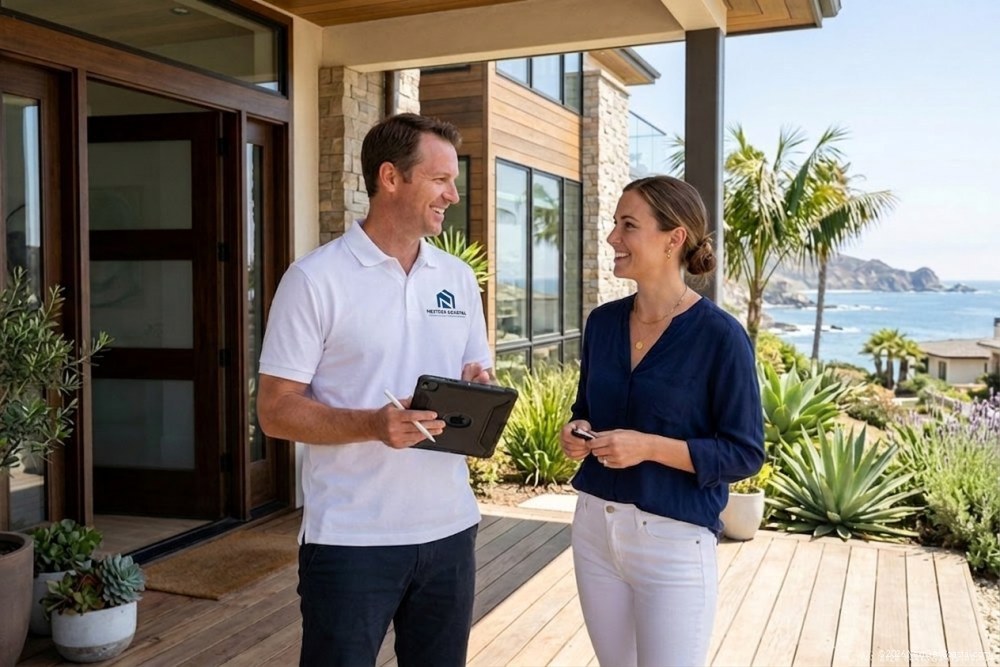
Our property managers (all based in Costa Mesa, all in the white NextGen Coastal polo) give forty-eight hours' notice, walk interior and exterior, photograph condition. We check for deferred maintenance, unreported damage, lease compliance. But we also spot things the tenant might miss. Slow roof leaks. Failing HVAC parts. Irrigation problems. Catching these early prevents expensive emergency repairs and the frustration that drives non-renewals.
Renewal Outreach at 120 Days
Renewal talks start 120 days before lease expiration. Owners need time to evaluate rent adjustments (we pull comps). Tenants need time to plan.
California's tight coastal rental market rewards early clarity. If we're proposing a rent increase, I explain why with data. Comparable homes in your Newport Beach neighborhood are now leasing at $X; we're proposing $Y, which keeps you below market while reflecting property value. Transparency reduces pushback. It improves renewal rates. We see higher renewals when we start at 120 days versus waiting until 60.
Maintenance Responsiveness: The Retention Multiplier
Slow maintenance drives turnover faster than anything. Luxury coastal tenants expect prompt, professional service. Our maintenance system prioritizes both.
24-Hour Acknowledgment, Prioritized Dispatch
Every maintenance request through our tenant portal gets acknowledged within 24 hours. Emergencies (plumbing leaks, HVAC failures, security breaches) get same-day dispatch, usually within two to four hours. Non-urgent requests get a timeline. We'll have a vendor on-site by [date] to assess and repair.
Communication is the trick. Tenants don't expect instant fixes for every issue. They expect to know when help arrives.
Vetted Coastal Vendor Network
We maintain a curated vendor list. Licensed, insured contractors who specialize in coastal properties. These aren't the cheapest options. We prioritize quality, responsiveness, familiarity with coastal building codes and salt-air corrosion.
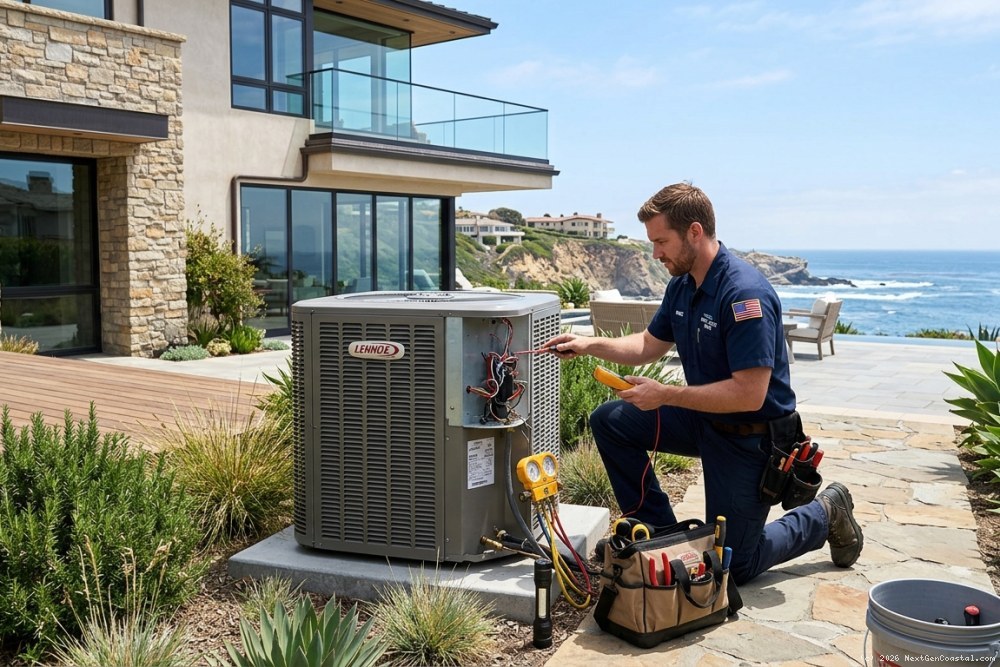
Our plumbers understand older copper systems in Laguna Beach cottages. HVAC techs know ductless mini-splits common in modern Newport Coast builds. Landscapers understand drought-tolerant coastal plantings and HOA requirements in gated communities. This specialization means faster repairs, better quality, fewer callbacks.
Preventive Maintenance Calendar
We don't wait for breakdowns. Every property sits on a preventive maintenance calendar:
- HVAC service: twice yearly (spring and fall), plus quarterly filter swaps
- Landscape maintenance: weekly or bi-weekly service, seasonal color rotation, irrigation audits
- Gutter cleaning: before winter rains (critical in hillside properties like Laguna's Top of the World)
- Pool and spa service: weekly chemical balance, quarterly equipment inspection
- Appliance check: annual inspection of major systems (water heater, dishwasher, disposal)
This proactive approach costs owners twelve hundred to twenty-four hundred annually, depending on property size. But it avoids the five-to-fifteen-thousand-dollar emergency repairs that result from deferred work. It keeps tenants happy. A tenant who never experiences a broken AC in July or a flooded garage in January is a tenant who renews.
Financial Transparency and Owner Communication
Retention isn't just tenant work. It's owner education. We provide:
- Monthly financial statements delivered by the 10th of each month, covering rent collected, expenses paid, net owner distribution
- Quarterly portfolio reviews for multi-property owners, tracking occupancy trends, maintenance spend, market rent analysis
- Renewal recommendations backed by data (I don't just say "renew at $X"; I show comps, explain reasoning, forecast turnover cost if the tenant walks)
- Maintenance transparency: every repair over five hundred dollars gets pre-approval (unless it's an emergency), with photos and vendor quotes delivered through our owner portal
This builds trust. Owners see that what we do extends beyond rent collection. We protect their asset, maximize occupancy, deliver predictable cash flow. When owners trust our judgment on renewals and pricing, we execute retention strategies without friction.
Data from Our Portfolio: What Works
NextGen's retention-first strategy delivers 44% longer tenancies and 40% faster re-lease times than county averages.
View chart data
| Category | NextGen Coastal | OC Market Average |
|---|---|---|
| Avg Tenancy (mo) | 26 | 18 |
| Re-Lease Time (days) | 21 | 40 |
| Renewal Rate (%) | 68 | 50 |
We manage over two hundred coastal California units. We track retention metrics. Here's what shows up:
- Average tenancy length: 26 months across our portfolio
- Renewal rate: two-thirds of tenants renew at least once; one-third renew twice or more
- Turnover cost: when it happens, our average cost to owners runs around eighteen thousand dollars (lost rent, make-ready, leasing), lower than market because we maintain properties proactively and re-lease efficiently
- Maintenance response time: over ninety percent of non-emergency requests resolved within seven days; all emergencies addressed same-day
These outcomes flow from our systems. Each additional month a tenant stays is a month of uninterrupted cash flow for the owner and compounding return on their coastal California investment.
When Turnover Happens: Our Re-Lease Process
Despite everything, turnover is inevitable. Job relocations happen. Family changes happen. Life happens. When a tenant gives notice, we move immediately.
Pre-Marketing and Showings
We start marketing 45 days before vacancy, with tenant cooperation. Professional photos (we re-shoot if the property has been updated), detailed listing copy emphasizing coastal lifestyle and neighborhood perks, syndication across Zillow, Apartments.com, our proprietary NextGen Coastal site.
Showings happen during the notice period. The goal is a signed lease before the current tenant moves out. In high-demand markets like Newport Beach and Coronado, we often achieve near-zero vacancy. The new tenant moves in shortly after the old one moves out.
Make-Ready Standards
Our make-ready process stays consistent. Professional cleaning. Paint touch-up or full repaint (depending on condition and tenancy length). Carpet cleaning or replacement. Landscape refresh. Final walkthrough with photos.
We don't cut corners. Coastal tenants expect move-in-ready condition. First impressions drive lease conversions. A well-presented home leases faster and commands higher rent.
Re-Lease Timeline
Our average time-to-lease is 21 days from vacancy. Orange County runs 35 to 45 days, per industry reports. Speed matters. Every week of vacancy is two to three-and-a-half thousand in lost rent for a typical coastal property. Our systems (pre-marketing, professional presentation, responsive showing coordination, efficient screening) compress that timeline and get owners back to cash flow faster.
Why Owners Choose NextGen Coastal for Retention
We're not the cheapest property management option in coastal California. What we charge is transparent and competitive, but we're not racing to the bottom. Owners choose us because retention equals revenue, and revenue drives returns.
Here's what sets us apart:
- Coastal specialization: we only manage coastal California properties (Newport Beach, Laguna Beach, Dana Point, La Jolla, Coronado, Santa Barbara, Malibu). We know these markets, these neighborhoods, these tenant profiles.
- Boutique scale: two hundred-plus units is large enough for systems, small enough to know every property and tenant by name.
- Protection focus: our job is protecting your asset and maximizing cash flow. Every decision (screening, pricing, maintenance spend) gets made through that lens.
- Local presence: we're headquartered in Costa Mesa, on the coast. Our team lives and works in the communities we serve. We're not a national franchise with a call center in another state.
- Proprietary technology: our owner and tenant portals provide real-time visibility into financials, maintenance, communication. You're never in the dark.
Retention isn't marketing copy for us. It's a measurable outcome. Our portfolio's 26-month average tenancy translates directly into fewer vacancy months, lower turnover costs, higher lifetime returns for our owners.
Conclusion: Retention as a Competitive Advantage
In coastal California's high-rent single-family rental market, tenant retention separates good investments from great ones. Every lease renewal is a compounding event. Another year of cash flow. Another year of appreciation. Another year without turnover friction and cost.
At NextGen Coastal, we've built our operation around this principle. Rigorous screening. Proactive communication. Responsive maintenance. Every system we've designed aims to keep great tenants in place and keep your revenue flowing.
If you own a coastal California rental property and you're tired of the turnover cycle, we'd welcome the chance to show you how our approach works in practice.
Frequently Asked Questions
What is the average tenant retention rate for coastal California rental properties?
How much does tenant turnover cost a coastal California landlord?
What are the most effective tenant retention strategies for luxury coastal rentals?
How does NextGen Coastal's 5.9% management fee compare to other coastal property managers?
When should I start the lease renewal conversation with my tenant?