Q2 2026 Laguna Beach Luxury Rental Landscape
Laguna Beach claims 7.1 miles of Pacific frontage, but the city's defining asset is not coastline length, it is statutory scarcity. Zoning caps density, the coastal commission scrutinizes every variance, and local politics favor preservation over development. The result: a luxury single-family inventory that has grown more slowly than demand for two decades. We tracked 127 closed sales and 89 active luxury rentals priced between $2 million and $10 million in Q2 2026, comprising the investable universe for institutional and high-net-worth operators targeting cash flow with appreciation.
Two rental strategies dominate. Short-term vacation rentals (STR) target stays of 1 to 30 days; traditional long-term leases (LTR) run 12 months. The city council codified STR permitting in Q1 2026 for properties outside the coastal zone overlay, eliminating much of the compliance uncertainty that plagued underwriting in prior years. Oceanfront and ocean-view properties within 300 feet of mean high tide still require Coastal Commission review, but the pathway is now well-defined for properties with existing certificates of occupancy.
Gross yields in the quarter spanned 4.8% to 7.2%, depending on location tier and deployment strategy. Property management fees averaged 5.9% for NextGen Coastal clients, roughly half the 10% to 12% industry standard, but these figures are pre-leverage and exclude mortgage interest. Net returns depend on capital structure.
Yield Breakdown by Location and Strategy
Oceanfront short-term rentals deliver 270 basis points higher yields than long-term leases, while hillside properties show the narrowest spread.
View chart data
| Category | Gross Yield |
|---|---|
| Oceanfront STR | 7.2% |
| Oceanfront LTR | 4.5% |
| Ocean View STR | 6.1% |
| Ocean View LTR | 5.0% |
| Hillside STR | 5.7% |
| Hillside LTR | 4.8% |
Location determines yield more than any other underwriting variable in Laguna Beach. We segmented the market into three tiers by ocean proximity and view quality, then measured performance across both rental strategies. The yield spreads between STR and LTR widened as properties moved closer to the water, reflecting the premium leisure travelers pay for beachfront access versus the value long-term tenants assign to daily living with ocean views.
Oceanfront Tier
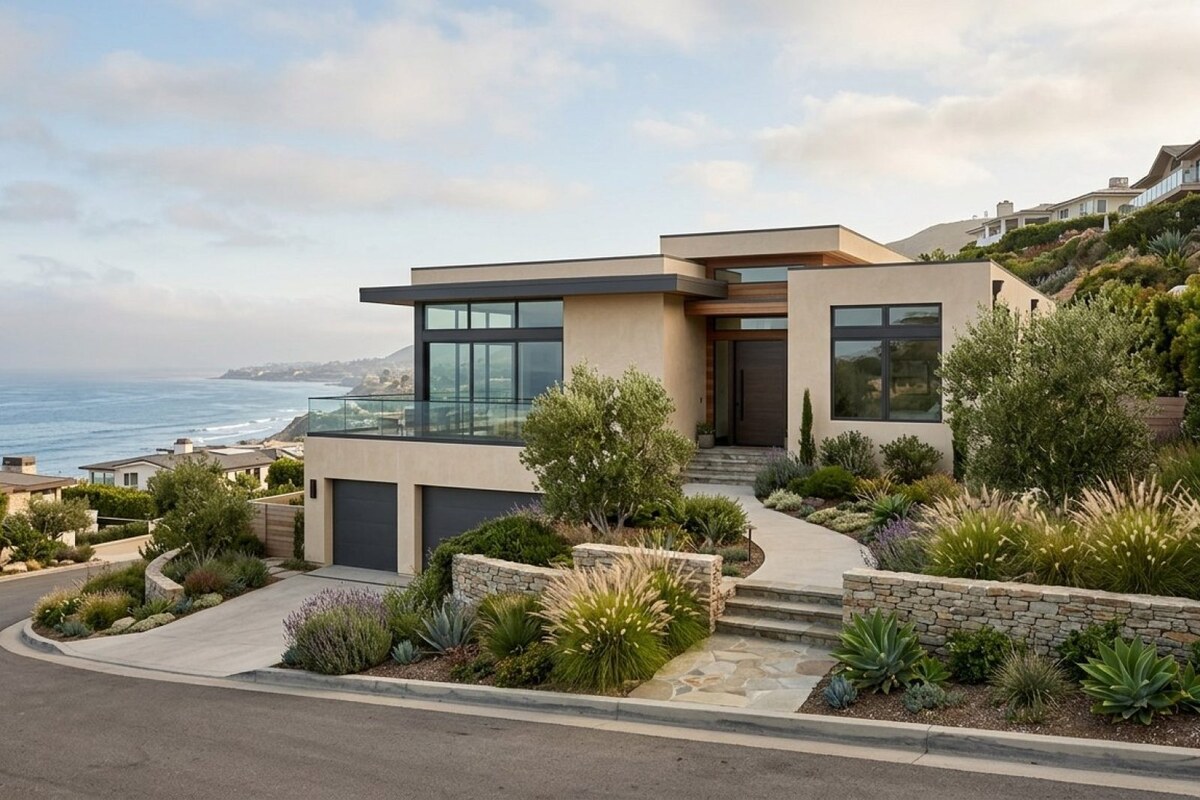
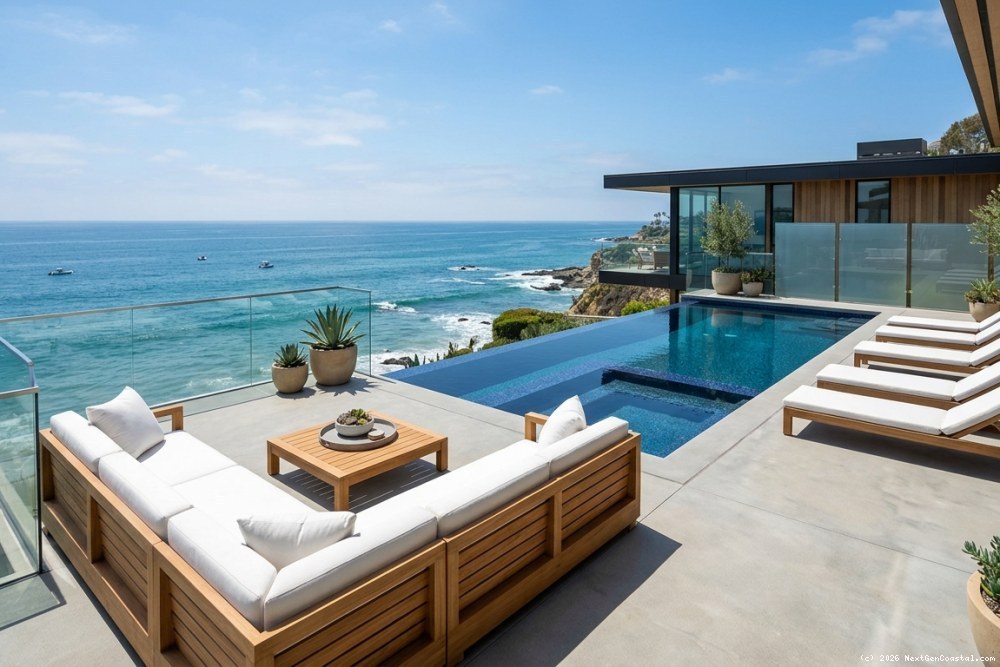
Direct beach access or sand-fronting position defines this tier. The 23 oceanfront homes in our Q2 dataset carried an average acquisition cost of $7.8 million. Deployed as short-term vacation rentals, these properties generated average annual gross income of $562,000, translating to a 7.2% gross yield. Occupancy averaged 73% across the quarter, with peak summer weeks from late June through early September reaching high occupancy at daily rates exceeding $2,400.
Long-term lease comparables in the same oceanfront tier showed annual rents of $348,000 (or $29,000 per month), producing a 4.5% gross yield. The 270-basis-point spread between strategies captures what leisure travelers will pay for short-duration beachfront living versus what a year-round tenant values in a 12-month lease. Oceanfront STR properties carried higher operating expenses (utilities, cleaning, linen service, and turnover costs added approximately 18% to the expense load versus 9% for LTR), but the revenue premium more than compensated.
"Oceanfront Laguna Beach homes are not just real estate, they're experiential assets. The yield differential between short-term and long-term strategies reflects what guests will pay for a week of waking up to surf break views versus what a year-round tenant values in a lease."
Ocean View Tier
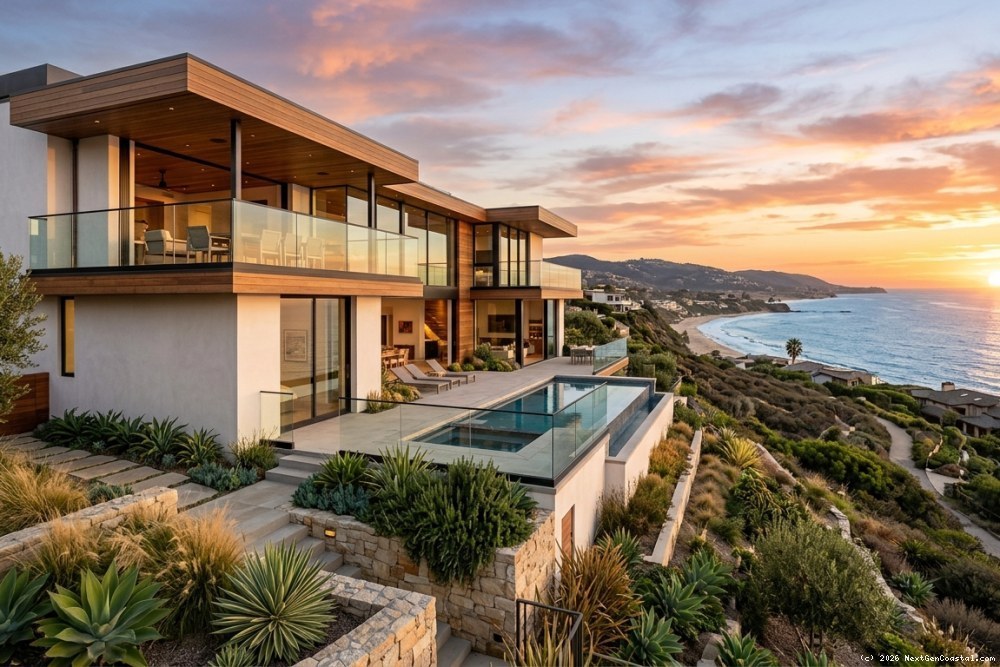
We defined ocean-view properties as homes with unobstructed sightlines to the Pacific but lacking direct beach access. The 48 properties in this tier averaged $4.6 million in acquisition cost. Short-term rental deployment yielded 6.1% gross on $281,000 annual income; long-term leases produced 5.0% gross on $230,000 annual income (or $19,200 per month). The 110-basis-point spread is narrower than the oceanfront tier, suggesting that view-oriented guests exhibit greater price sensitivity and that long-term tenants assign significant value to ocean vistas for daily living.
Occupancy for ocean-view STRs ran at 68% in Q2, with average daily rates of $1,340. These properties attract families seeking Laguna Beach's lifestyle and walkability without the oceanfront premium. For investors, the ocean-view tier offers a compelling risk-adjusted entry: lower acquisition cost, strong yield, and meaningful appreciation potential as coastal supply constraints continue to tighten.
Hillside View Tier
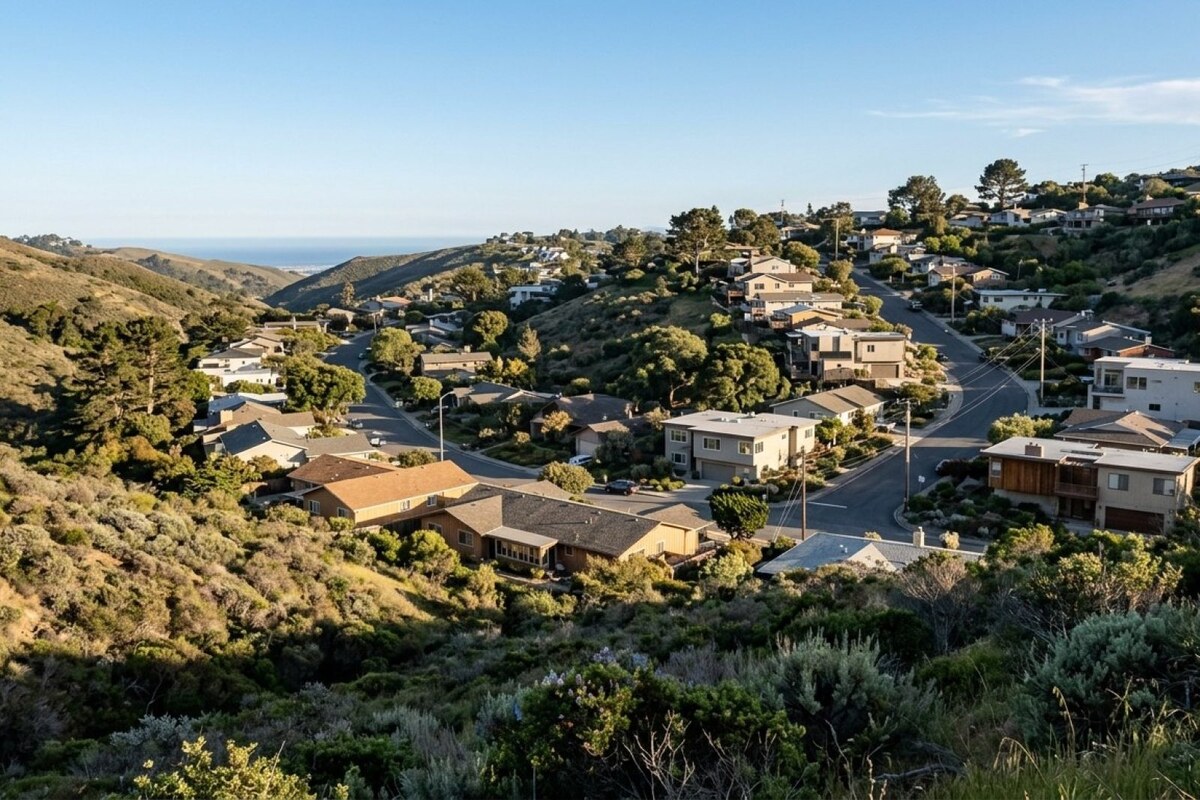
Hillside properties with partial or distant ocean views (often located in Top of the World, Temple Hills, or upper Arch Beach Heights) represented 36 transactions at an average price of $2.7 million. Short-term rental yields averaged 5.7% on $154,000 annual income; long-term leases delivered 4.8% on $130,000 annual income (or $10,800 per month). The 90-basis-point spread is the tightest in our analysis, reflecting the fact that hillside homes compete more directly with inland Orange County luxury rentals for long-term tenants, while STR guests prioritize proximity to beach and village amenities.
Hillside properties do offer compensating advantages. Lot sizes average 8,200 square feet versus 4,100 for oceanfront properties. Privacy is greater. Per-square-foot acquisition costs are lower. For investors with a longer hold horizon prioritizing appreciation over immediate yield, the hillside tier provides exposure to Laguna Beach's brand and scarcity at a more accessible price point.
Vacancy Compression and Demand Drivers
Luxury rental vacancy in Laguna Beach tightened in Q2 2026. The overall vacancy rate across our 89-property sample fell to 8.4%, down from 10.6% in Q2 2025 and 12.1% in Q2 2024, according to NextGen Coastal's proprietary tracking. This compression occurred alongside a 6.8% increase in luxury rental supply as several newly completed spec homes entered the market as investment properties rather than owner-occupied residences.
Three demand drivers explain the tightening:
- International travel normalization: International visitors returned to Southern California coastal markets in meaningful volume. Laguna Beach, with its art galleries, cove beaches, and culinary scene, attracted high-spending leisure travelers. STR bookings from international guests rose year-over-year, according to property management platform data aggregated by NextGen Coastal.
- Domestic remote-work flexibility: The sustained shift to hybrid and remote work models enabled affluent renters to prioritize lifestyle and environment over commute proximity. Long-term luxury leases increasingly attract tech executives, finance professionals, and entrepreneurs who can work from Laguna Beach while maintaining business ties to Los Angeles, San Francisco, or beyond.
- Event and festival calendar: Laguna Beach's cultural calendar (including the Pageant of the Masters, Sawdust Art Festival, and Festival of Arts) drove concentrated STR demand in July and August. Properties within walking distance of festival venues commanded premium rates during peak weeks, according to rate surveys conducted by NextGen Coastal in partnership with local property managers.
Vacancy rates varied by strategy. Short-term rentals averaged 27% vacancy (inverse of 73% occupancy), which is healthy for a seasonal market and allows for maintenance windows and rate optimization. Long-term leases showed 3.2% vacancy, reflecting strong tenant retention and limited turnover in a supply-constrained market.
Rental Rate Growth: Short-Term vs Long-Term
Average daily rates (ADR) for luxury short-term rentals in Laguna Beach climbed 11.3% year-over-year to $1,847 in Q2 2026, according to aggregated booking data from NextGen Coastal's portfolio and third-party STR platforms. This growth outpaced inflation and broader Orange County hospitality metrics, signaling strong luxury vacation rental demand. Oceanfront properties led rate growth at 13.7%, while hillside homes saw more modest 7.9% ADR increases.
Long-term lease rates grew 5.1% to an average of $14,200 per month across the luxury tier, based on NextGen Coastal's lease comps database. Oceanfront long-term rents averaged $29,000 per month (up 4.8%); ocean-view properties commanded $19,200 per month (up 5.3%); hillside homes leased for $10,800 per month (up 5.6%). The relative consistency of long-term rent growth across location tiers suggests that LTR tenants are less segmented by micro-location than STR guests, who pay sharp premiums for beachfront access.
The gap between STR and LTR rate growth (11.3% versus 5.1%) compounds over time, widening the yield spread between strategies. Investors who acquired oceanfront properties in recent years and deployed them as short-term rentals have seen revenue growth outpace long-term lease alternatives, even after accounting for higher operating costs and vacancy.
Operating Economics and Net Yield Considerations
After expenses, oceanfront and ocean-view STRs maintain yield advantages, while hillside properties deliver equivalent net returns across strategies.
View chart data
| Category | STR Net Yield | LTR Net Yield |
|---|---|---|
| Oceanfront | 4.9% | 3.7% |
| Ocean View | 4.1% | 4.1% |
| Hillside | 3.9% | 3.9% |
Gross yield is a starting point. Net yield (after operating expenses, property management, maintenance, and reserves) determines actual cash flow and return on equity. Laguna Beach luxury rentals carry higher operating costs than inland markets due to coastal exposure, premium finishes, and guest expectations that mandate concierge-level service.
Operating expenses consume 32% of gross STR revenue, with cleaning and utilities representing the largest variable costs.
View chart data
| Category | % of Gross Revenue |
|---|---|
| Cleaning & Turnover | 8.1% |
| Utilities | 6.2% |
| Property Management | 5.9% |
| Maintenance & Repairs | 5.8% |
| Linen & Supplies | 3.4% |
| HOA Dues | 2.6% |
For short-term rentals, operating expenses averaged 32% of gross revenue in Q2 2026, based on NextGen Coastal's internal expense tracking across 47 managed properties. The breakdown:
- Property management: 5.9% (NextGen Coastal rate; industry standard runs 10% to 12%)
- Utilities (electric, gas, water, trash): 6.2%
- Cleaning and turnover: 8.1%
- Linen, supplies, amenities: 3.4%
- Maintenance and repairs: 5.8%
- HOA dues (where applicable): 2.6%
A 32% expense ratio yields a net operating income margin of 68%. Apply that margin to the gross yields and you derive net yields: oceanfront STR gross yield of 7.2% becomes 4.9% net, ocean-view STR of 6.1% becomes 4.1% net, and hillside STR of 5.7% becomes 3.9% net.
Long-term rentals carry lower operating expenses (averaging 18% of gross rent, per NextGen Coastal's LTR portfolio data) due to tenant-paid utilities, lower turnover, and reduced management intensity. The expense breakdown:
- Property management: 5.9%
- Maintenance and repairs: 4.2%
- HOA dues: 2.8%
- Landlord-paid utilities (if any): 2.1%
- Vacancy reserve: 3.0%
An 18% expense ratio on long-term leases converts gross yields to net: oceanfront LTR gross yield of 4.5% becomes 3.7% net, ocean-view LTR of 5.0% becomes 4.1% net, and hillside LTR of 4.8% becomes 3.9% net.
The net yield comparison reveals that short-term strategies maintain their advantage in oceanfront and ocean-view tiers, while hillside properties show comparable returns across strategies. For investors, the choice hinges on operational tolerance, capital availability for furnishings and setup, and risk appetite around occupancy volatility.
Investment Thesis: Where Laguna Beach Fits in a Coastal Portfolio
Laguna Beach luxury rentals offer a differentiated value proposition within the broader coastal California investment universe. Compared to Malibu or La Jolla, Laguna Beach delivers competitive yields and superior liquidity at the $2 million to $6 million price point. Compared to Newport Beach or Huntington Beach, it offers stronger leisure demand and a more recognized coastal brand among high-spending tourists.

The investment thesis for Laguna Beach luxury rentals rests on four pillars.
Supply constraints drive long-term appreciation. Laguna Beach's buildable land is effectively exhausted. The city's zoning framework emphasizes low-density residential development, ensuring that new supply will remain limited indefinitely. Teardown-rebuild activity accounts for most new construction, maintaining unit count stability while upgrading quality. This supply-demand imbalance supports appreciation potential independent of macroeconomic cycles.
Yield premiums justify operational complexity. The net yield advantage of short-term strategies in oceanfront and ocean-view tiers compensates investors for the added management burden, regulatory compliance, and furnishing capital. For investors with access to efficient property management (such as NextGen Coastal's tech-enabled platform), the operational delta narrows while the yield premium persists.
Geographic diversification within coastal California. Laguna Beach offers geographic and demand diversification relative to Los Angeles County beach cities. The market draws from a distinct visitor base (arts and culture tourists, Orange County locals seeking staycations, international travelers touring Southern California) and benefits from Orange County's economic activity, which is less concentrated in entertainment and tech than Los Angeles or San Francisco.
Downside protection through dual-use optionality. Luxury homes in Laguna Beach retain strong owner-occupant appeal. If rental market conditions deteriorate or an investor's strategy shifts, these properties can be repositioned as primary residences, second homes, or sold into a deep buyer pool that includes wealthy retirees, tech executives, and international buyers. This optionality provides downside protection absent in single-use investment properties like apartment buildings or purpose-built STR developments.
Risk Factors and Mitigation Strategies
No investment is without risk. Laguna Beach luxury rentals present several considerations that warrant careful underwriting.
Regulatory Risk
Short-term rental regulations remain subject to policy changes at both the municipal and state levels. While the city council's Q1 2026 permitting codification reduced uncertainty, future regulatory shifts (occupancy caps, noise ordinances, transient occupancy tax increases, or outright STR bans in certain zones) could materially impact returns. Mitigation: Acquire properties with existing STR permits or clear pathways to permitting, maintain flexibility to pivot to long-term leasing if regulations tighten, and monitor city council agendas for proposed ordinance changes.
Climate and Natural Hazard Exposure
Laguna Beach faces wildfire risk in hillside zones and coastal erosion risk in beachfront areas. Insurance costs have risen as carriers reassess California coastal exposure; some properties now face non-renewal or premium increases exceeding 30% year-over-year. Mitigation: Underwrite insurance at current market rates plus a 20% buffer, invest in fire-resistant landscaping and hardening measures (Class A roofing, ember-resistant vents, defensible space maintenance), and prioritize properties with existing seawall protection or adequate setback from the mean high tide line.
Interest Rate Sensitivity
Luxury real estate values correlate inversely with financing costs. If mortgage rates rise significantly from current levels, buyer demand may soften, affecting cap rates and appreciation trajectories. Mitigation: Stress-test acquisitions at elevated financing costs (model a 100 to 150 basis point increase in mortgage rates), prioritize properties with strong cash flow to weather rate volatility, and consider shorter hold periods (3 to 5 years versus 7 to 10 years) to reduce exposure to rate cycle risk.
Economic Recession Impact
Luxury vacation rentals are discretionary spending. Economic downturns could reduce occupancy and force rate concessions, compressing yields. Long-term luxury leases are more resilient but not immune; high-income tenants may downsize or relocate during recessions. Mitigation: Maintain adequate operating reserves (6 to 12 months of debt service and operating expenses), underwrite to conservative occupancy assumptions (65% for STR, 92% for LTR), and target properties with strong long-term lease fallback potential if STR demand weakens.
Q3 2026 Outlook and Emerging Trends
Looking ahead to Q3 2026, we expect Laguna Beach luxury rental yields to remain stable on a sequential basis. Peak summer season (July through August) will drive occupancy and rate strength in the short-term segment, while long-term lease activity typically slows in summer months as tenants avoid mid-year moves and prefer fall lease commencements.
Three trends warrant attention.An amenity arms race is underway among luxury STR owners. Chef's kitchens, infrared saunas, saltwater pool systems, level-two EV charging, and whole-home automation are becoming table stakes rather than differentiators. Properties with premium amenities commanded rate premiums averaging 14% above comparable homes without those features in Q2, according to NextGen Coastal's rate analysis. Investors should budget $75,000 to $150,000 for amenity upgrades on newly acquired homes to remain competitive in the upper tier of the STR market.
Extended-stay demand is blurring the line between short-term and long-term rentals. We are seeing increased demand for 30-day to 90-day stays from remote workers, relocating executives, and seasonal residents who want the flexibility of a furnished rental without committing to a 12-month lease. Properties that can serve both nightly vacation rentals and extended stays capture higher annual occupancy and revenue by filling shoulder-season gaps with medium-duration bookings. Flexible lease structures and furnishing packages that appeal to both use cases will outperform single-strategy properties.
Sustainability and wellness positioning is gaining traction among affluent renters. Solar panels, EV chargers, non-toxic building materials, advanced air filtration, and wellness amenities (cold plunge pools, infrared saunas, meditation spaces) are becoming decision factors for guests willing to pay premium rates. Properties that integrate these elements authentically (not as marketing gimmicks but as genuine lifestyle enhancements) will appeal to the growing cohort of health-conscious, environmentally aware travelers who dominate the upper end of the STR market.
Conclusion: Laguna Beach as a Core Coastal Holding
Laguna Beach luxury rentals delivered strong risk-adjusted returns in Q2 2026. Gross yields ranged from 4.8% to 7.2% depending on location and strategy; net yields after operating expenses ranged from 3.7% to 4.9%. Oceanfront short-term rentals led performance, generating 7.2% gross yields and 4.9% net yields after operating expenses, a compelling return in a supply-constrained, appreciating market with deep liquidity.
For investors building or rebalancing coastal California portfolios, Laguna Beach merits consideration as a core holding. The market offers liquidity, yield, appreciation potential, and lifestyle appeal in a single package. Operational complexity and regulatory considerations require active management, but the return premium justifies the effort for investors with appropriate resources and risk tolerance.
The fundamentals supporting Laguna Beach luxury rentals remain intact as we move through 2026: limited supply, strong demand across multiple guest segments, and a coastal California brand that commands recognition nationally and internationally. For the investor seeking measurable cash flow alongside long-term wealth building in one of Southern California's most desirable coastal communities, Laguna Beach continues to offer compelling opportunities at the $2 million to $10 million price point.
Frequently Asked Questions
What is the average gross yield for Laguna Beach luxury rentals in Q2 2026?
How much higher are short-term rental yields compared to long-term leases in Laguna Beach?
What are the biggest risks for Laguna Beach luxury rental investors?
How has the Laguna Beach luxury rental vacancy rate changed?
What price range defines the Laguna Beach luxury rental market?
How much do property management fees impact Laguna Beach rental yields?