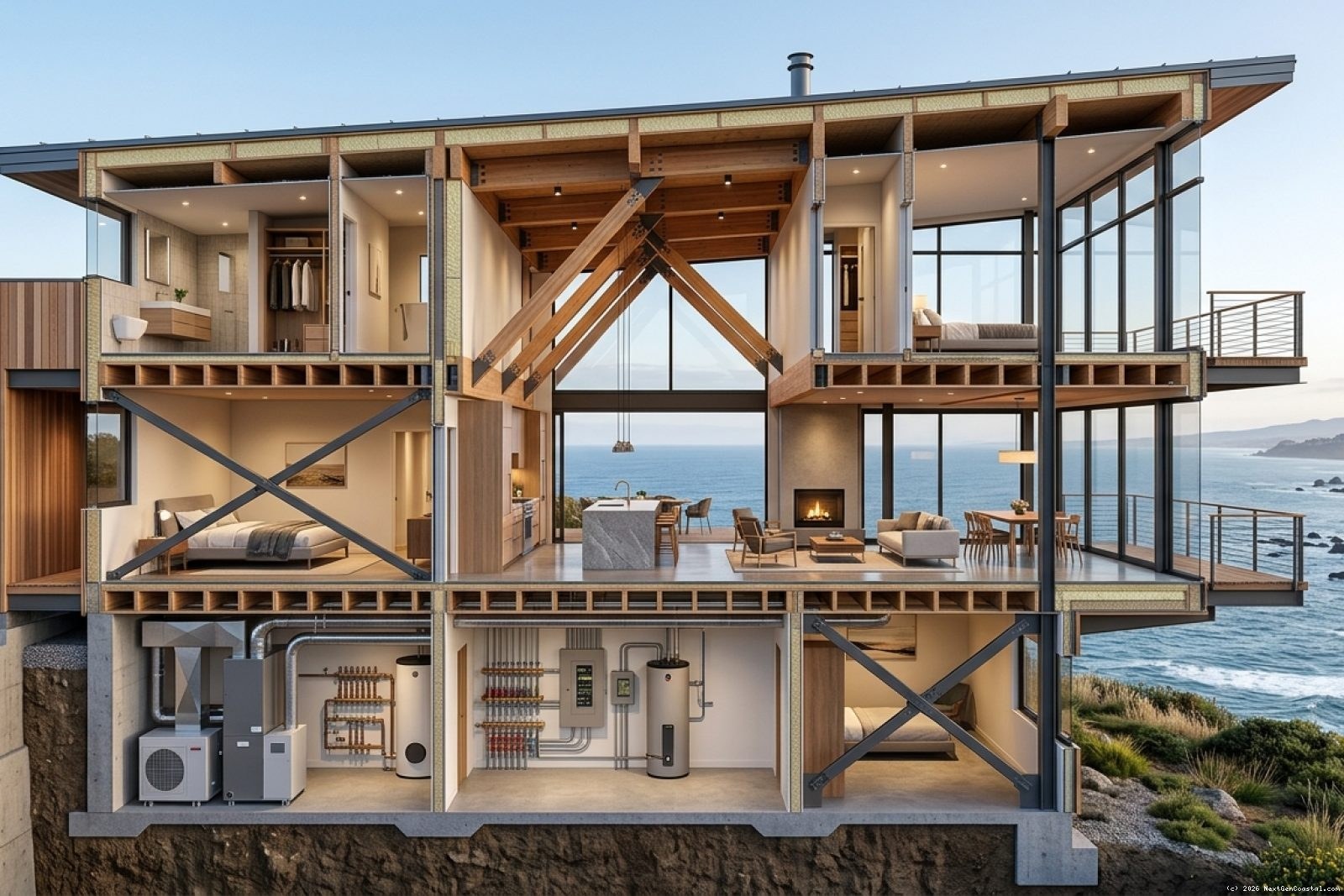
Cost Segregation Mechanics: Reclassifying Basis for Accelerated Depreciation
After the TCJA phase-down to 80% (2023) and 60% (2024), the One Big Beautiful Bill Act restored 100% bonus depreciation permanently for property acquired after January 19, 2025.
| Label | Bonus Depreciation Rate |
|---|---|
| 2023 | 80% |
| 2024 | 60% |
| 2025 (pre-OBBBA) | 40% |
| 2025+ (OBBBA) | 100% |
| 2026+ | 100% |
Cost segregation is an IRS-approved engineering-based study that disaggregates a property's depreciable basis into asset classes with shorter recovery periods. Instead of depreciating the entire structure over 27.5 years (residential rental) or 39 years (commercial), the study identifies components that qualify as 5-year personal property (carpeting, appliances, decorative lighting, window treatments) or 15-year land improvements (landscaping, hardscaping, site utilities, pool decking).
The methodology follows the tangible property regulations under IRC §1.263(a) and relies on detailed construction cost data, architectural plans, and on-site inspection. A qualified firm—typically staffed by engineers and former IRS agents—allocates costs using one of three approaches: the detailed engineering approach (most defensible), the residual estimation approach, or the sampling/modeling approach for large portfolios.
For a coastal SFR, the study typically reclassifies a portion of the building basis. A property with a $2.8 million building basis (excluding land) might yield approximately $560,000 to $1.12 million in 5-year and 15-year property combined, with the remainder on the 27.5-year schedule. Under current bonus depreciation rules—restored to 100% permanently by the One Big Beautiful Bill Act (OBBBA) for qualified property acquired after January 19, 2025—the entire 5-year and 15-year property allocation can be expensed in year one. For example, $700,000 in 5-year property at 100% bonus depreciation yields the full $700,000 as a year-one deduction, on top of straight-line depreciation on the remaining 27.5-year basis.
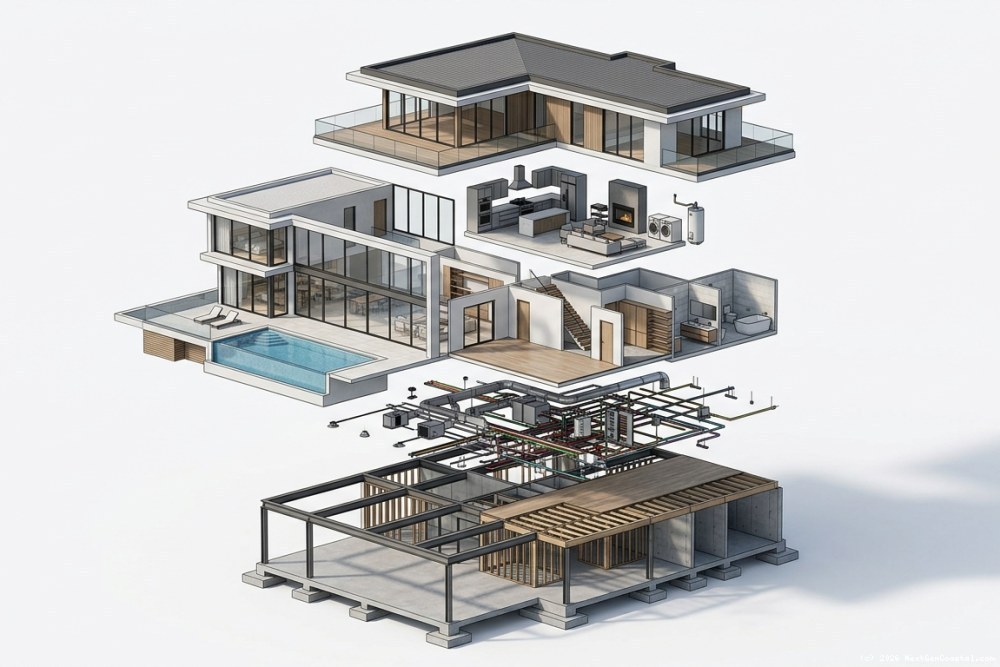
Bonus Depreciation Phase-Down: Timing Considerations
The Tax Cuts and Jobs Act of 2017 expanded bonus depreciation to 100% for qualified property placed in service between September 28, 2017, and December 31, 2022, after which it began phasing down by 20 percentage points annually (80% in 2023, 60% in 2024). The One Big Beautiful Bill Act (OBBBA), signed in July 2025, repealed the remaining phase-down and permanently restored 100% bonus depreciation for qualified property acquired after January 19, 2025. Property acquired under a written binding contract dated before January 20, 2025, is treated as acquired on the contract date and may remain on the legacy 40% schedule, so contract dating matters for properties currently in escrow.
This creates timing considerations for coastal investors who acquired properties in prior years but haven't yet commissioned a cost segregation study. The IRS permits retroactive studies via Form 3115 (automatic change in accounting method), allowing you to claim catch-up depreciation in the current year. A client who purchased a property in 2021 and completes a study in 2026 can claim the missed accelerated depreciation as a single adjustment on the current return, subject to passive activity loss limitations. Note that the bonus depreciation rate applied to each component is the rate in effect when the property was placed in service—so a 2021 acquisition would still apply the 100% rate then in effect.
"For high-net-worth coastal investors, the combination of cost segregation and bonus depreciation can generate substantial first-year tax deferrals—capital that can be redeployed into additional acquisitions or used to de-risk the investment through reserves."
Coastal SFR Component Profile: What Qualifies for Acceleration
Luxury coastal homes present a favorable component mix for cost segregation. High-end finishes, custom millwork, and specialized systems can drive the personal property allocation above the typical range for standard residential rentals.
5-Year Personal Property
Personal property includes assets that are not structural components of the building. In a coastal SFR, this category typically captures:
- Appliances and equipment: High-end ranges, refrigerators, wine refrigerators, washers, dryers, built-in espresso machines
- Window treatments: Motorized shades, plantation shutters, custom drapery hardware
- Decorative lighting: Chandeliers, pendant fixtures, accent lighting (distinct from general illumination)
- Carpeting and area rugs: Bedroom carpeting, stair runners (hardwood and tile are structural)
- Specialty finishes: Wallcoverings, decorative tile accents, custom cabinetry hardware
- Security and AV systems: Cameras, intercoms, whole-home audio, smart-home controllers
- Garage systems: Epoxy flooring, storage systems, EV charging stations (equipment portion)
A luxury coastal rental with high-end lighting, audio integration, and a chef's kitchen can allocate a substantial portion to this category, depending on the property's specific features and cost basis.
15-Year Land Improvements
Land improvements are exterior assets that are not structural to the building but benefit the property. Coastal homes with resort-style outdoor spaces can generate substantial 15-year allocations:
- Hardscaping: Pavers, retaining walls, decorative concrete, outdoor kitchens (non-structural elements)
- Landscaping: Irrigation systems, drought-tolerant plantings, decorative rock, mulch
- Pool and spa: The water feature itself, decking, equipment (pumps, heaters, automation)
- Site utilities: Exterior electrical, gas, water, and sewer lines beyond the building footprint
- Fencing and gates: Perimeter fencing, automated entry gates, privacy walls
- Outdoor lighting: Path lighting, landscape uplighting, security floods
A coastal ocean-view home with a pool, outdoor kitchen, and tiered landscaping can allocate a significant amount to 15-year property, depending on the scope and cost of these improvements.

Financial Impact Modeling: ROI on the Study Itself
Typical study reclassifies 25–37% of building basis into accelerated 5-year and 15-year schedules.
| Label | Allocated Basis |
|---|---|
| 5-Year Personal Property | $800,000 |
| 15-Year Land Improvements | $400,000 |
| 27.5-Year Building | $2,000,000 |
Cost segregation studies for coastal SFRs typically cost $6,000–$15,000, depending on property complexity, basis, and whether the firm conducts a site visit. The ROI can be substantial when the study generates significant reclassifications.
Example Scenario: $3.2M Coastal SFR
Assume a client acquires a 2,800-square-foot coastal rental for $4.5 million ($1.3M land, $3.2M building). Without cost segregation, annual depreciation is $116,364 ($3.2M ÷ 27.5 years). The investor is in a high federal tax bracket plus state income tax, resulting in a combined marginal rate that varies by jurisdiction.
Illustrative cost segregation allocation:
- 5-year personal property: $800,000
- 15-year land improvements: $400,000
- 27.5-year building: $2,000,000
Year-one depreciation (2026 acquisition, 100% OBBBA bonus on 5- and 15-year property):
- Bonus depreciation (100% × $800,000 of 5-year property): $800,000
- Bonus depreciation (100% × $400,000 of 15-year property): $400,000
- 27.5-year building (straight-line): $72,727
- Total year-one depreciation: $1,272,727
Compared to the baseline $116,364, the study generates an additional $1,156,363 in first-year deductions. The tax benefit depends on your individual marginal rate and passive activity loss limitations. Over the first five years, cumulative depreciation under cost segregation can significantly exceed straight-line 27.5-year depreciation. Upon sale, depreciation recapture applies, but if you 1031 exchange, recapture is deferred, enhancing the long-term benefit.
Passive Activity Loss Limitations
Real estate rental income is generally passive under IRC §469, and passive losses can only offset passive income (with a $25,000 exception for active participants earning under $100,000 AGI, phasing out to $150,000). High-net-worth coastal investors often exceed these thresholds, rendering the cost segregation deduction suspended until they generate offsetting passive income, qualify as a real estate professional, or dispose of the property.
However, suspended losses carry forward indefinitely and are released upon sale, reducing gain. More importantly, investors with multiple coastal rentals, short-term rental activity (which can qualify as non-passive if material participation tests are met), or other passive investments (syndications, funds) can utilize the deductions immediately. A client with passive income from other sources can absorb cost segregation deductions in year one, deferring tax and improving cash flow.
Short-Term Rental Exception: Material Participation and Non-Passive Treatment
Coastal SFRs operated as short-term rentals (average guest stay ≤7 days) fall outside the definition of a "rental activity" under Treas. Reg. §1.469-1T(e)(3)(ii)(A) and can therefore qualify for non-passive treatment if the owner materially participates under IRC §469. This requires meeting one of seven tests, most commonly:
- More than 500 hours of participation during the year, or
- Substantially all participation in the activity (if multiple owners), or
- More than 100 hours and no one else participates more
Material participation allows the cost segregation losses to offset any income—W-2, business, portfolio—not just passive income. An investor who self-manages a luxury short-term rental (coordinating cleanings, guest communications, maintenance, marketing) and logs 520 hours can deduct cost segregation losses against their other income, subject to documentation and IRS scrutiny.
This strategy can be powerful for high-income professionals seeking to shelter active income. However, the IRS scrutinizes material participation claims, and contemporaneous time logs (calendar entries, emails, service records) are essential for audit defense. Investors using this strategy should engage a CPA experienced in short-term rental tax planning and maintain detailed participation records.
Integration with 1031 Exchanges: Maximizing Basis Step-Up
Cost segregation and 1031 exchanges are complementary strategies. When you exchange into a coastal SFR, the replacement property's basis equals the relinquished property's adjusted basis plus any cash boot paid. A cost segregation study on the replacement property maximizes the depreciation available on that stepped-up basis.
Example: Exchange from Inland to Coastal
An investor sells a property (adjusted basis $1.2M after depreciation) and exchanges into a $3.6 million coastal SFR ($2.6M building, $1M land), paying $1.8M in cash boot. The replacement property's basis is $1.2M + $1.8M = $3.0M (allocated between building and land based on fair market value ratios).
A cost segregation study on the replacement property reclassifies a portion into 5- and 15-year property. With bonus depreciation available, the investor can claim accelerated depreciation in year one—on a property acquired tax-deferred. The study effectively converts deferred gain into depreciation deductions, sheltering rental income.
Importantly, the cost segregation does not trigger recapture of the relinquished property's accelerated depreciation. That recapture is deferred along with the gain, and the replacement property's depreciation schedule starts fresh. Upon eventual sale (if not exchanged again), recapture applies only to the replacement property's accelerated depreciation.
Vacation Home Mixed-Use: The 14-Day Rule and Cost Segregation
Coastal investors often acquire SFRs for mixed use—personal enjoyment plus rental income. IRC §280A governs the tax treatment of vacation homes, and the interplay with cost segregation requires careful planning.
The 14-Day Rule (IRC §280A(g))
If you rent the property fewer than 15 days per year, the rental income is excluded from gross income (tax-free), but you cannot deduct rental expenses beyond mortgage interest and property taxes (which are deductible as personal itemized deductions, subject to the $10,000 SALT cap). Cost segregation is irrelevant in this scenario because you're not reporting rental activity.
This rule is available for coastal homeowners who rent their home for a limited period during peak season but otherwise use it personally. However, it precludes depreciation deductions.
Rental Use Exceeds 14 Days: Allocation Required
If you rent the property 15+ days and use it personally more than the greater of 14 days or 10% of rental days, it's classified as a personal residence under §280A(d). Expenses (including depreciation) must be allocated between rental and personal use based on days of each type. Only the rental portion is deductible, and rental deductions cannot exceed rental income (the activity is not a trade or business).
Cost segregation still applies, but the benefit is limited to the rental-use percentage. If you rent a property for 120 days and use it personally for 60 days (33% personal, 67% rental), only 67% of the cost segregation depreciation is deductible, and only to the extent of rental income. Suspended losses do not carry forward; they're lost.
Rental Use Minimizes Personal: Full Deductibility
If you rent the property 15+ days and limit personal use to ≤14 days or ≤10% of rental days (whichever is greater), the property is treated as a rental (not a personal residence). All expenses, including cost segregation depreciation, are fully deductible (subject to passive loss rules), and losses carry forward.
For a property rented 200 days, you can use it personally up to 20 days (10% of 200) and still claim full rental treatment. A client with a coastal rental rents it 210 days and uses it personally for 18 days. The property qualifies as a rental, and the cost segregation deduction fully offsets the rental income and can generate a suspended loss to carry forward or offset against other passive income.
Entity Structure Considerations: LLC, S-Corp, and Qualified Business Income
Most coastal SFR investors hold rental properties in single-member LLCs (disregarded entities for tax purposes, reported on Schedule E) or multi-member LLCs taxed as partnerships. Cost segregation flows through to the members' individual returns, subject to passive loss limitations.
S-Corporation: Generally Inadvisable
Holding rental real estate in an S-corporation is typically disadvantageous. Rental income is passive to the S-corp shareholders, but the entity itself pays no tax (pass-through). More problematically, distributing appreciated real estate from an S-corp triggers gain at both the corporate and shareholder levels, and the entity cannot conduct a 1031 exchange (only individuals and partnerships qualify). Cost segregation deductions flow through, but the structural inflexibility outweighs any benefit.
Qualified Business Income Deduction (IRC §199A)
Rental real estate can potentially qualify for the 20% qualified business income (QBI) deduction under §199A if it rises to the level of a trade or business. For coastal SFRs, this may be achievable if you self-manage or actively oversee a property manager.
Cost segregation reduces net income (because depreciation reduces taxable income), which affects the QBI deduction calculation. If your coastal rental generates net income after depreciation, the 20% deduction applies to that remaining income. With cost segregation, year-one depreciation can exceed rental income, creating a loss—no QBI deduction that year, but the loss shelters other passive income and carries forward. In subsequent years, as depreciation normalizes, QBI deductions may resume.
The interplay is complex and depends on your overall tax profile, but for high-income investors, the immediate tax deferral from cost segregation can be beneficial when integrated with a comprehensive tax strategy.

Audit Risk and Documentation: IRS Scrutiny and Best Practices
The IRS has long accepted cost segregation as a legitimate tax strategy. However, aggressive or poorly documented studies can invite scrutiny.
Qualified Firm Selection
Engage a firm with engineering credentials (PE licenses), IRS audit experience, and a track record in residential real estate. The study should include:
- Detailed narrative explaining methodology and asset classifications
- Site visit photos and floor plans
- Component-level cost allocation (not just percentages)
- Reconciliation to purchase price and any available construction cost data
- Engineer's certification and signature
Avoid firms that guarantee a specific percentage reclassification or charge contingent fees based on tax savings. These practices may raise IRS concerns.
Form 3115 and Automatic Consent
If you're conducting a cost segregation study on a property placed in service in a prior year, you must file Form 3115 (Application for Change in Accounting Method) with your current-year return. The IRS provides automatic consent for this change under applicable revenue procedures, meaning no user fee or advance approval is required—but the form must be completed correctly.
The catch-up depreciation (all missed accelerated depreciation from prior years) is claimed as a single §481(a) adjustment in the year of change. This can create a large deduction in one year, which is beneficial but may warrant explanation if the adjustment is substantial relative to your income. Maintain the cost segregation report and Form 3115 in your permanent tax files.
Recapture Upon Sale
Depreciation recapture applies when you sell the property. Straight-line depreciation on real property (27.5-year) is recaptured at a maximum 25% rate (unrecaptured §1250 gain). Accelerated depreciation on personal property (5-year) is recaptured as ordinary income to the extent of prior depreciation deductions, then as §1231 gain (typically long-term capital gain).
In practice, if you've claimed accelerated depreciation and sell for a gain, a portion is recaptured at higher rates. However, if you 1031 exchange, all recapture is deferred—making cost segregation even more valuable in a serial-exchange strategy.
Coastal Market Timing: When Cost Segregation Delivers Maximum Value
Cost segregation is most valuable when:
- Basis is high: Coastal SFRs with substantial building basis generate sufficient reclassification to justify the study cost.
- Bonus depreciation is available: The OBBBA-restored 100% rate applies to property acquired after January 19, 2025. Properties under written binding contracts dated before that cutoff remain on the legacy 40% schedule, so deal timing and contract dating directly affect first-year deductions.
- You have passive income to offset: Suspended losses are valuable, but immediate utilization is beneficial. Investors with multiple rentals, syndication income, or short-term rental activity (non-passive) see greater benefit.
- You're not selling soon: If you plan to sell within 1–2 years (and not exchange), recapture may offset some of the benefit. Cost segregation is most effective in a hold-and-exchange strategy.
For clients acquiring luxury SFRs in coastal markets, the typical profile involves a substantial purchase price, a multi-year hold, and eventual 1031 exchange into a larger coastal asset or portfolio. Cost segregation in year one can accelerate significant deductions, improving cash-on-cash returns and building tax-deferred equity for the next exchange.
Implementation Roadmap: Executing a Cost Segregation Study
Here's the step-by-step process for implementing a cost segregation study:
- Acquisition close: Obtain final settlement statement, purchase agreement, and any available construction cost data (if new build or recent renovation).
- Engage cost segregation firm (within 90 days): Provide property address, purchase price, land/building allocation, and access for site visit. Typical turnaround is 4–6 weeks.
- Review draft report: Ensure classifications are reasonable and documentation is thorough. Request clarification on any positions you wish to understand better.
- Deliver to CPA: Your CPA integrates the study into your tax return, files Form 3115 if applicable, and calculates the §481(a) adjustment.
- File return and retain documentation: Keep the cost segregation report, engineer's certification, and Form 3115 for the life of the property plus seven years post-sale.
- Update depreciation schedules: Track basis in each asset class (5-year, 15-year, 27.5-year) for future recapture calculations and 1031 exchange planning.
Coordinate with your tax advisor to ensure the study aligns with your overall strategy—whether that's maximizing current deductions, preserving QBI eligibility, or positioning for a future exchange.

Conclusion: Cost Segregation as Portfolio Strategy
Cost segregation is an engineering-based application of the tax code that aligns depreciation with the actual useful life of building components. For coastal SFR investors, the strategy can be compelling because luxury finishes, high-end systems, and resort-style outdoor improvements can drive personal property and land improvement allocations above typical residential rentals.
The financial impact can be immediate: a cost segregation study on a high-basis coastal rental can generate substantial first-year deductions, improving cash flow and enabling faster portfolio growth. When integrated with 1031 exchanges, short-term rental strategies, and entity planning, cost segregation becomes a valuable component of tax-efficient coastal real estate investing.
With OBBBA restoring 100% bonus depreciation permanently for property acquired after January 19, 2025, the strategic question shifts from "act before the phase-down" to "structure acquisitions to qualify for the restored 100% rate" — particularly avoiding pre-January 20, 2025 binding contracts that lock property onto the legacy 40% schedule. For clients building portfolios of coastal SFRs, the message is clear: commission the study early, document thoroughly, and integrate the deductions into a long-term hold-and-exchange strategy. The result is a coastal rental portfolio that generates income, appreciates with the market, and delivers tax deferrals—capital that compounds into your next acquisition and the one after that.